art · Museums and galleries · Travelling

Gustav Klimt, Egon Schiele and the art of Vienna

I am here in Vienna for the first time and have four days to explore the galleries of this magnificent city. I have long wanted to visit Vienna, ever since I visited a Gustav Klimt and Egon Schiele exhibition in Japan in 2019. I have five main galleries to see plus whatever else I can fit in:

– The Albertina
– The Belvedere
– The Leopold
– The Secession building
– The Kunsthistorisches Museum

1 March 2023, The Albertina

The Albertina is a gallery famous for having some beautiful old masters drawings including works by Rafael, Michaelangelo and Albrecht Durer. My current interest in art started when I read a book called the ‘1,000 paintings to see before you die’ and in that book there were two works by Durer that are in the Albertina. They are ‘Hare’ 1502 and ‘Wing of a Blue Roller’ 1512.

Wing of a Blue Roller
Wing of a Blue Roller, Durer, 1512
Hare by Albrecht Durer
Hare by Durer, 1502

I do not know a huge amount about Durer but his work does strike me as so different to what other artists of that period were doing. Whilst he did paint portraits, some of his work is studies of birds, trees, plants, animals and the human body. At a time when religious and classical subjects were the flavour of the day, it seems to me that he really was forging his own artistic path.

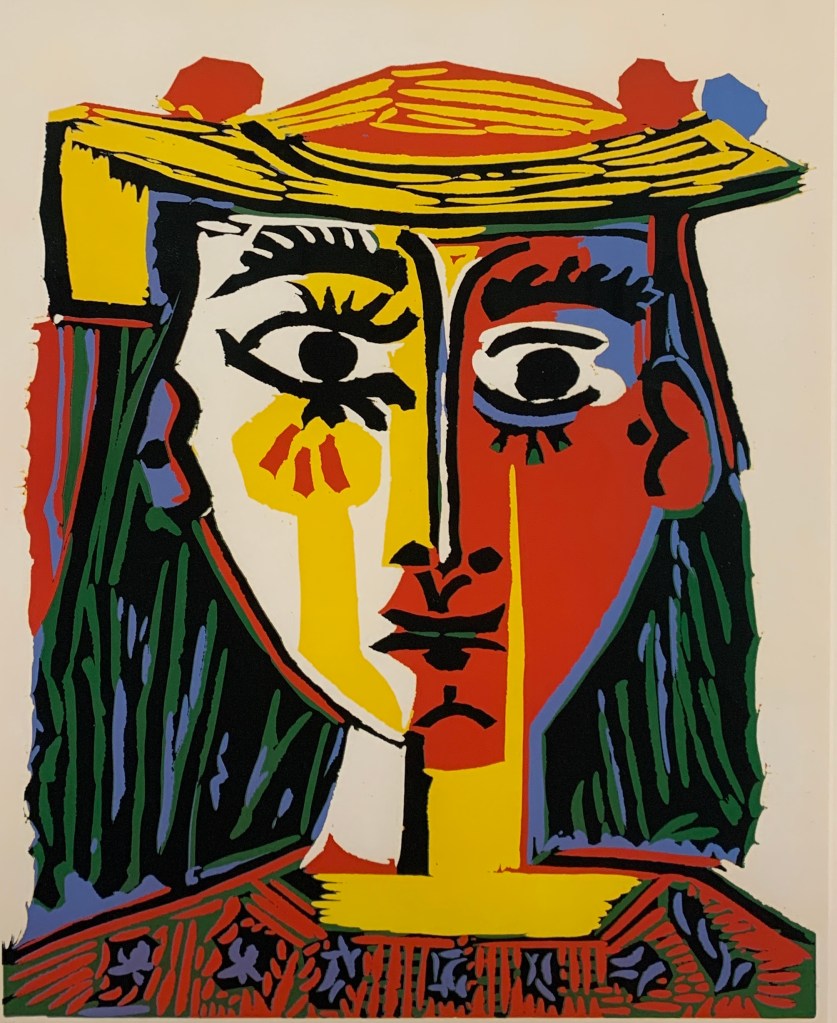
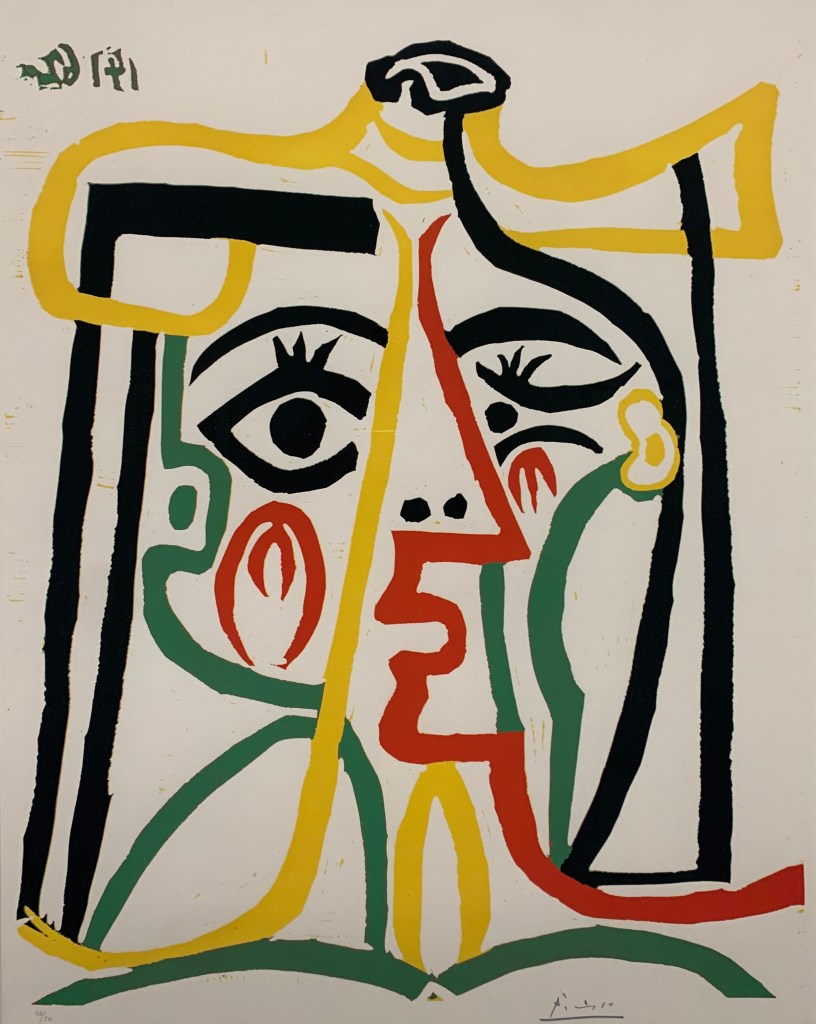
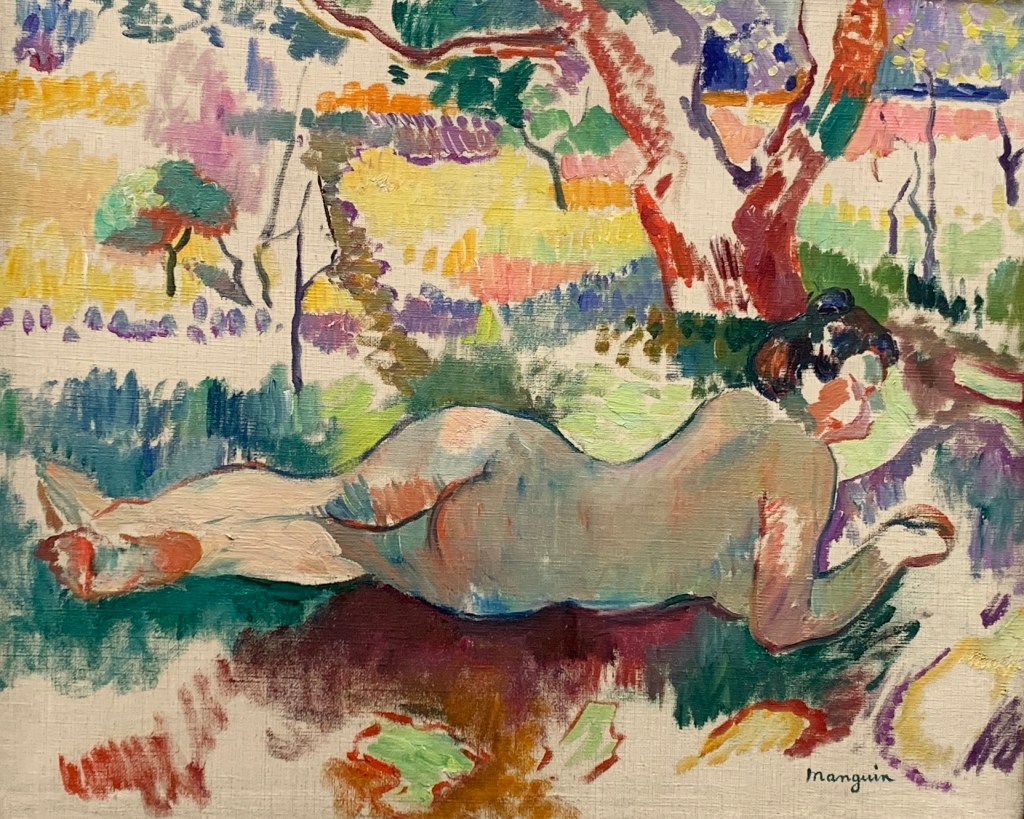
The other outstanding collection in the Albertina is the Herbert Batliner collection. He was a Lichenstein lawyer who died in 2019. He amassed an amazing collection of artworks, and donated it the Albertina. The focus of his collection is Impressionism, but he also collected many other artists including:

– Alberto Giacommeti
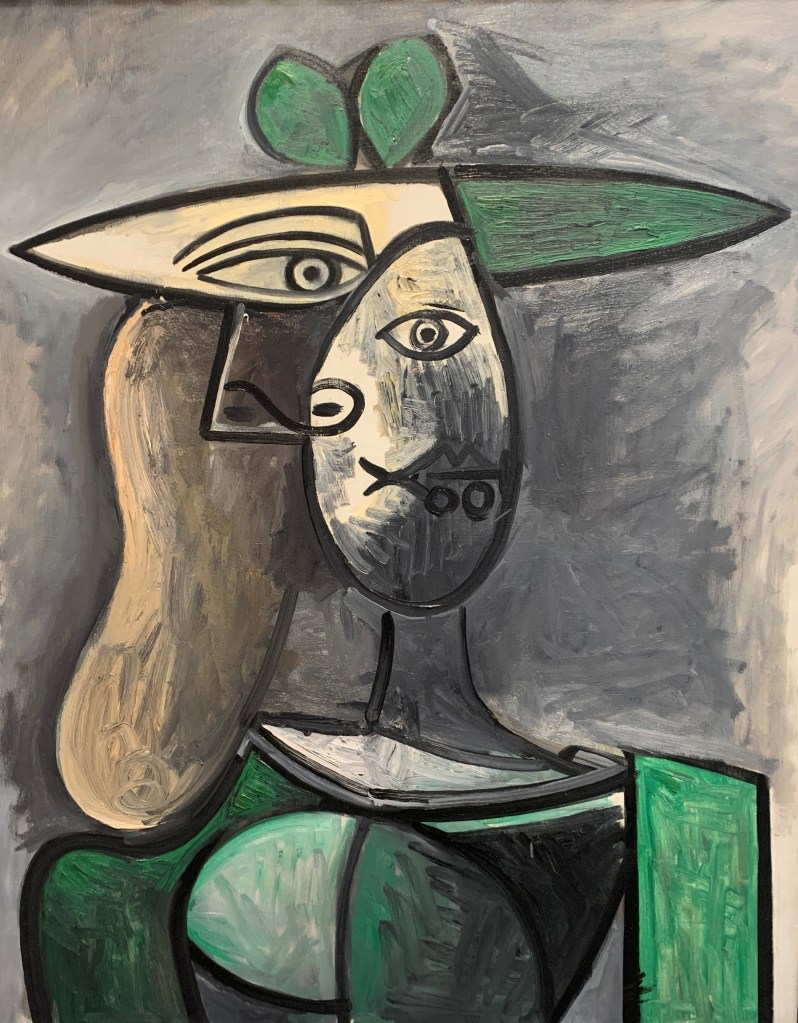
– Pablo Picasso
– Amedeo Modigiliani
– Henry Manguin

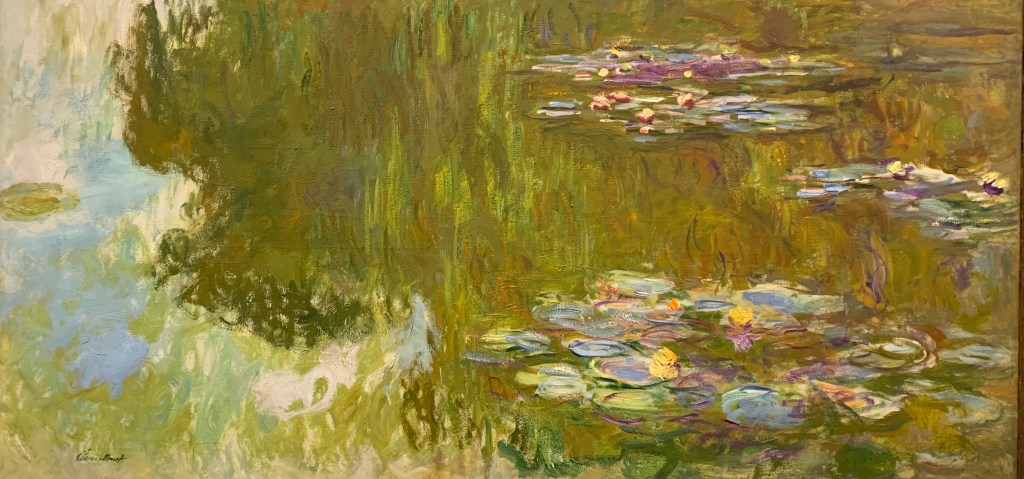
The gallery is worth visiting alone just to see his collection. There are some beautiful works by Claude Monet and Paul Signac.

Entry is roughly €19 to get in. It is open late Wednesdays til 9pm, which is when I went and Fridays too I think.

2 March 2023, The Belvedere

If the Albertina was the starter, the Belvedere was the main course! What a stunning collection of art. Mind. Blown! This is probably a good time to mention the Vienna Secession. It was an Austrian art movement formed in 1897, by the artists Gustav Klimt, Josef Hoffman, Koloman Moser and Otto Wager.

The art of the secession is identifiable as similar to that of the art nouveau movement. In fact the exhibition at the Belvedere demonstrates how Klimt was inspired by other artists of the time. The reason it is called the secession is because the group saw themselves as seceding away from traditional artistic styles of the day. The Belvedere displays many works of the secession along with probably my favourite artist Egon Schiele. There were so many amazing paintings by Schiele and by Klimt in this gallery.

In fact the Belvedere is 3 galleries. The Upper gallery has lots of the Klimt works, and is the largest. The Lower gallery seems to have more exhibitions. In March 2023 when I visited they were showing a selection of paintings from the gallery celebrating 300 years of the gallery. They were also showing an exhibition showing the artists who inspired Klimt, including Lawrence Alma Tadema, Margaret MacDonald MacIntosh and Van Gogh. Both are excellent exhibitions.

The entrance fee of €22.90 gained me entrance to both galleries. I recommend booking online as you have to select a time slot and saves queueing.

Like all the art here, there is a huge depth in the work on display. For maybe the second time ever I actually had to say I had seen enough art! The poster below is from the first Secession exhibition, from 1898.

Poster advertising the first secession exhibition in 1898

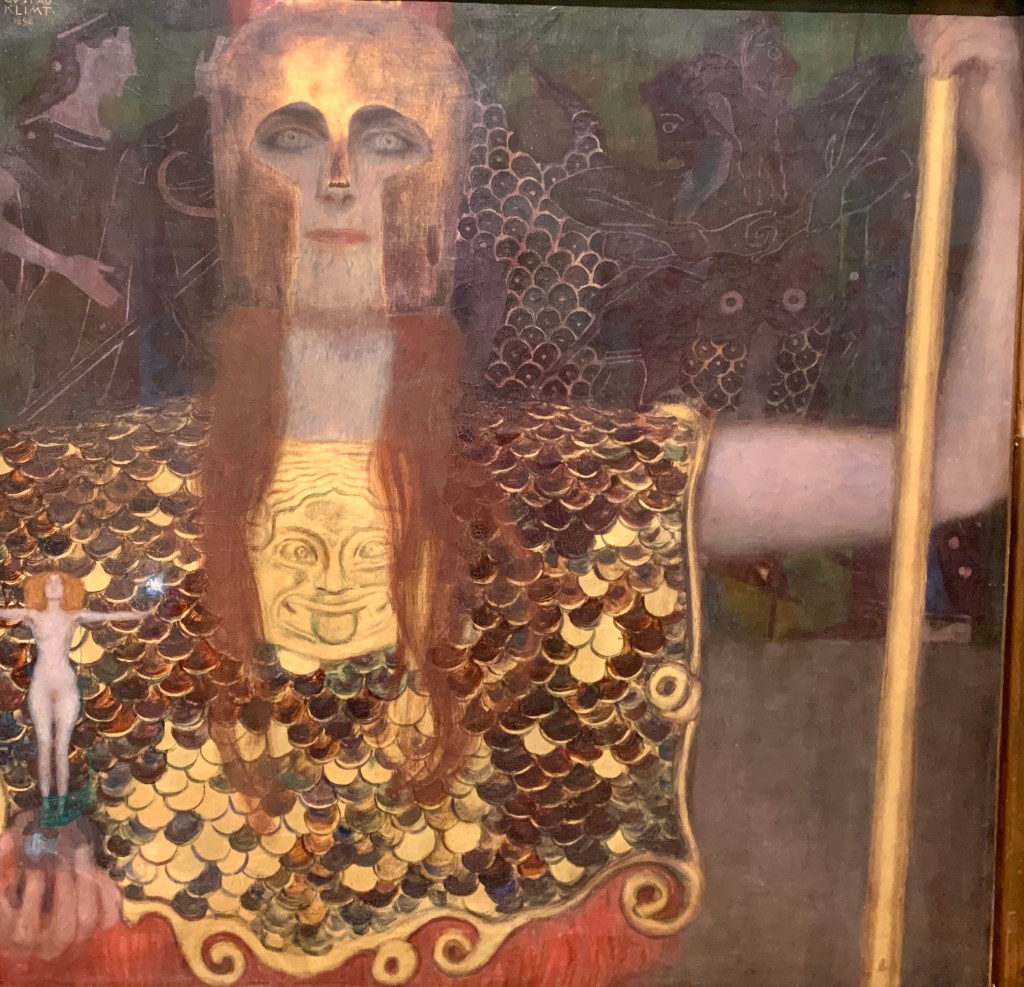
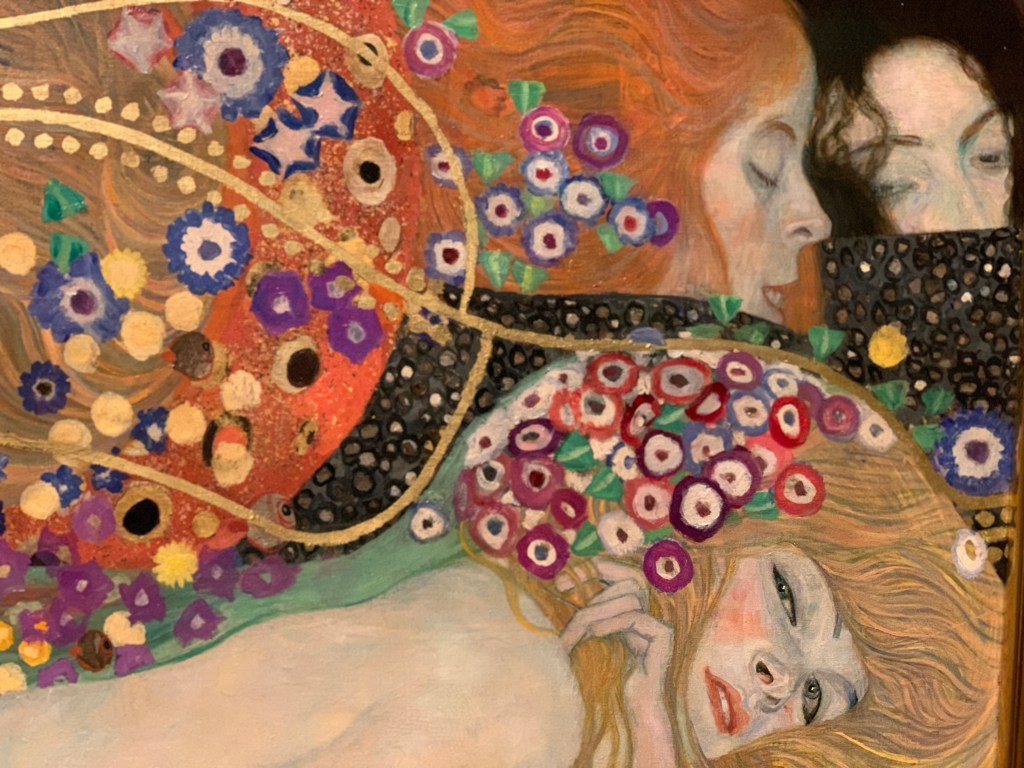
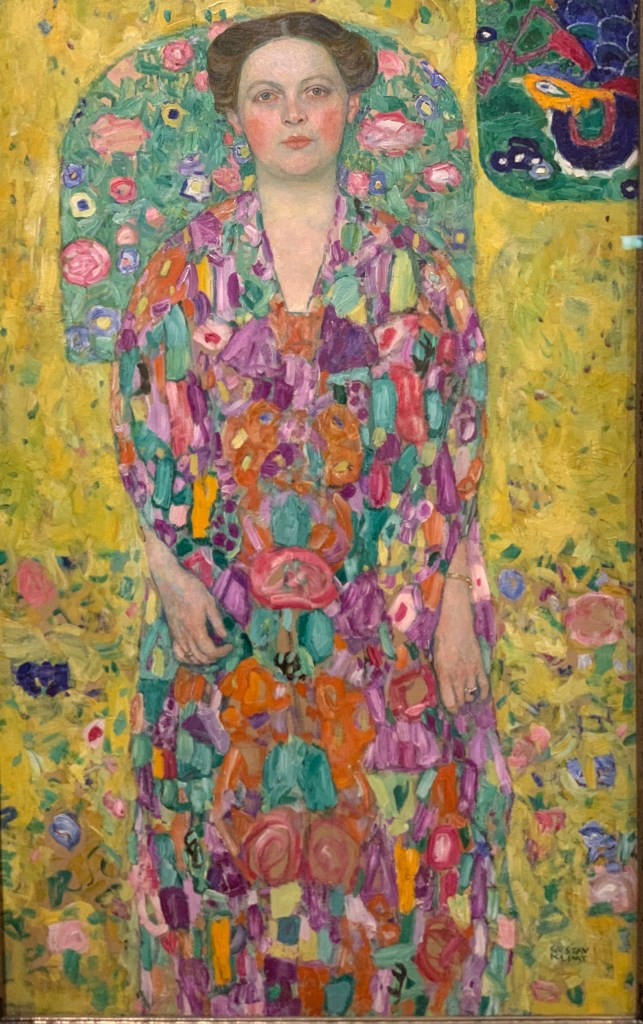
There are so many artworks to chose to accompany this post, here are some of my favourites.

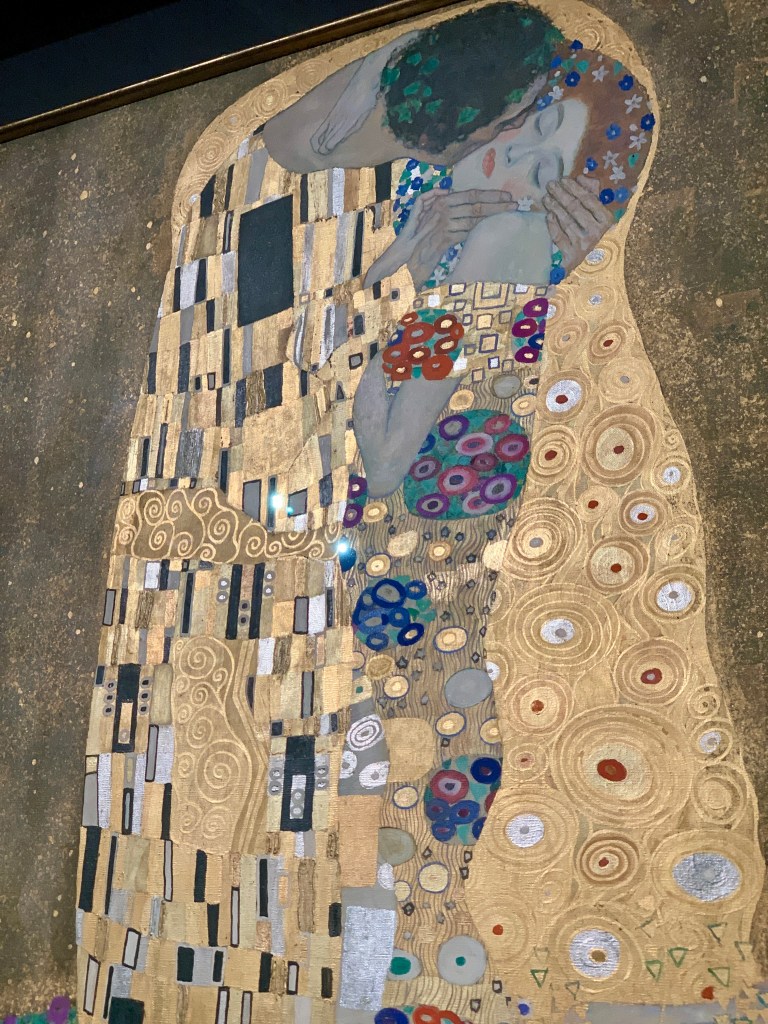
Gustav Klimt at the Belvedere

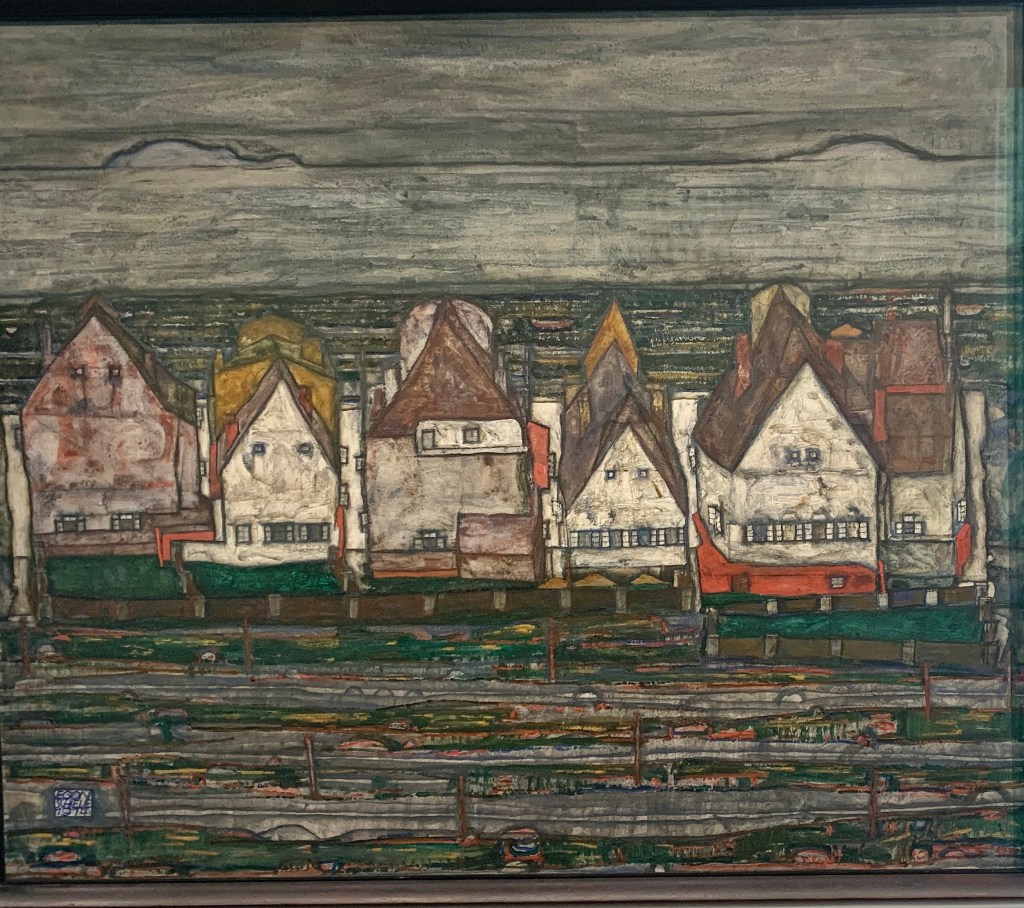
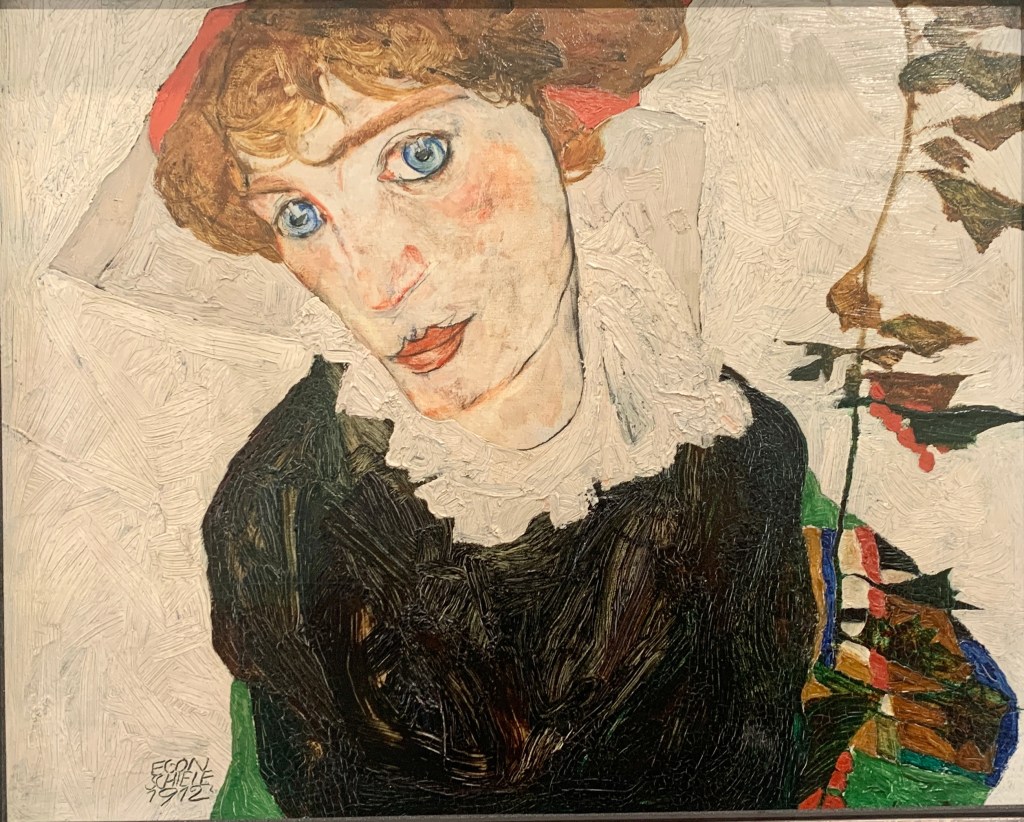
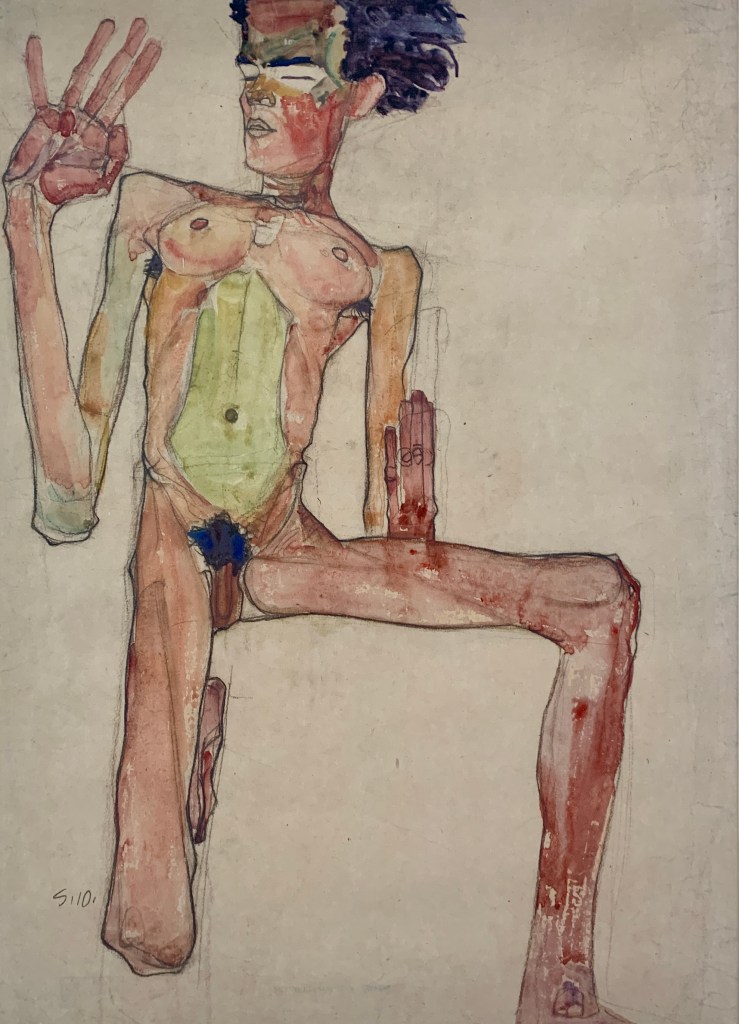
Egon Schiele at the Belvedere

The Belvedere has a great collection of Schiele’s works, some of which are below. However the museum I am going to tomorrow has the largest collection in the world, the Leopold. To say I am excited to go is an understatement!
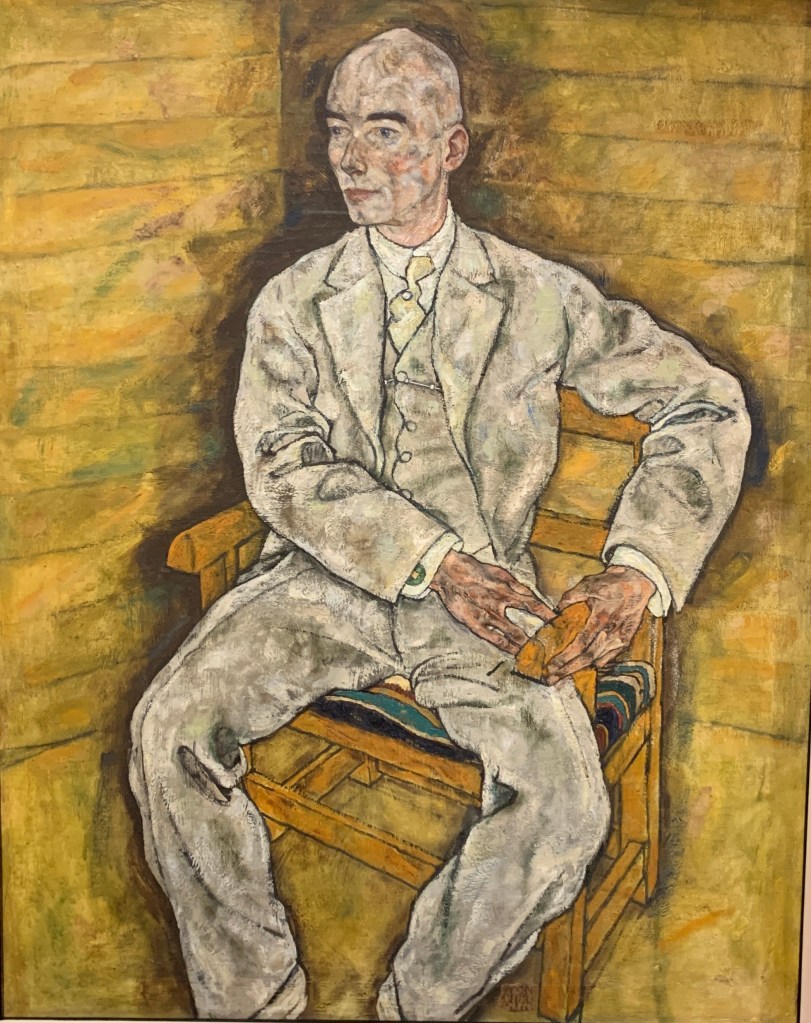
Victor Ritter Von Bauer, Egon Schiele, 1918
City on the blue river III, Egon Schiele, 1911
Mother with two children III, Egon Schiele, 1915
Portrait of Edith, 1918, Schiele
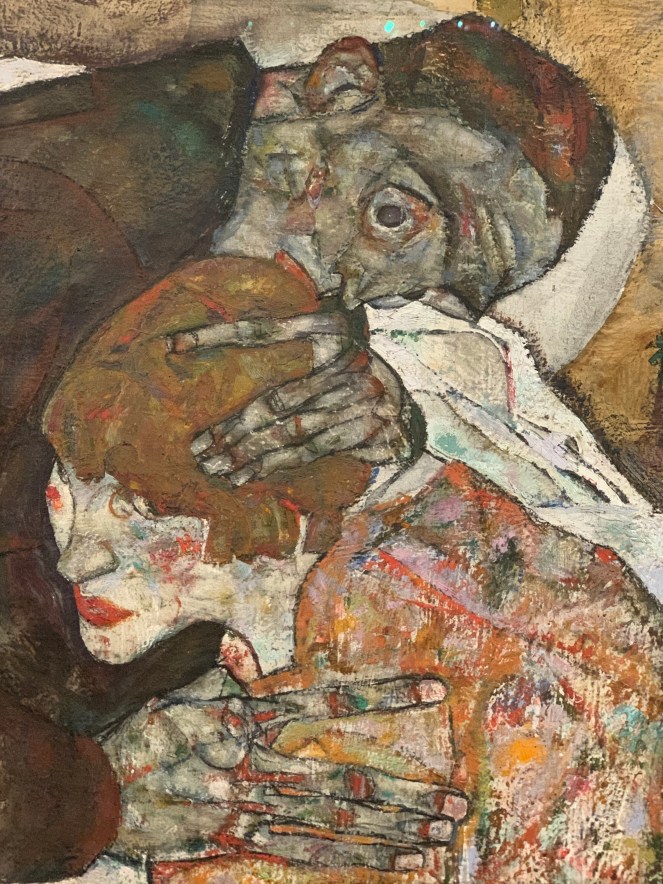
Death and Maiden, a painting
Death and Maiden, 1915, Egon Schiele

3 March 2023, The Leopold

The Leopold Museum was founded through a donation of a huge and significant private art collection and has become a leading gallery for Austrian art, especially that of Egon Schiele. The couple who collect the original artworks were Elizabeth and Rudolf Leopold. The museum opened in 2001. It is spread over about 4 floors, the permanent collection being on three of the floors. It is mainly late 19th and early 20th century Austrian art.

It’s a very modern building, has a nice cafe and a great shop. It costs about €15 to enter. I loved the collection, obviously the Schiele works I loved too! Schiele was a ground breaking artist, painting in a technique unique to him. He does not paint in a realistic manner.

Having read quotes from him, he was interested in painting the soul of the people he saw, the truth he saw of the Austrian landscapes and the objects around him. He was a contemporary of Klimt, though was about twenty years younger.

He met Klimt in 1907, and they both exhibited at the secession building, which I visited today also. Schiele finally made it big in 1918, with a successful show at the building. He finally felt he had risen out from under the shadow of Klimt. Tragedy then struck. His wife Edith, featured in many of his portraits, died of flu in 1918. Schiele also then died of flu just a few weeks later.

What could his career have become if he had survived? He was just 28 years old when he died.

Schiele landscapes
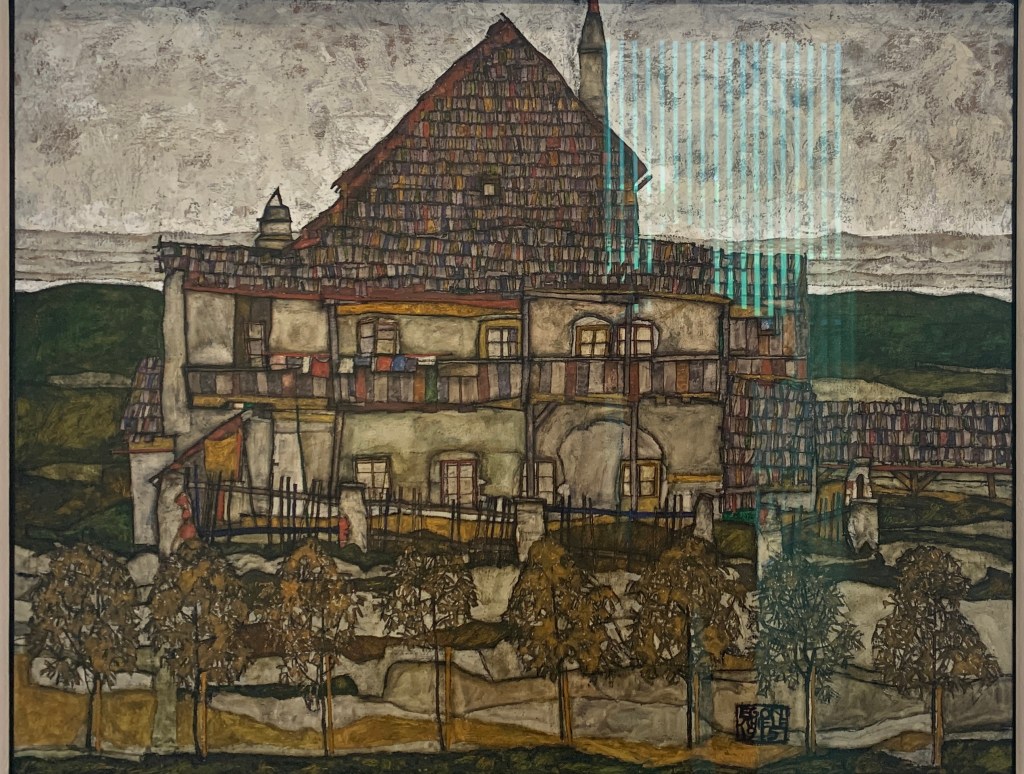
Schiele portraits

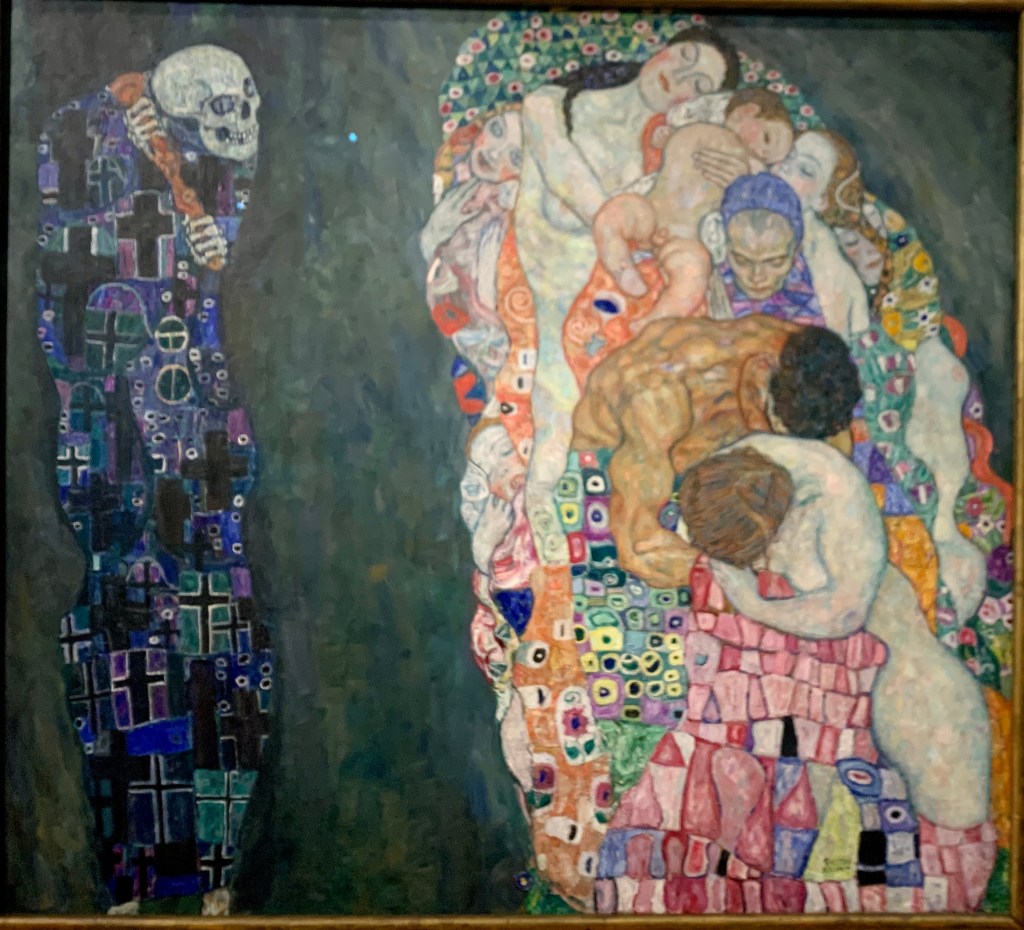
Klimt at the Leopold

The gallery also has some wonderful Klimt’s, including one of his masterpieces, ‘Death and Life’, 1910.
The Secession Building

I also visited the spiritual home of the Vienna secession movement. This black and white photo shows the original members, including Klimt, seated on the left.
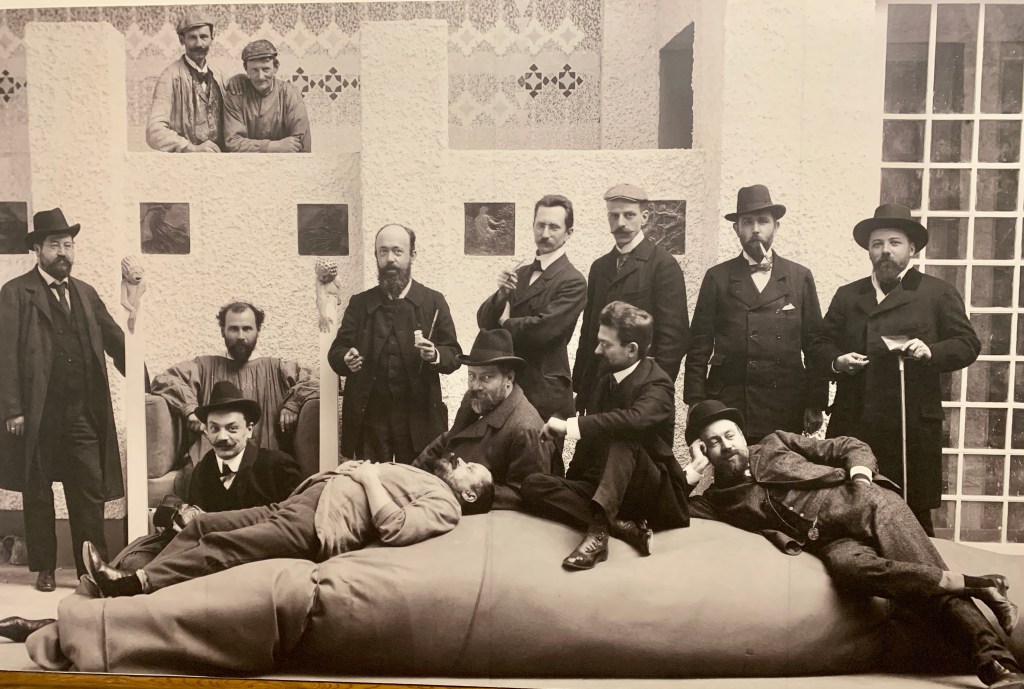
Artists of the Vienna Secession, including Klimt, seated

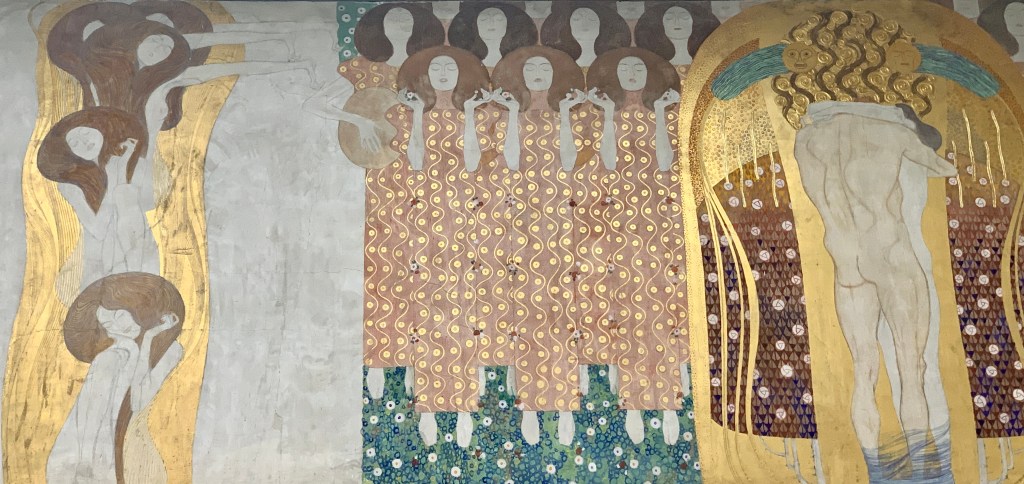
As mentioned, Klimt was a key figure, and he created a wonderful artwork on the walls of the building for the 1898 show that launched his career. The work is called the Beethoven Frieze. The building is a nouveau masterpiece with a wonderful golden crown on top of the building. It costs €12 to enter.

4 March 2023, the Kunsthistorisches Museum

My final day and I headed off to what I think translates in to the ‘art history museum’, You can find it in the ‘MQ’, the Museum Quarter, opposite the Natural History Museum. It is €21 entry.

The collection is vast so I did not attempt to see it all. The first floor has all the pictures. The ground floor is Egyptian and Roman artefacts plus lots of items from what I think was the Hapsburg Royal collection.

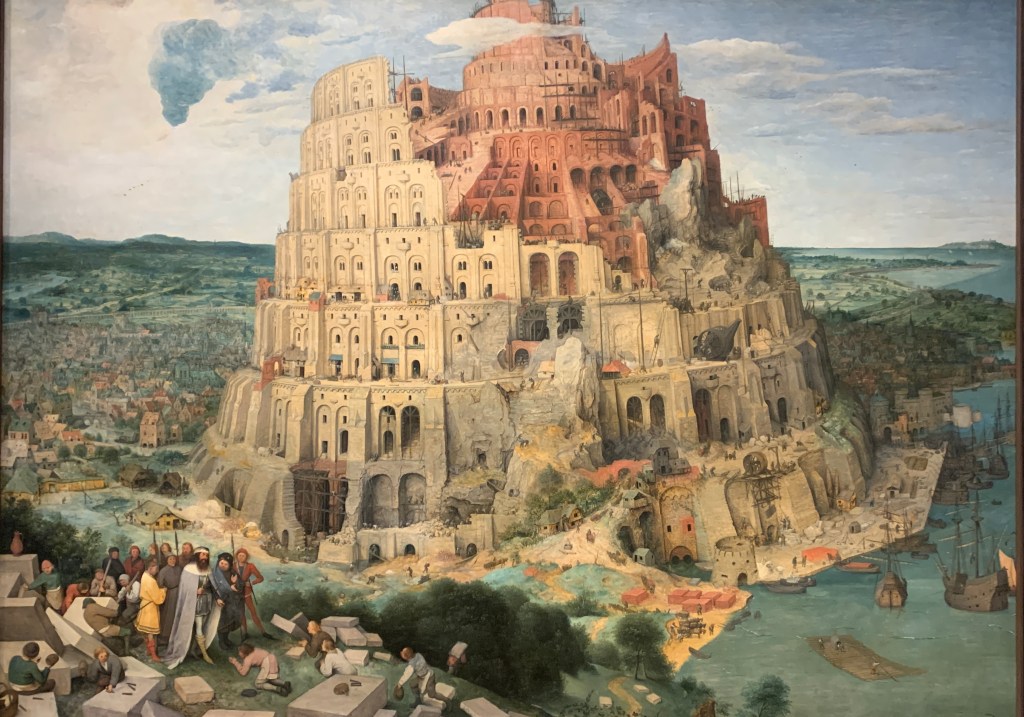
The art here is more ‘traditional’. Think Titian, Velasquez, Rubens. Some of the stars of the show are the paintings by Dutch artist Pieter Bruegel. He is famous for being one of the first artists to depict everyday people and everyday landscapes. One of his most famous works is largely credited as being the first painting to ever show a winter landscape. Some of his other famous works shown in the gallery depict peasants partying and celebrating and going about everyday life.

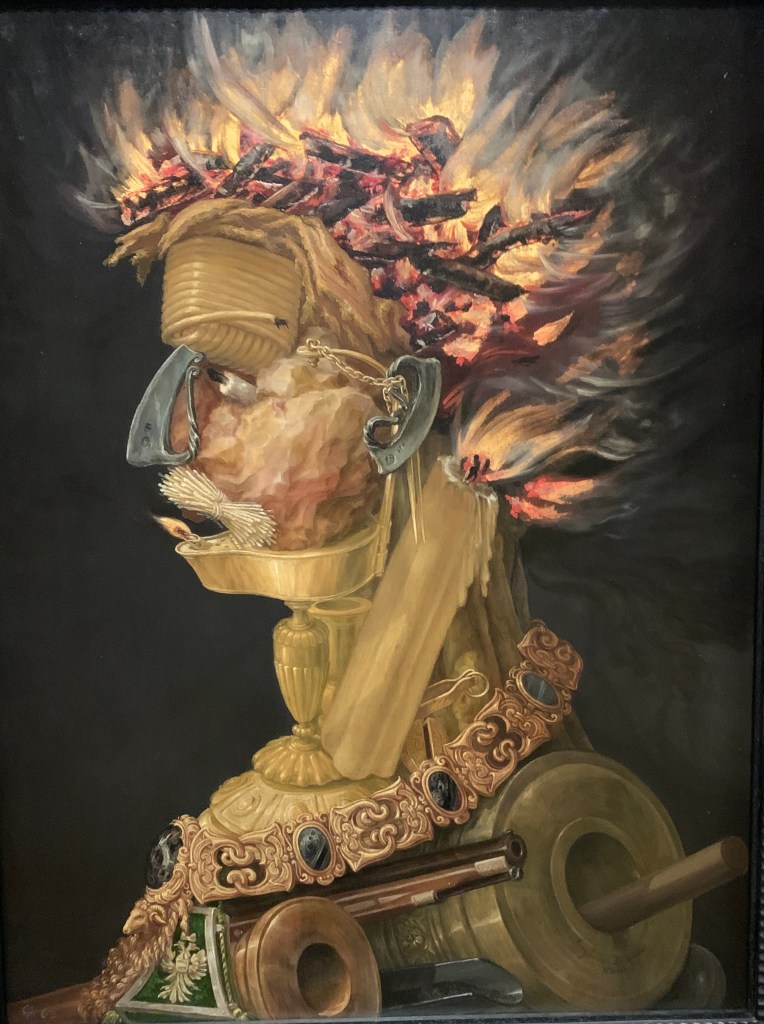
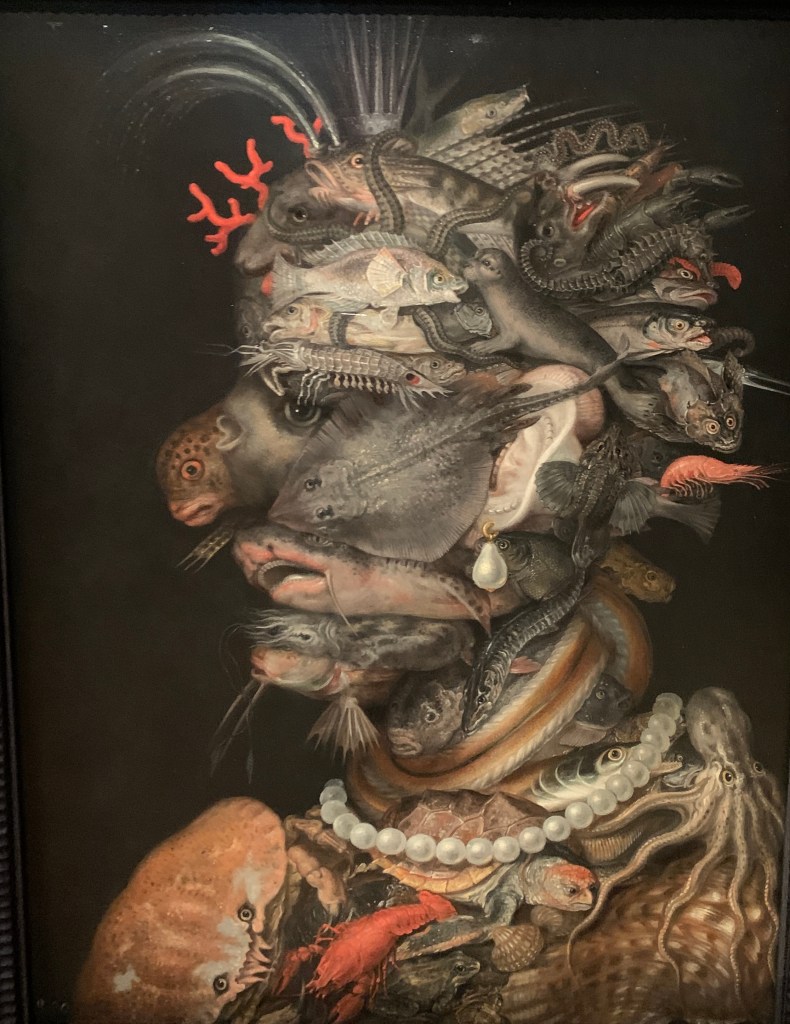
Another artist show here is Giuseppe Arcimboldo. Painting in 1563 he created 4 paintings showing the 4 seasons. However what is unusual is that he created 4 portraits of people showing the seasons using inanimate objects such as fruit, dead fish and guns! They really are fascinating and strange works of art.

The Roman and Egyptian collections are vast, lots of sarcophagi and statues. Whilst I enjoyed the gallery, it is not all to my taste, I prefer straight up painting!

Pieter Brugel
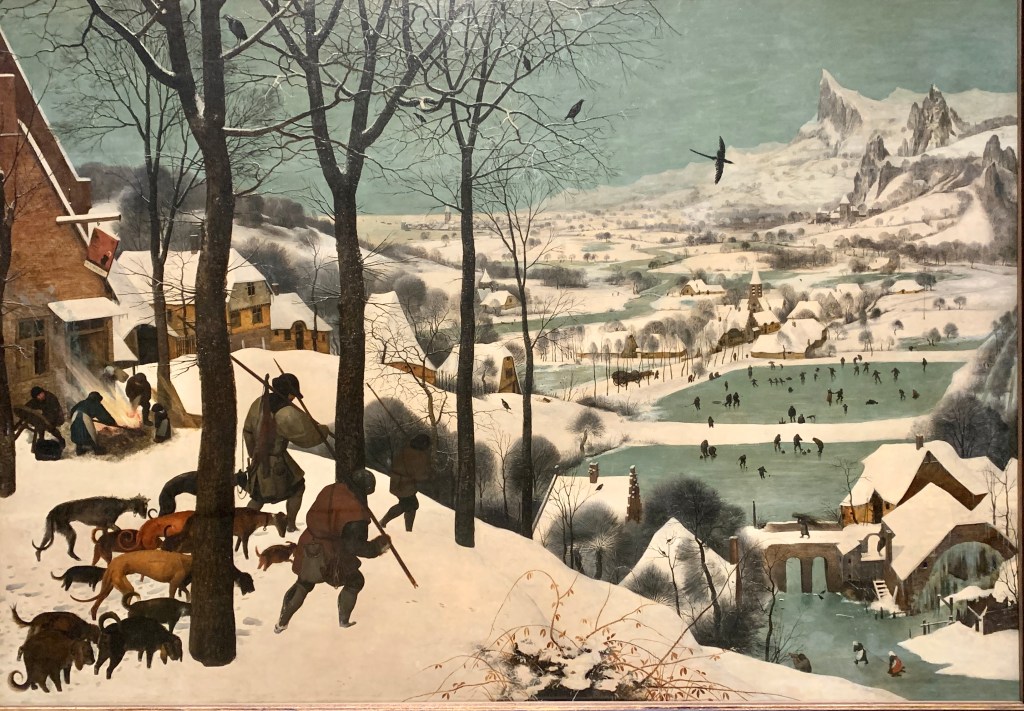
Hunters in the snow, 1565, Pieter Brugel
Peasant Dance, 1568, Pieter Brugel
The Tower of Babel, 1563, Pieter Bruegel

Giuseppe Arcimboldo

Egyptian artefacts

Japan · Tokyo · Travelling

Days 14 to 19 – Tokyo, Japan

Day 14 – Busan to Tokyo

On day 14 of my trip I said goodbye to Korea and headed over to the land of the rising sun – Japan. I had some amazing views of Busan as I took off, see my video. It isn’t very far to get to Japan from Korea, only two hours flight from Busan to Tokyo. I had to pick up my SIM card and rail pass which was pretty easy then I jumped onto a train into the heart of the biggest city in the world! And boy does it feel big!

I immediately felt a difference in the people. On the train there was none of that Korean shoving to get a seat. It was so much more orderly and respectful. I arrived into Tokyo station at rush hour with a large suitcase which was as much fun as you can imagine…! However there are so many rail lines it is actually pretty easy to get around.

First thing I did when I got to my hotel was laundry! I literally had nothing left to wear.

Day 15 – Finding my way around

I just checked and I walked 23,000 steps today and it is only 6pm! I decided to do some sightseeing today and book some of my onward tickets. I have booked a ticket up to the island of Hokkaido in the north next week which I am really looking forward to. I bought myself a ‘Suica’ card for the metro and set off exploring. A few dead ends to start with though, as the Museum of Western Art is closed the entire time I am here and the National Museum was insanely busy so I thought, no. I should’ve known better than to turn up at 12 noon. Going to have to do that another day.

Bonsai trees
Bonsai trees

I did walk around the gardens off the Japanese Imperial Palace which were lovely, and also the Gojo Tenjinsha, a shrine in Ueno Park surrounding the National Museum. I also stumbled across a display of flowering bonsai trees which were beautiful. I know keeping and pruning bonsai is a Japanese art form, the people looking at them were fascinated by the trees.

I then headed on the metro down to the Shibuya district, with the famous crazily-busy pedestrian crossing that seems to appear in loads of films. I tried to go to a conveyor belt sushi place for lunch but like everywhere else here it was crazy busy so I bought some cooked aduki bean rice and salad from a shop and headed to the park instead!

Golden temple door
Golden temple door

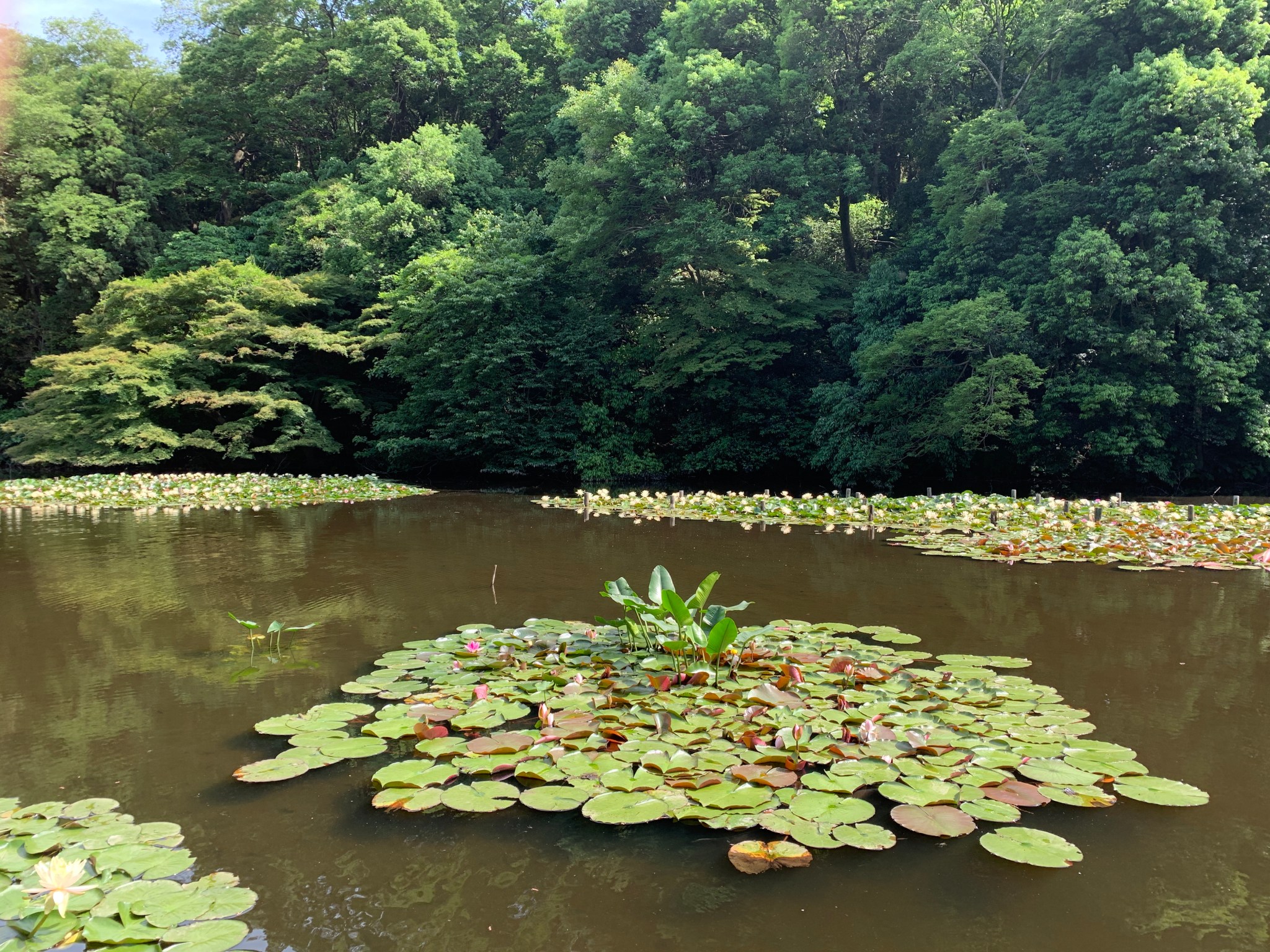
Veggie food here is certainly no picnic but it is a little better than Korea so far. In the afternoon I visited the forest park that contains the Meiji-Jingu shrine. There was also a beautiful garden with water lilies and irises so I decided to eat my lunch there in the relative peace. Tokyo is fun but you need to escape the noise sometimes.

Meiji-jingu Gyoen
Meiji-jingu Gyoen 

Finally I visited the famous Harajuku district. This is the area where all the trendy young things hang out and shop, so I was in good company. I went to a vintage shop and bought some sunglasses, as I lost both my pairs already!! It was a really interesting sight, seeing all the crazy outfits everyone was wearing, especially after the conservative nature of Korean young people.

Day 16 – Museums

Learning my lesson from yesterday, I headed out early to the National Museum of Tokyo. I was very glad I did, as for the first few galleries I had the place to myself. The museum is actually four galleries in one, with an entrance fee of about 600 yen which is about £5!

Second century Indian buddhas

The main gallery has artefacts from Japan including some amazing buddhas, masks and some wood prints images. Similar to Seoul Museum, it was incredibly well presented and laid out. I also went to the museum cafe and after explaining to the waitress that I don’t eat no meat, she found a special tofu burger meal I could have which was very kind of her, and delicious too! The other galleries focus on Asian art in general, with stunning Indian buddhas from the second and third centuries being my highlights. Overall I spent five hours there and it was fantastic.

Japanese masks
Japanese masks

In the evening I checked out the Akhihabra district, otherwise known as Electric Town. Well it was quite the assault on the senses. I looked round some of the game arcades, which were pretty funny, as they were packed with middle-aged businessmen playing retro games, presumably reclaiming their youth after a busy day in the office. The area is also full of ‘maid cafes’. Which is kinda what they are, lots of young women dressed as maids standing in the streets with menus trying to tempt (mainly men funnily enough…) into the cafes, where I think they put on performances and food comes in ‘kawaii’ style – cute. On the flyer I was given the highlight were teddy bear shaped omelettes!

Japanese anime
Japanese anime

 Day 17 – Closed, closed, closed

Well the lesson of the day is to check museum websites before you travel. I went to THREE art galleries all of which were closed. Closed. Closed. What were the chances I turn up when all three are closed to put together new exhibitions. After the weeping stopped, I headed over to the Roppongi district. There is a great art complex there called the National Centre for Art and there was a fabulous Austrian art exhibition on celebrating 150 years of diplomatic relations between Japan.

Now, I would not normally consider Austrian art to be high on my agenda, but boy was I wrong, it was fabulous. Gustav Klimt is probably the artist from the exhibition you are most likely to have heard of (‘The Kiss’) but the whole exhibition was very interesting, concentrating on the 19thC and early 20thC. I also discovered two fantastic new artists, Hans Makart and Egon Schiele. The painting below is ‘Sunflowers’ by Schiele and I love it! The most famous painting in the exhibition was ‘Portrait of Emilie Floge’ from 1902 by Klimt, another stunning painting.

Day 18 – Shinjuku, Harajuku and Asakusa

Today I decided to mop up a few of the remaining areas of Tokyo I had yet to visit. I started with Shinjuku. There is a beautiful garden there called Shinjuku Goyen, free to get in on a Sunday and the perfect place to lie down on the grass and do nothing!  Shinjuku is more famous for its nightlife, so I am heading out there tonight to see what it has to offer.

Shinjuku Garden, Tokyo

I then got the metro over to Harajuku, made famous by Gwen Stefani perhaps, Harajuku girls. Anyway, it is very trendy and hip. I visited the Kawaii (cute) monster cafe for lunch. Oh my. I guess it is more for kids but was fascinating anyway to experience it. The cafe itself is a crazy, neon, OTT visual experience, and the staff put on shows, complete with cute dancing monsters.

Monster Cafe, Tokyo
Monster Cafe, Tokyo

Finally I headed east over to Asakusa. This area contains the oldest temple in the city, Senso-Ji. As it was a weekend it was packed. It is very touristy, lots of things to buy, lots of street food stalls, but interesting nonetheless. It reminds me of what I saw in Korea, a less sanitised version of the city.

Senso-ji temple, Tokyo

Day 19 – Robots

My last day in Tokyo and I looked to the future. Literally. I visited the Museum of Science and Emerging Innovation in the Odaiba district. The best part was watching a demonstration by ASIMO, the resident football-playing and dancing robot! It was really interesting to see how human they had made it, and what it could do. ‘He’ could also jump on one leg! The museum had lots of interesting exhibitions, including using cells in medicine and space exploration, where you could look round one of the actual living pods used on the International Space Station.

Robots in the Museum of Science and Emerging Innovation

Nearby there was also a huge robot thing which my friend Dom reliably informs me is called Gundam, and it is based on some cartoon or something that was popular once. Anyway it was pretty impressive, and it looked like a transformer. Another oddity in the area included a replica of the Statue of Liberty (not full sized). The area also has fantastic views of the city, as all as of the ‘Rainbow bridge’.

I have really enjoyed Tokyo, everyone is so friendly and welcoming and willing to try and speak with you. This goes for everyone who works for the rail system, anyone in a cafe or restaurant, anyone who works in a shopping centre, a 7/11 store, you name it. It definitely is the friendliest and politest country I have ever visited. The most efficient too!

Tomorrow I have my first experience of the Shinkansen trains (bullet trains). I am travelling five hours up to Hokkaido in the far north of Japan. I can’t wait!