The city of Pasadena, east of Los Angeles is blessed with three world class art museums, and I journeyed here to visit all of them!
The USC Pacific Asian Art Museum in Pasadena
The USC Pacific is in what I think is known as the old town of Pasadena. The collection is housed in a revivalist Chinese style building which is a fantastic backdrop to the collection.
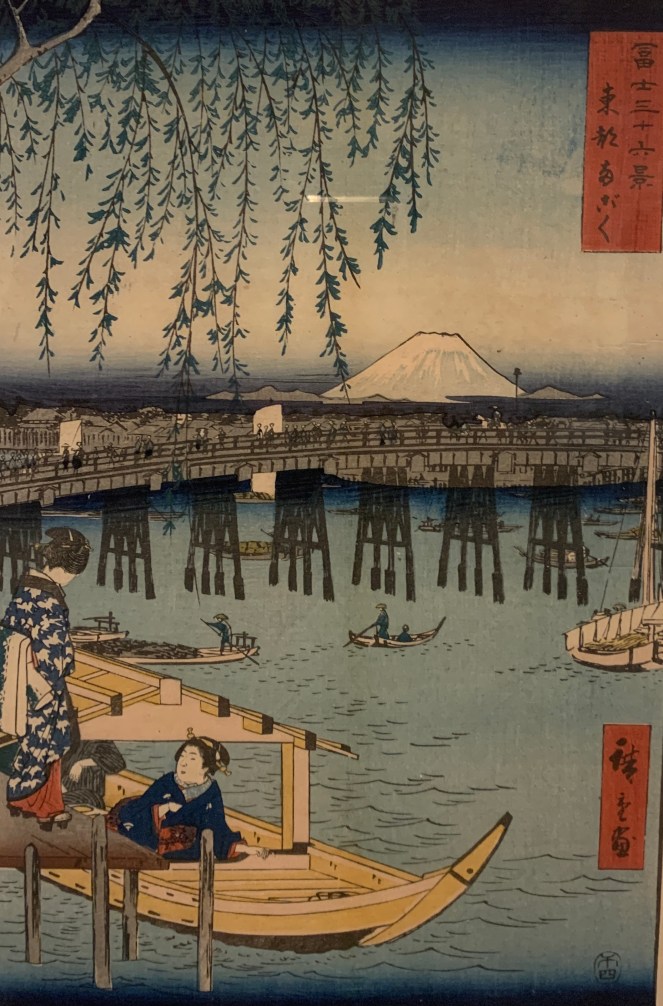
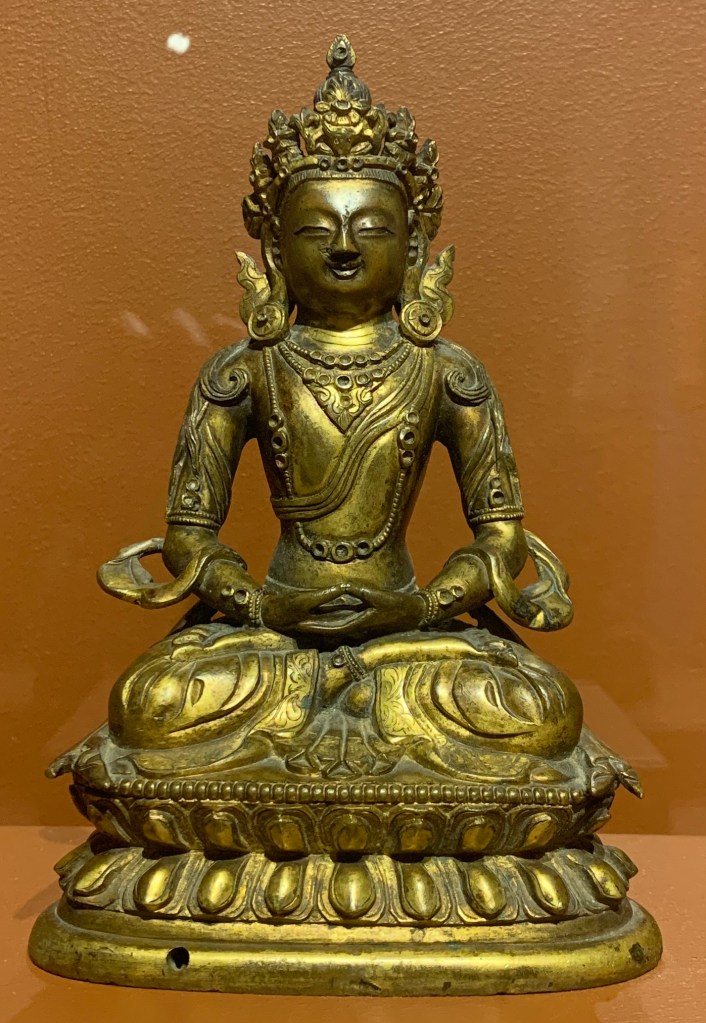
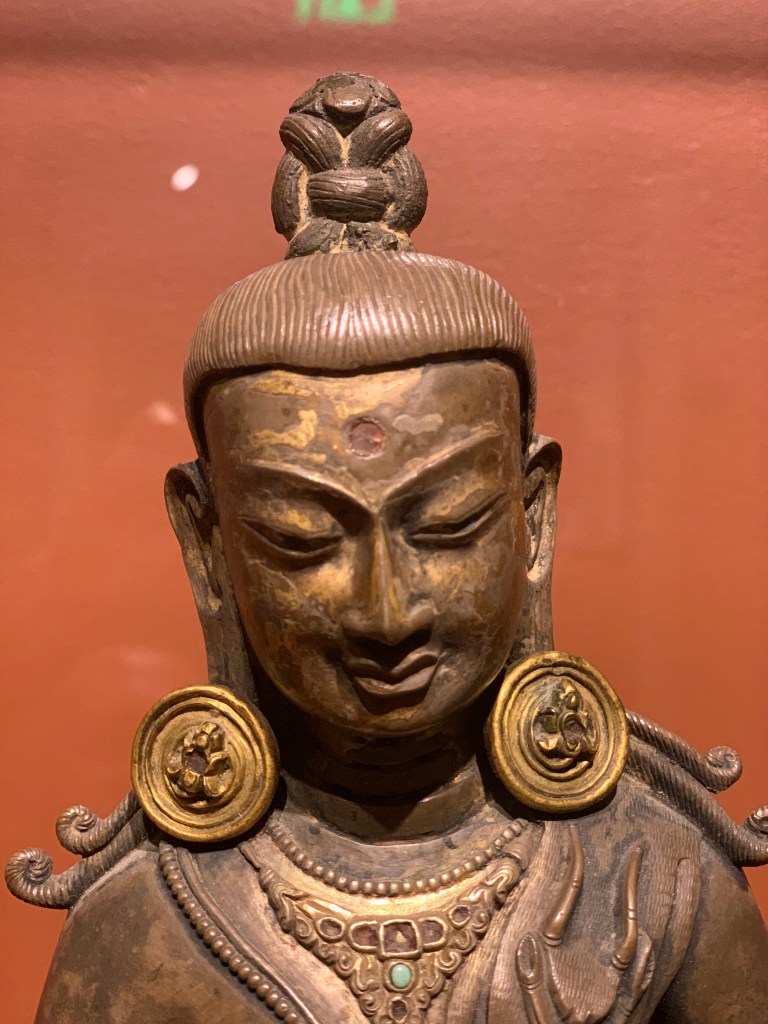
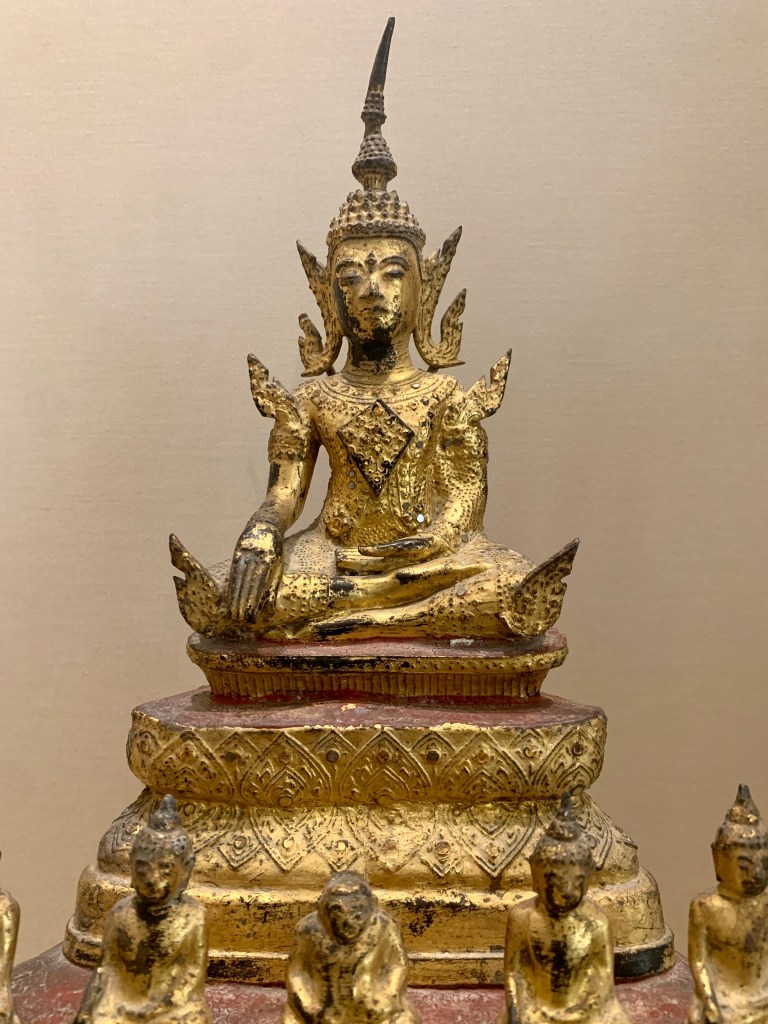
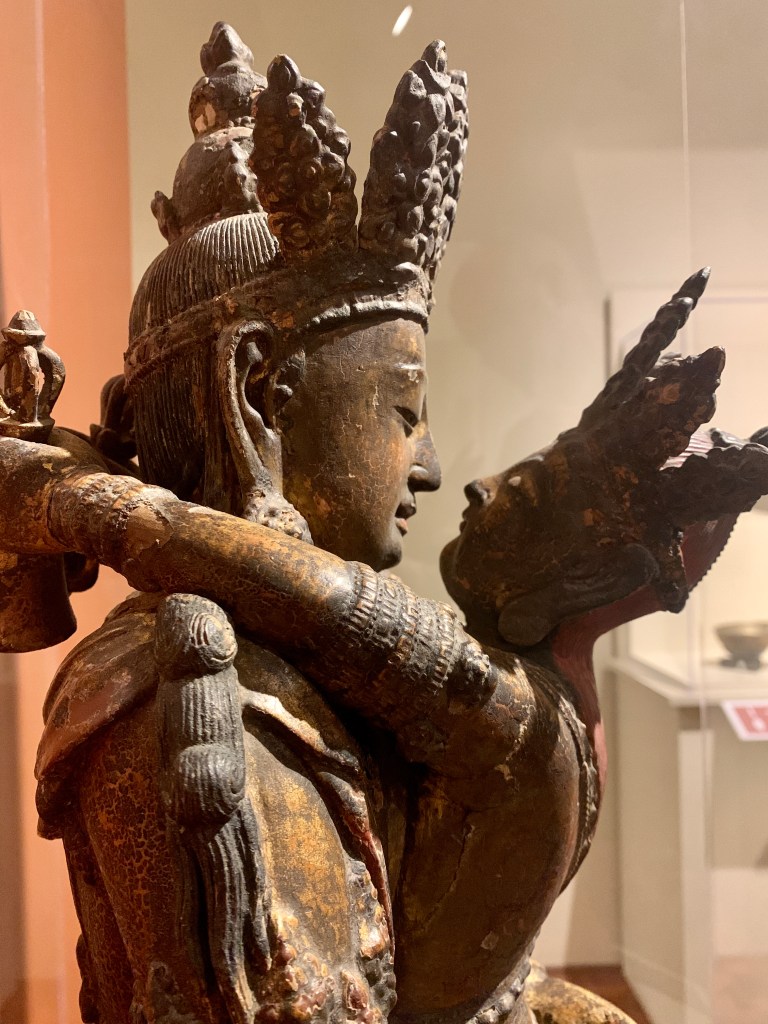
The highlight were the buddhas and bodhisattvas. A beautiful collection, from all over Asia. They also have some of the 19th century Mount Fuji series of pictures by the Japanese’s artist Hiroshige.
The gallery is not huge, I would say 90 minutes would allow you to see everything. There is a beautiful courtyard in the middle, and the cafe sells nice objects, lots of Asian gifts.
I visited on a Thursday and it was pay-as-you-like.
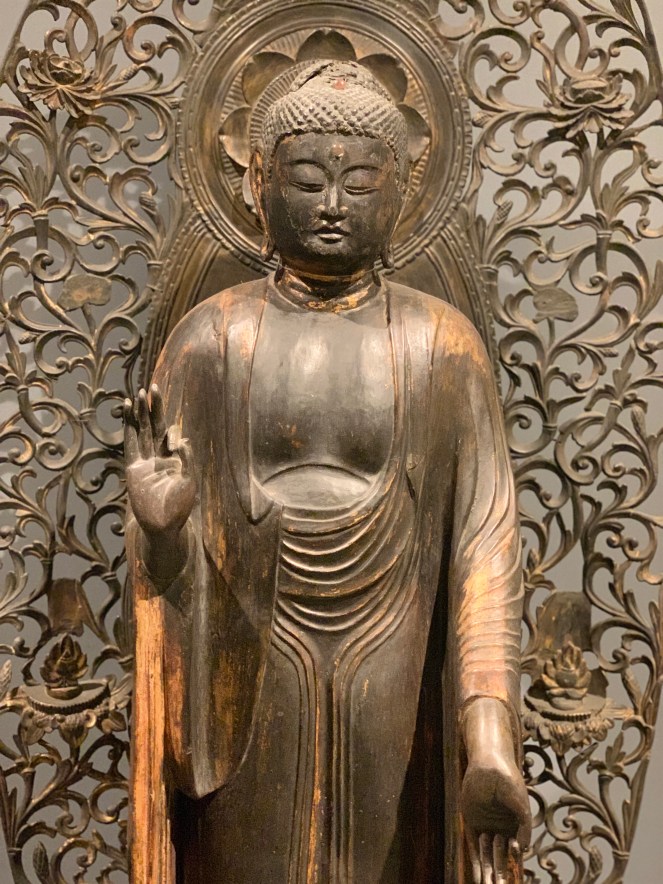
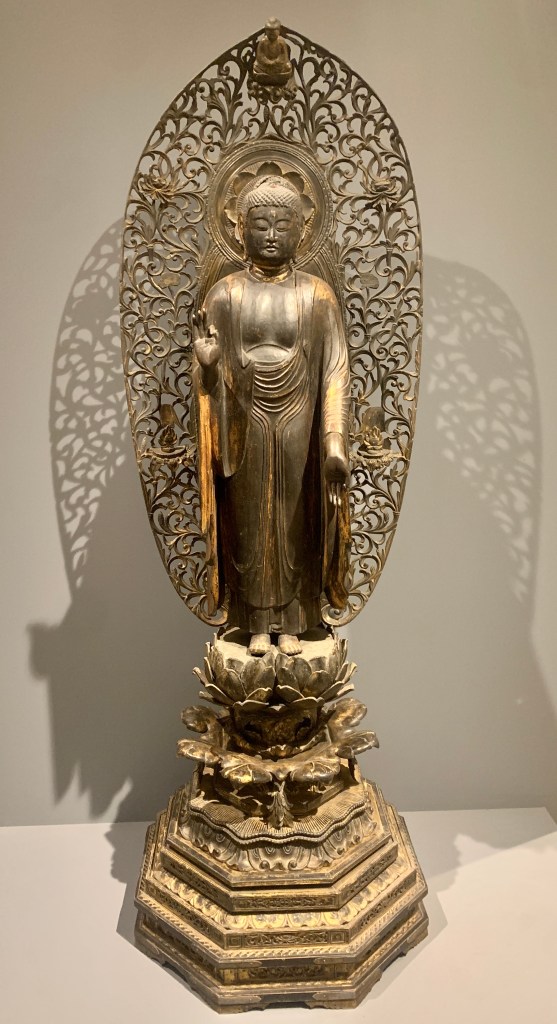
Fuji seen across Edo from the Ryoguku Bridge 19th Century, HiroshigeClose up of Japanese buddhaAmitabha buddha, Japan, 1185 to 1333A bodhisattva from TibetHead of a bodhisattva from TibetAmoghasiddhi buddha, Tibet, 13th centuryEnthroned buddha, Thailand, mid 19th centuryEmbracing bodhisattvas
The Norton Simon Museum in Pasadena
This impressive gallery has 16th, 17th, 18th, 19th & 20th century western art, as well a superb South East Asian art collection, occupying the entire ground floor.
It costs 20 dollars to enter and it is well worth it. Impressive modern building with great natural light and exhibition spaces. There are 5 galleries, one for each century and the 5th is the SE Asian gallery.
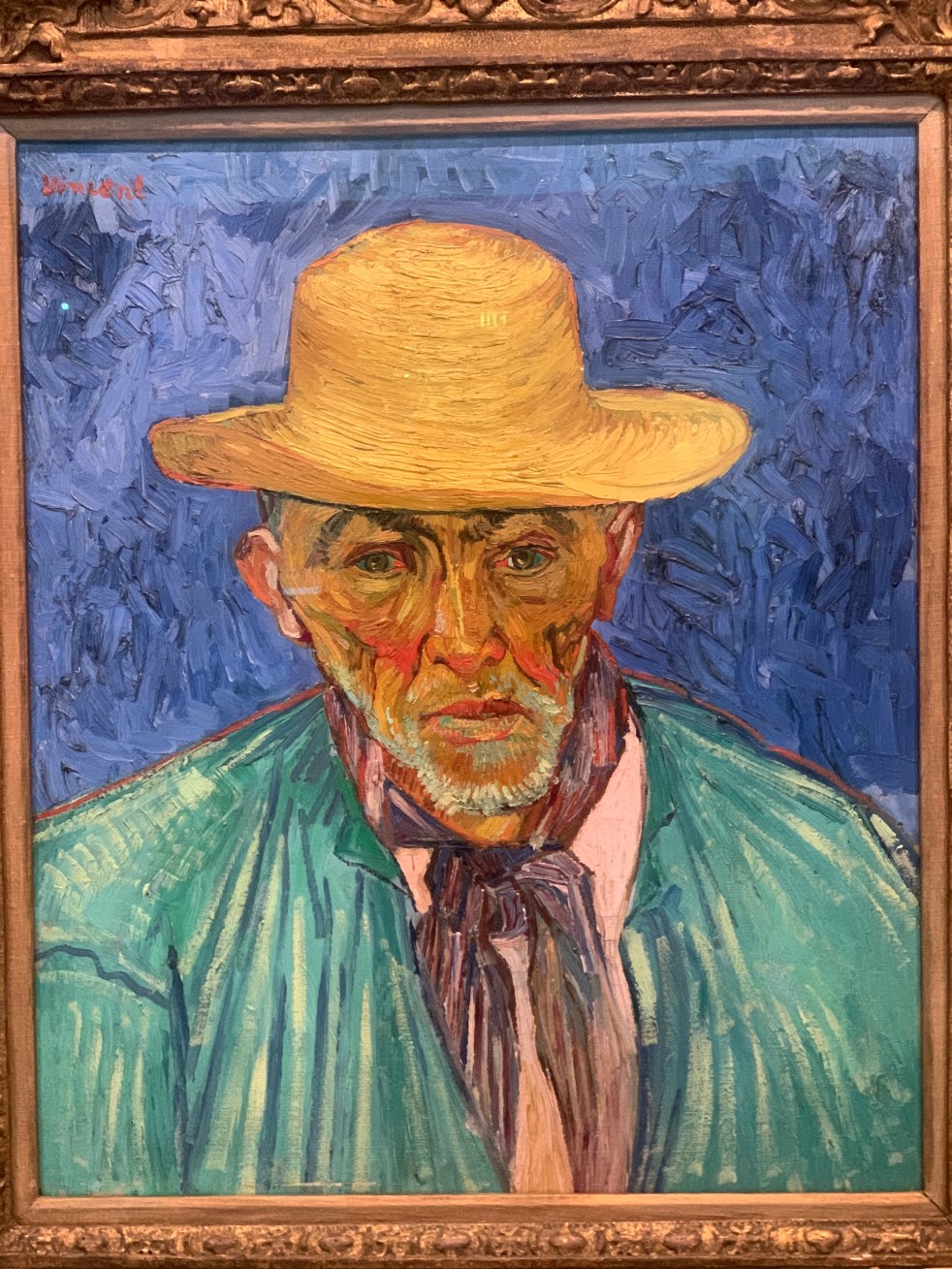
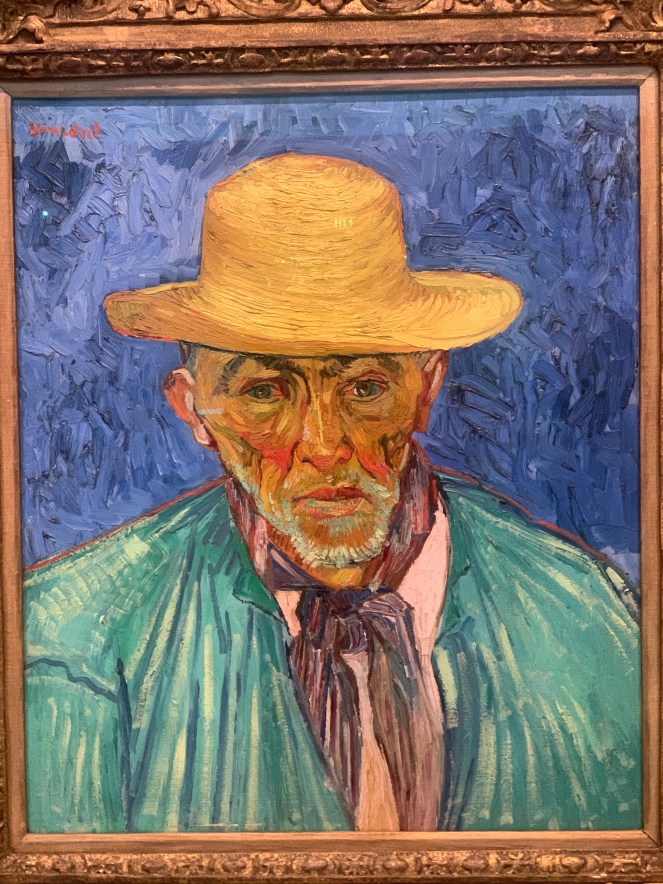
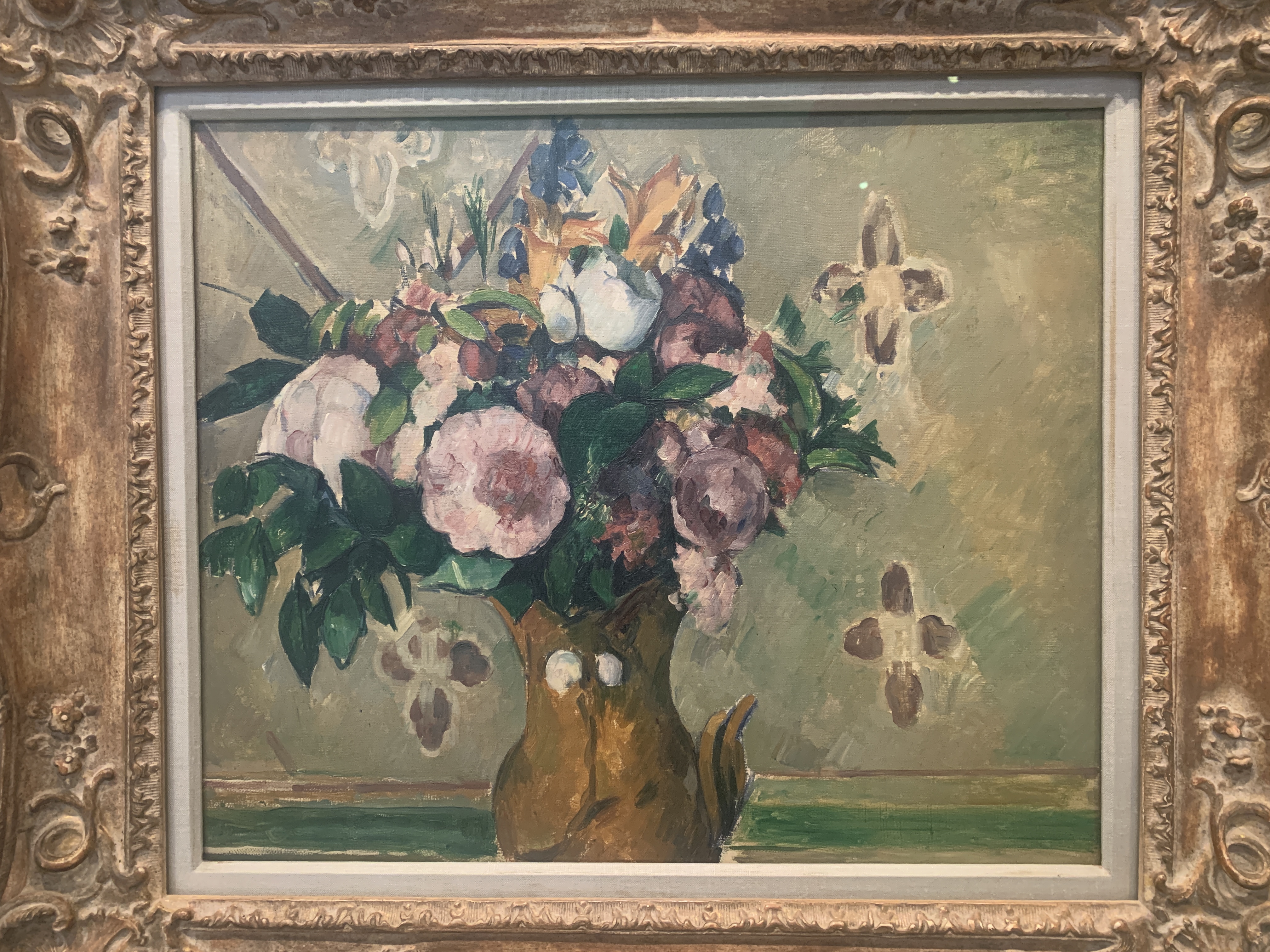
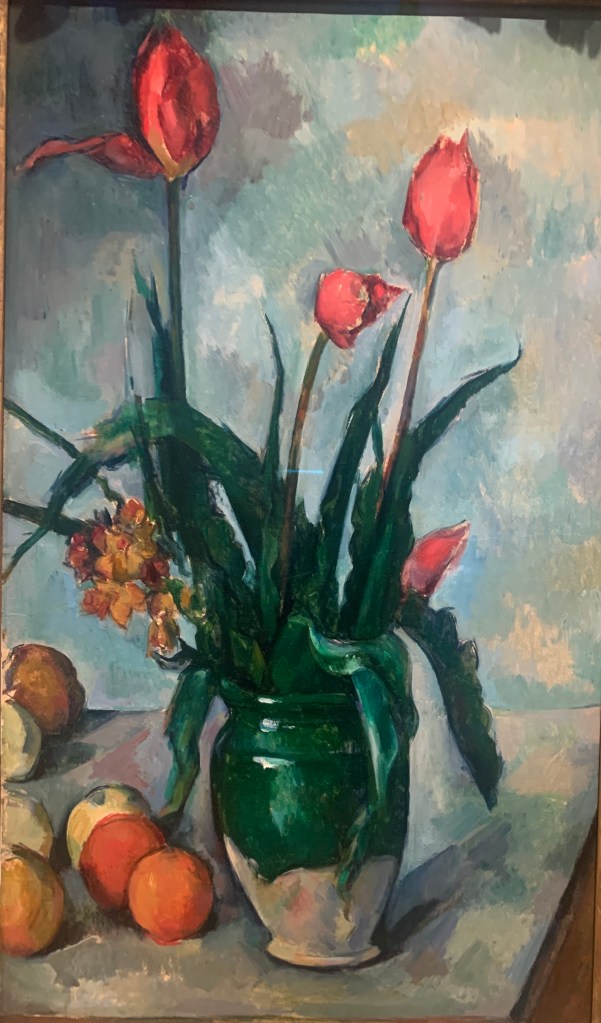
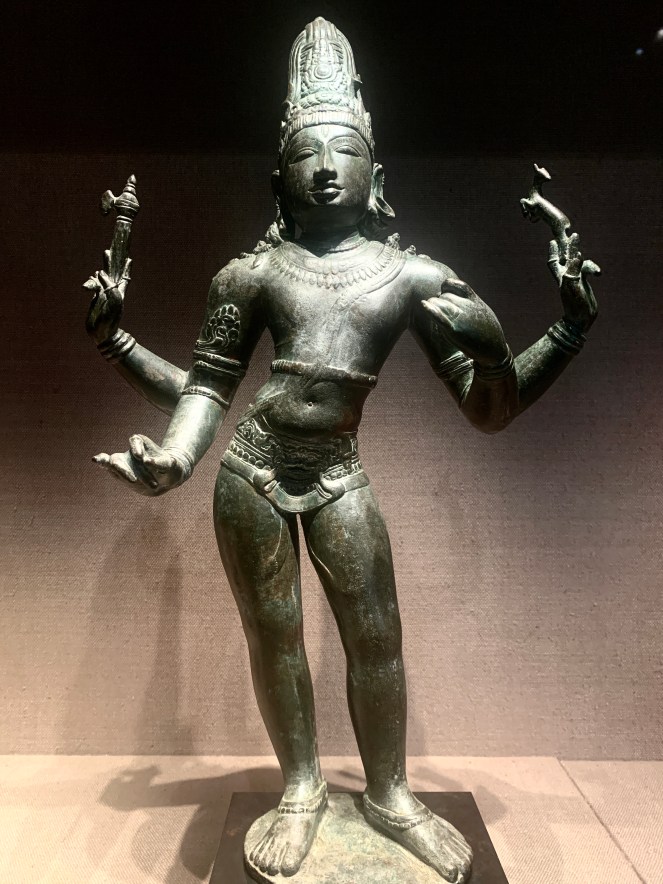
The 19th and 20th century collections are my favourite. They have some wonderful Cezannes and Van Goghs. The SE Asian floor is amazing, I have rarely seen so many excellent buddhas and bodhisattvas, from countries including Japan, Thailand, Tibet and India. There were few people in this gallery so I felt I had the place to myself!
There is a lovely little outdoor cafe with tables overlooking the central garden. The garden is full of sculptures too, including lots by Henry Moore and some very old Asian statues in a separate garden area connected to the Asian gallery. Parking is easy and free.
All in all this a 5* world class gallery. In my guide to California it does not even get a mention! Outrageous!
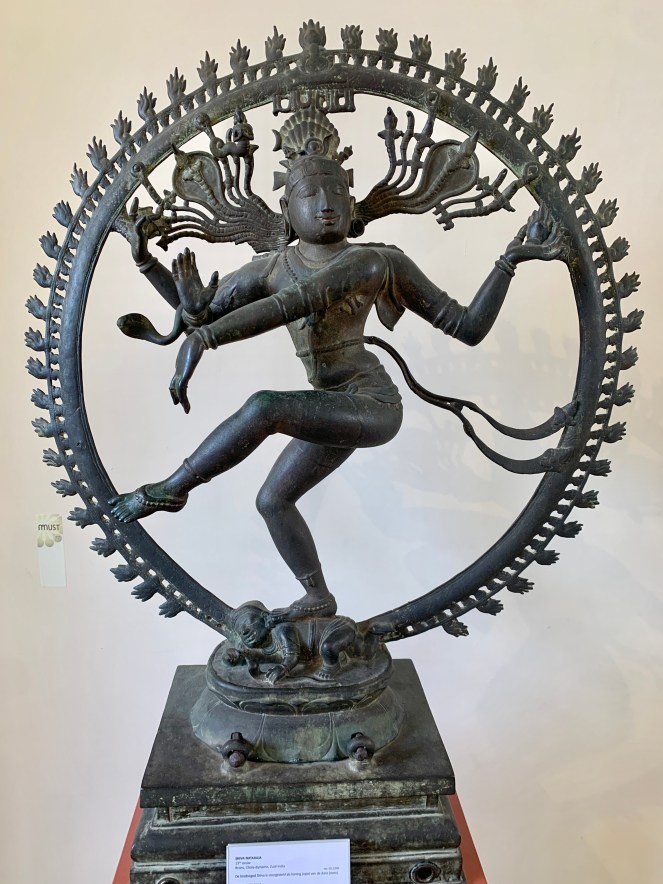
Gardens of the Norton Simon Museum in PasadenaThree paintings in the Norton Simon collection, from left to right Cezanne, Van Gogh, CezannePortrait of a peasant, Vincent Van Gogh, 1888 Brittany landscape by Emile Barnard, 1888Farmhouse and chestnut trees, Cezanne, 1884Vase of flowers, Cezanne, 1880Tulips in a vase, Cezanne, 1888In a villa by the seaside, Berthe Morisot, 1874Woman with a book, Picasso, 1932Vishnu, West Bengal, 1100ADVishnu, Uttar Pradesh, India, 1100ADParvati & Shiva, Tamil Nadu, India, 1000ADShiva, Tamil Nadu, India, 1150ADThree carved bodhisatvas, including Ganensha
The Huntington Gallery, Library and Gardens
What an amazing place to end my trip to Pasadena. A glorious combination of art and nature.
It costs about ¢29 to enter but it is worth. It is located actually in the small town of San Marino, so technically not Pasadena. There are two separate buildings for both American and European art.
The European gallery
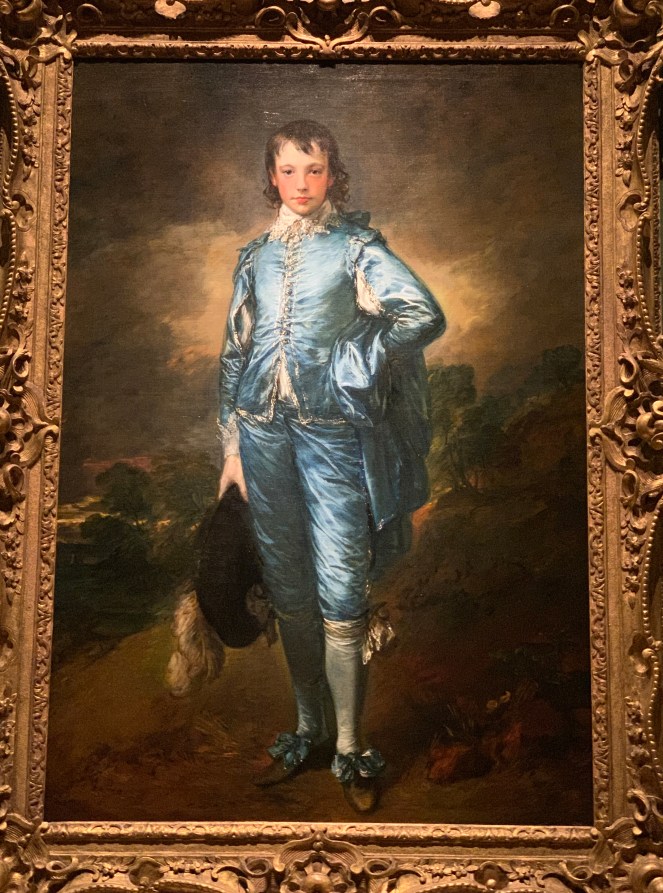
The star of the European gallery is ‘The Blue Boy’ by Thomas Gainsborough.
I have never seen this painting before and it really does live up to the hype, a very striking portrait. The European gallery also has some lovely early religious paintings from the 1400s. It also has many paintings by Antony Van Dyke, Constable and Turner.
View of The Stour at Dedham, by Constable, 1822The Grand Canal, JMW Turner, 1836The Blue Boy by Thomas Gainsborough, 1770Three panels from an alterpiece, 1470sDetail from ‘Saint Ausanns’, 1470sVase of flower with lemon, Duncan Grant, 1913
The American gallery
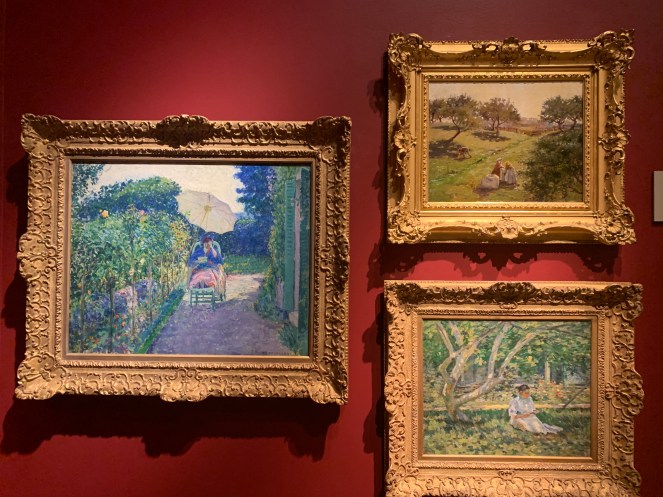
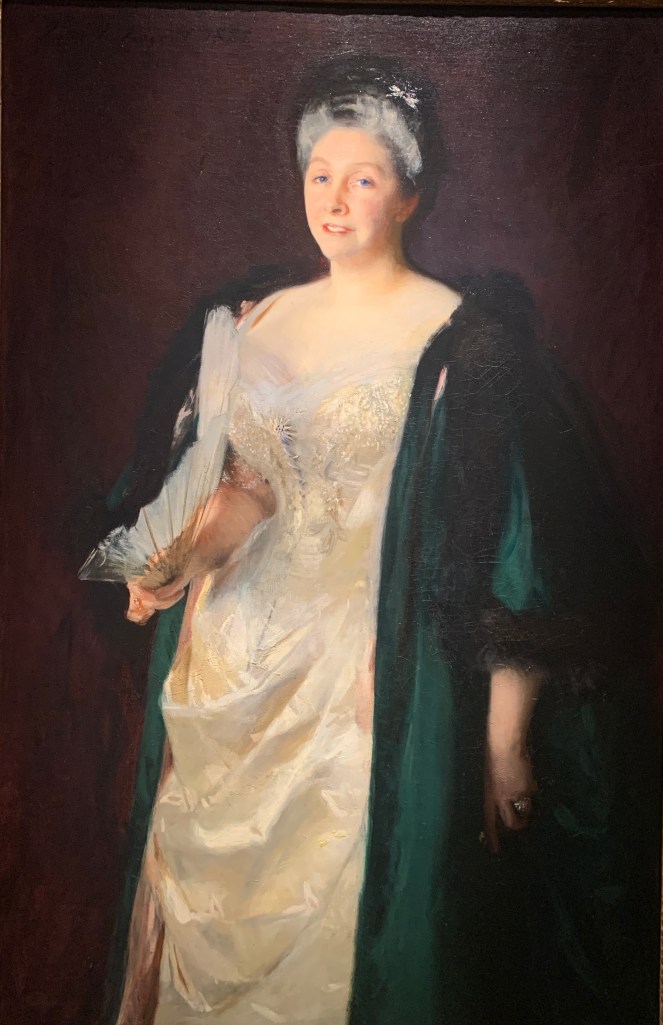
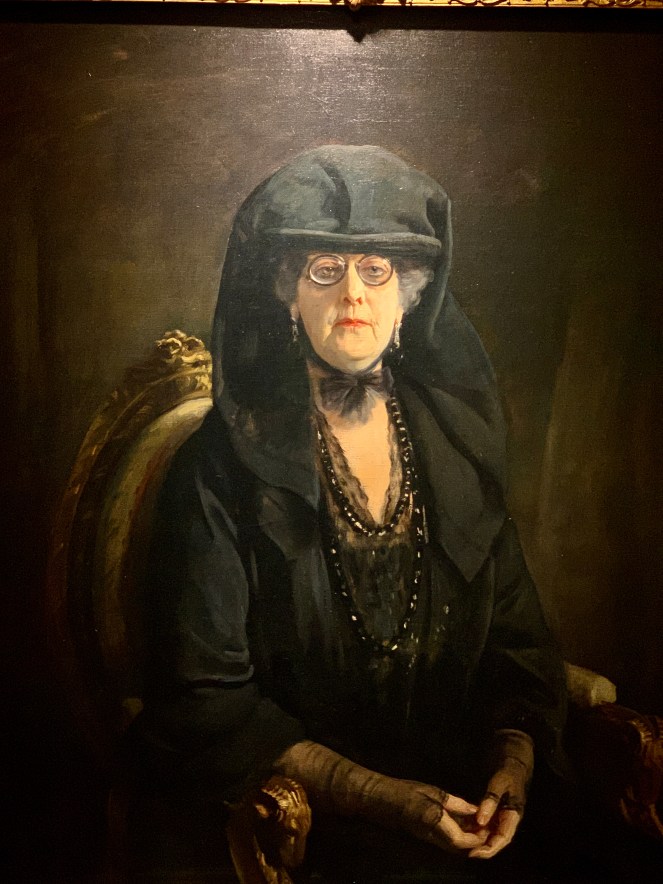
I really enjoyed the American gallery too. There was a great John Singer Sargent, and paintings by Mary Cassatt, William Merritt Chase and many other artists I have not heard of.
The Inner Studio, Tenth Street, by William Merritt Chase, 1882Woman seated in a garden, by Frederick Carl Frieseke (left), ‘Apple Orchard’ by Luther Emerson Van Gorder (top), ‘Nettie reading’, Theodore Robinson (bottom)Mrs William Playfair by John Singer Sargent, 1887Portrait of Arabella Huntingdon, by Oswald Birley‘Aster, Mullein, Bugloss, Bergamot’, by Dawson Dawson-Watson, 1903
The gardens
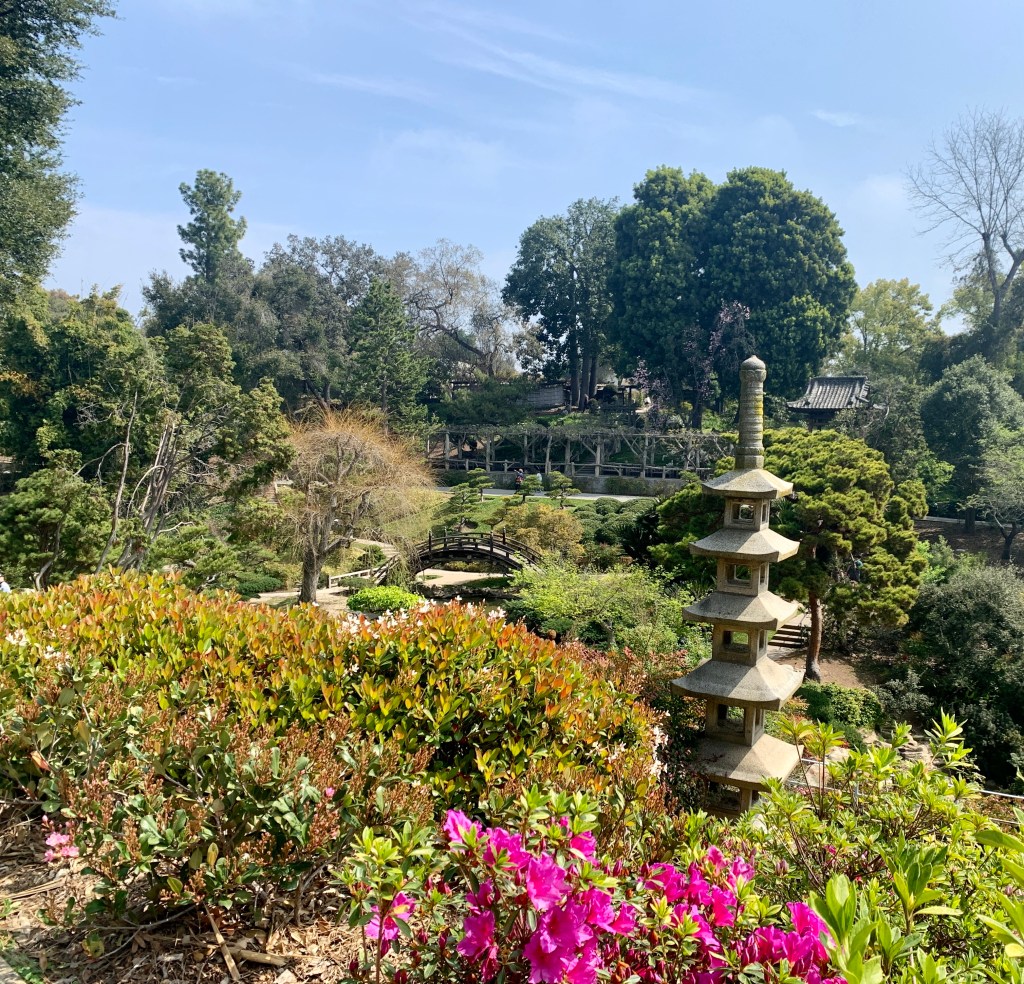
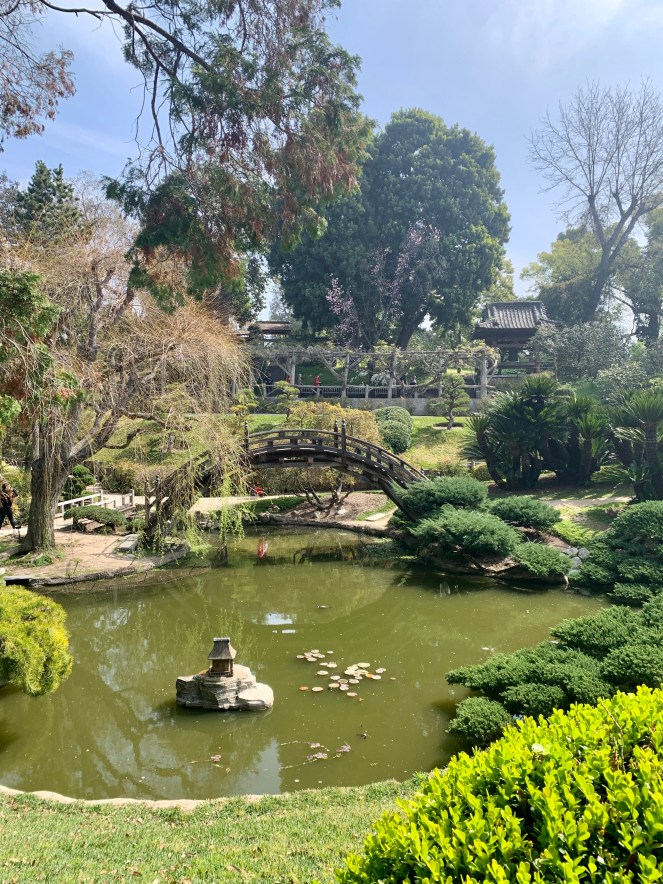
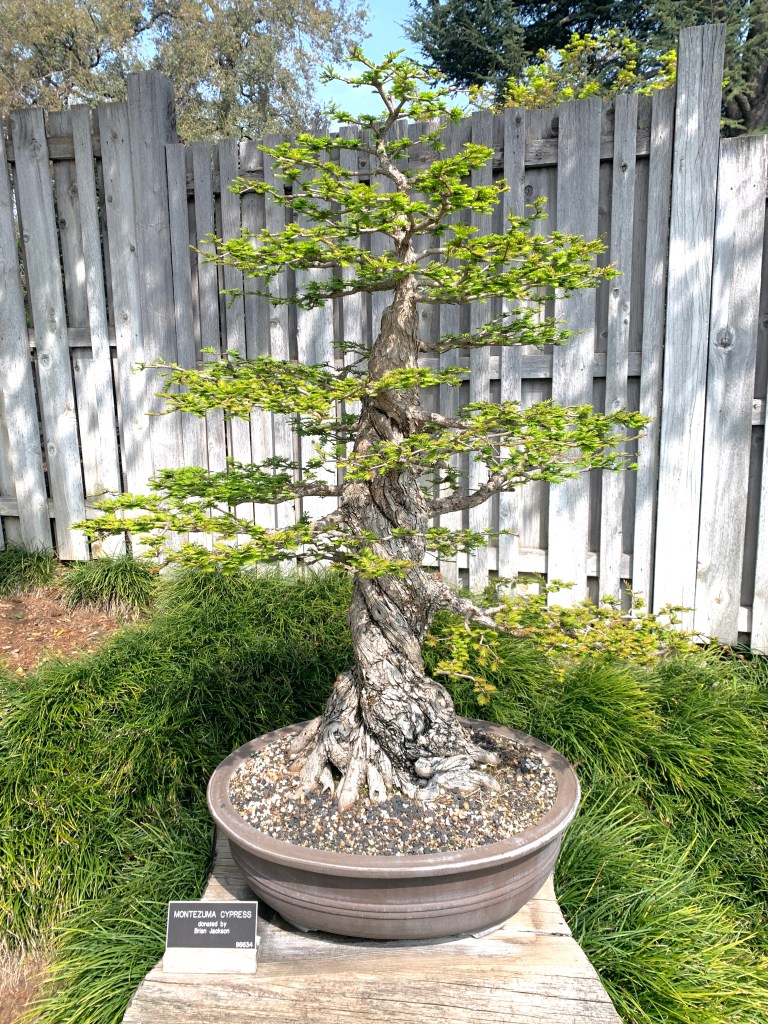
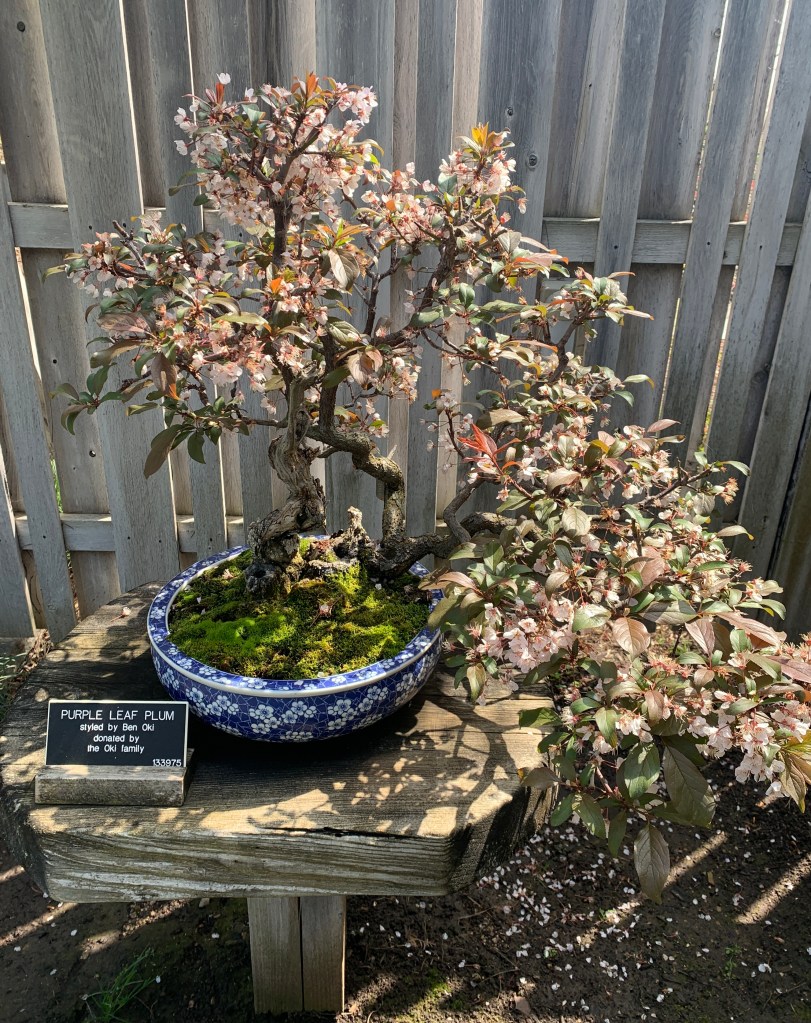
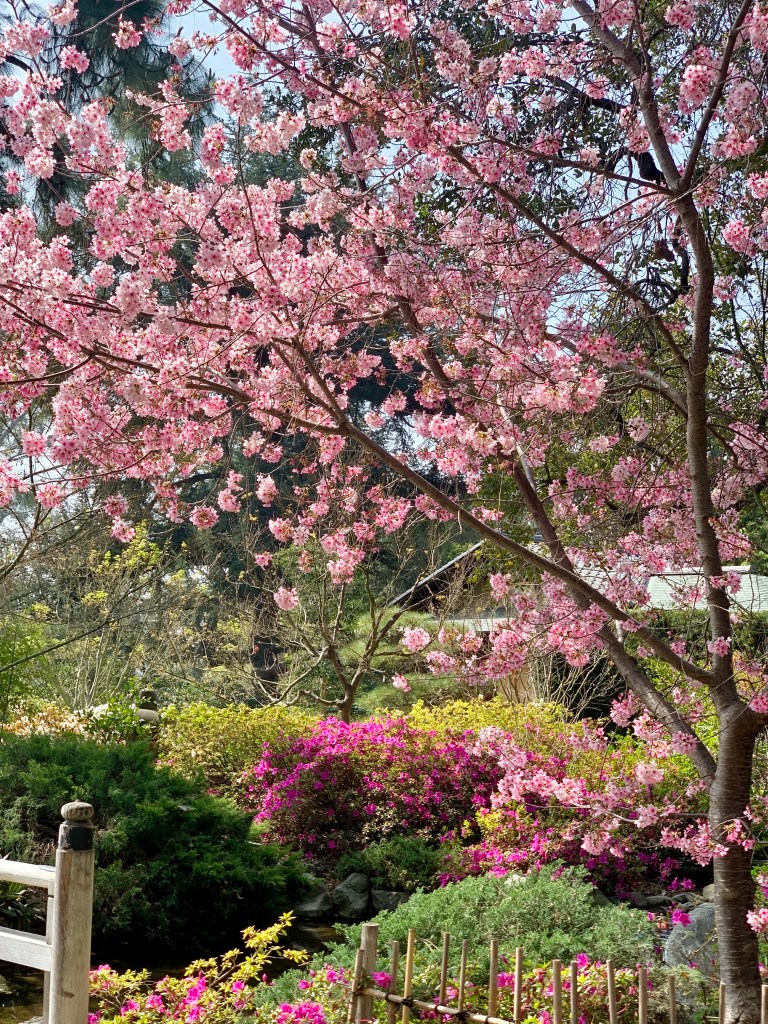
There are various gardens to look round including a Chinese, Japanese sub-tropical, desert and Australian garden. The grounds are huge! My favourite was the Japanese garden, so well laid out with a large bonsai collection.
Japanese garden at The Huntingdon Japanese garden at The Huntingdon Japanese garden at The Huntingdon BonsaiBonsaiCherry blossoms
The library
If that wasn’t enough, there is also a large library with some stunning books! This Huntingdon family sure had some cash to spend!
The highlights of the collections are:
Shakespeare’s First Folio
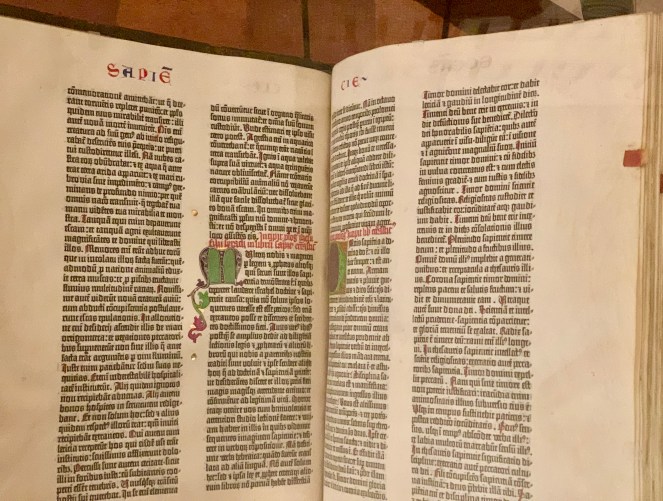
The Gutenberg Bible
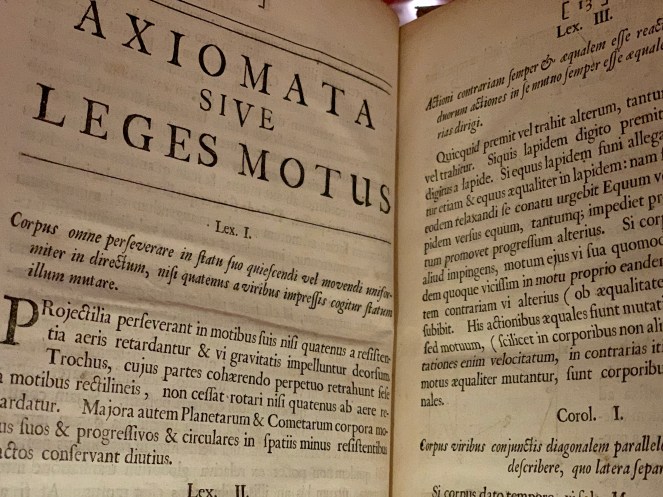
Principa by Isaac Newton
Birds of America by James Audobon
This last book I think is the most expensive book ever sold, fetching prices over ¢8m!
‘Principa’ by Isaac Newton, 1687Shakespeare’s first folio, 1623The Gutenberg Bible, 1450‘Birds of America, by James Audubon, 1827
I am only in Belgium for two days so am just seeing two galleries. I have visited Brussels a number of times and have visited most of the main galleries there. I have never been to Lieges and came here mainly to see La Boverie.
La Boverie, Liege
La Boverie is a fine arts gallery in La Boverie Park. In is the site of the 1905 World Expo, and has a lovely location on a small island on the Meuse river. It is not a huge gallery, but it does have some quality pieces. It was only 5 Euros to enter. As with lots of lesser known galleries, it was pretty quiet so I had some of the rooms almost to myself. Which I love!
People always head for the big hitter galleries, but I find the regional galleries often have some equally amazing artworks, it’s easier and cheaper to see them and much quieter too, win, win, win.
Belgian impressionism and neo impressionism
The gallery has range of artworks, but by far the most impressive is the impressionist and neo impressionist pieces. They have a couple of wonderful paintings by one of my favourite artists, the Belgian artist Théo van Rysselberghe. They also have some wonderful works by the Belgian artist Emile Claus, an artist I previously had not heard of. They also have some nice works by Rene Magritte, another Belgian artist. Here are my highlights from the gallery.
Théo van Rysselberghe
Les soeurs des peintre Schlobach, Theo Van Rysselberghe, 1884Le dame en blanc, Theo Van Rysselberghe, 1904Pin a la rosette, Theo Van Rysselberghe, 1919
Emile Claus
La Chatalgnler, Emile Claus, 1906Le view jardinière, Emile Claus, 1886
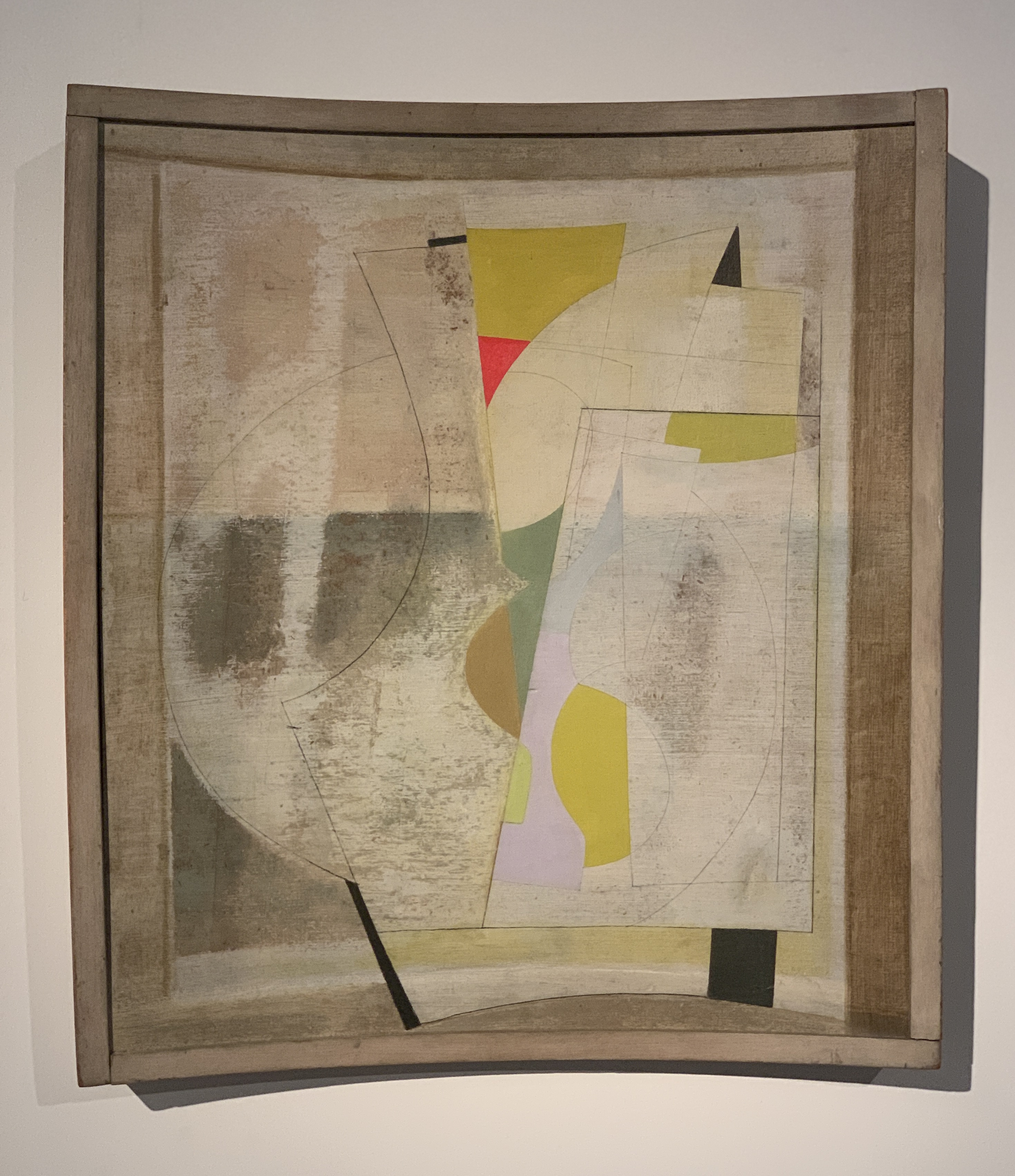
Signac, Magritte, Stevens, De Smet, Nicholson and McEwan
The Art & History Museum, Brussels
This museum is located in a huge building in the Jubelpark, Brussels. The collection is more history than art, I had expected paintings but alas no. I would say it is more an ethnographic collection of world objects that an art gallery.
The museum is split into geographical regions, think Africa, Indonesia, native America etc. And it is huge. massive. You could never see it all properly in a day. Good value at 10 Euros. The collection I enjoyed the most was unsurprisingly the asian art, specifically India, Japan, Vietnam and Cambodia. They have some super bodhisattvas. However I did rush through this museum somewhat, which is unlike me. particularly because it was very bereft of people. I think I have hit museum and gallery tipping point amazingly!
I was also thinking why I am drawn to certain art, such as bodhisattvas, but have little interest in ceramics and silverware. I think I just have no interest in utilitarian pieces, I cannot see the beauty in them. Whereas devotional objects such as bodhisattvas I instantly see the beauty in them.
One of the failings of this gallery is that there is not a single object label in English. Not one. Just Dutch and French. Which surprises me as this is clearly a collection of international importance and must attract lots of international visitors. I also thought the lighting was pretty poor at times, lots of objects are in glass cases and are hard to see properly and photograph. Therefore some of my photos do not have descriptions. Anyway here are my highlights of the museum (all asian artworks!).
12th century Chinese bodhisattva
12th century bodhisattva from Angkor Wat, Cambodia
Cologne is a medieval city in the west of Germany. It has three art galleries all of which I am visiting on my trip to Germany.
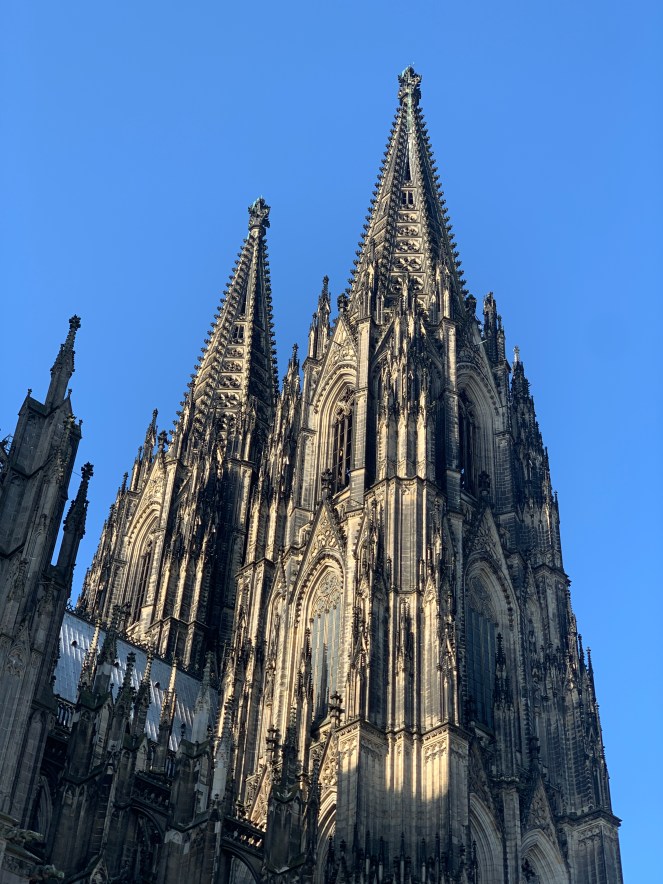
Cologne cathedral
Wallraf Richartz Gallery
This gallery is in the centre of Cologne, costs 8 Euros to enter and is well worth it. The collection has three distinct areas of the permanent collection:
19th and 20th century art
Baroque art
Medieval art
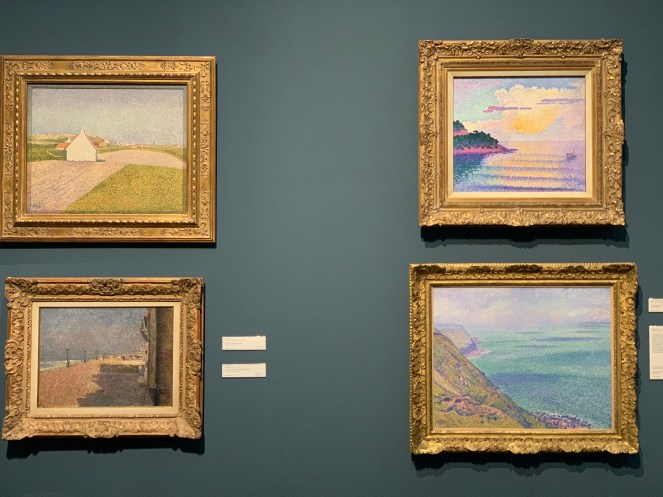
Paul Signac
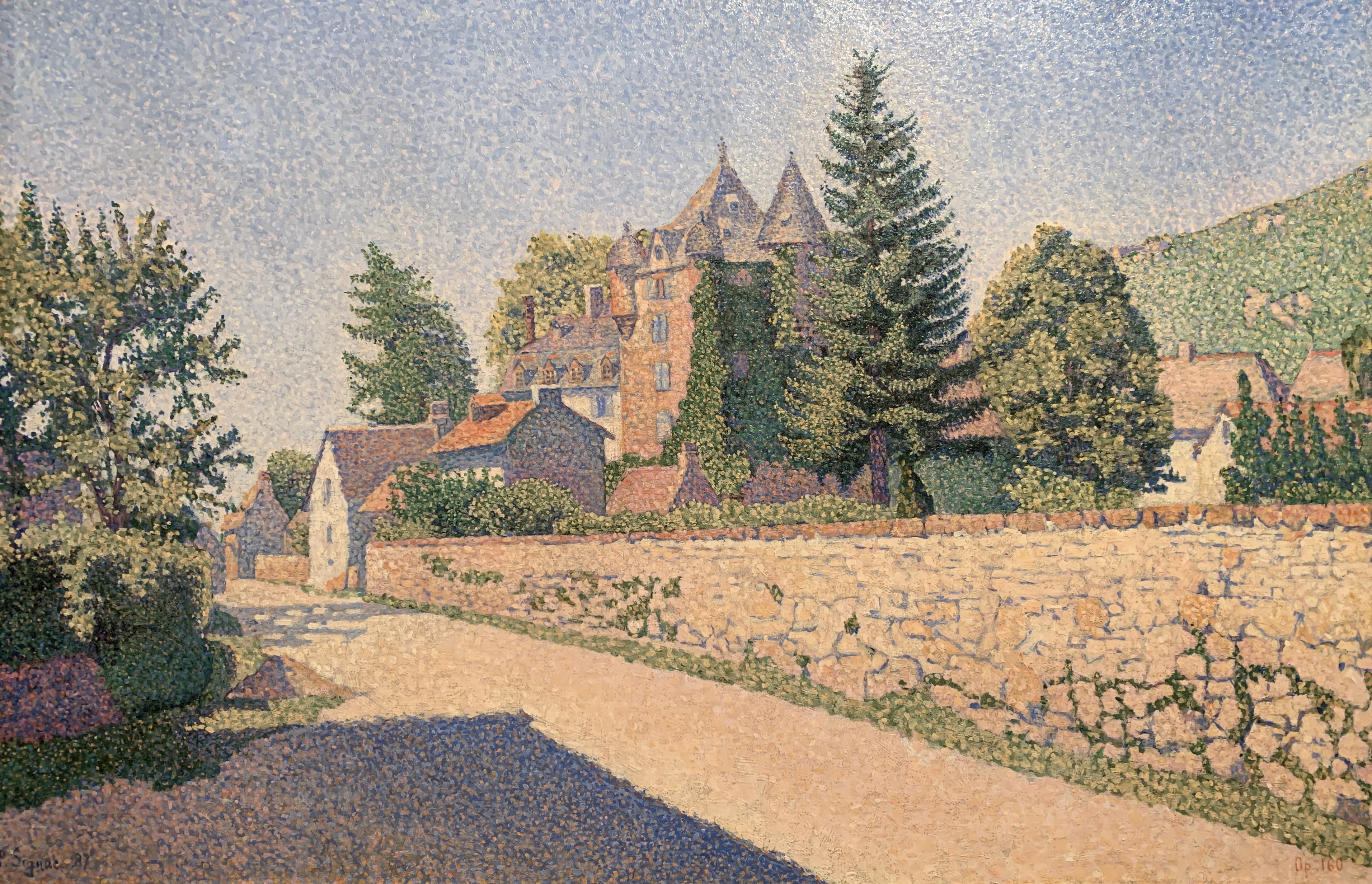
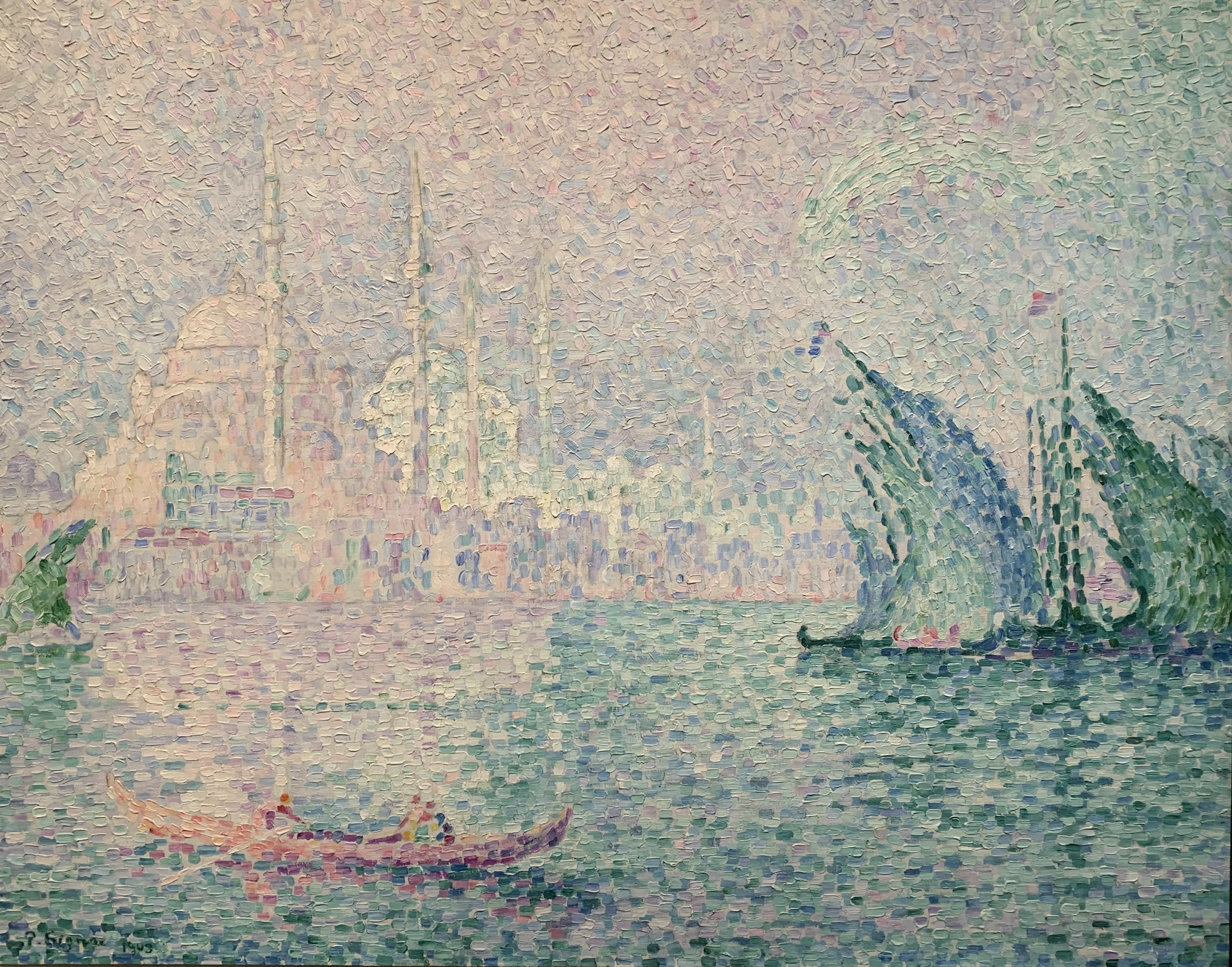
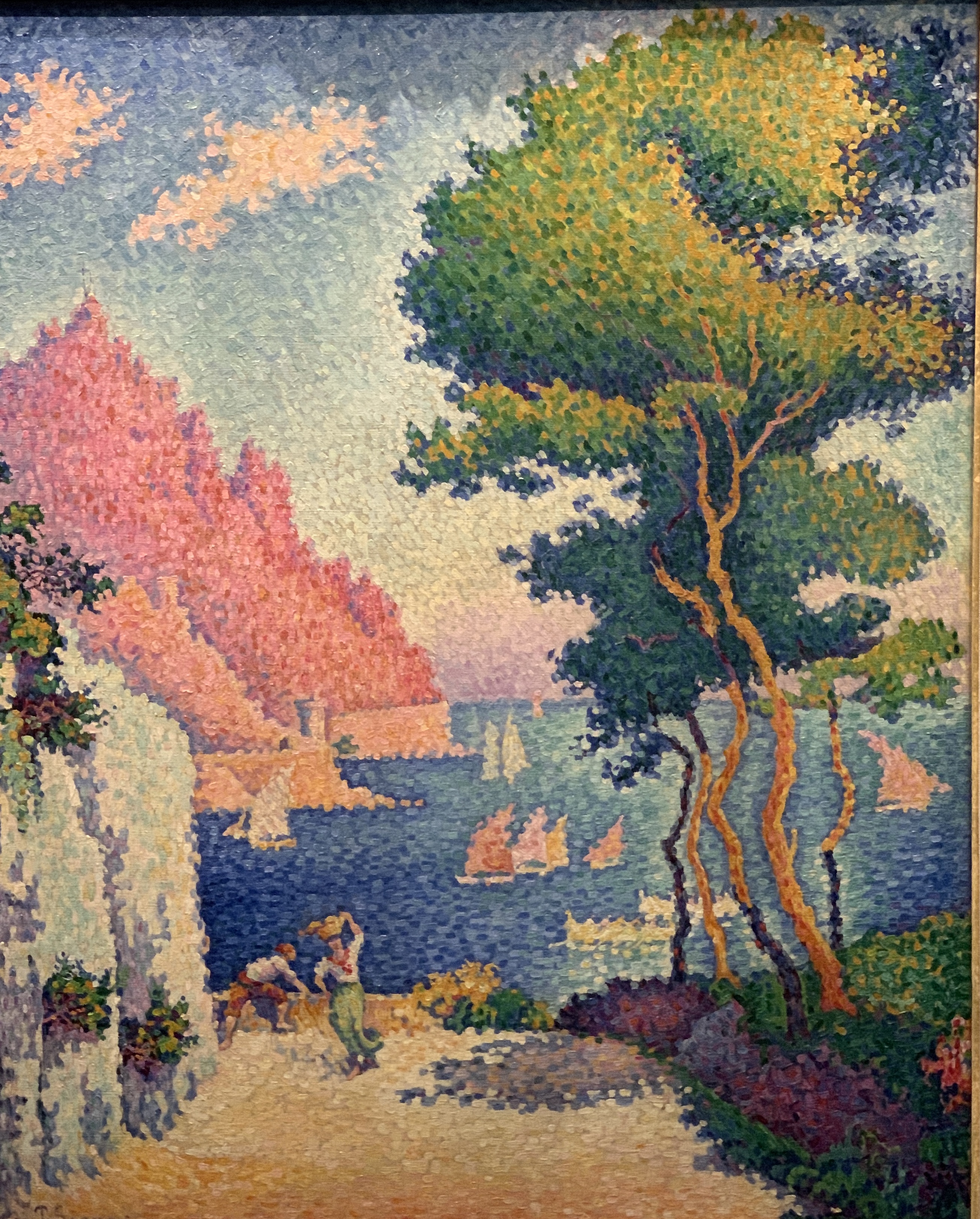
Signac was a leading exponent of Neo-impressionism and worked in a style called pointillism, using dots of bright colour. This gallery has a wide collection of his work. I find his work so beautiful, bright and uplifting.
Four paintings by Paul Signac
German Impressionism
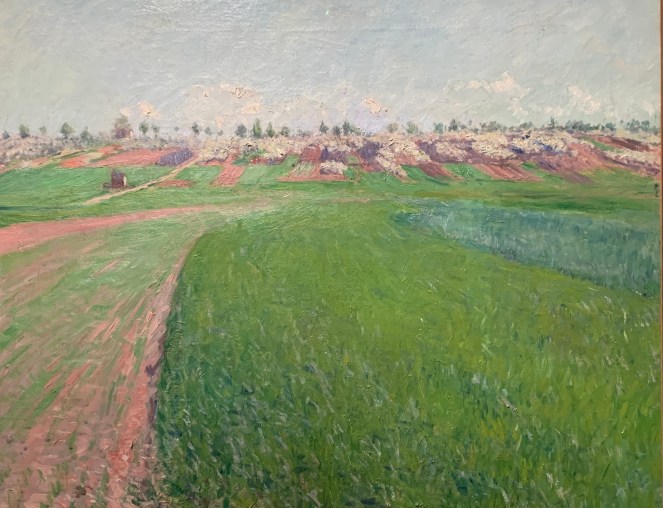
It took 20 years for the impressionism whirlwind to arrive in Germany. I don’t know much about this movement but I am very impressed, particularly by the work of an artist called Gustave Caillebotte. It seems like his work was largely forgotten for many years, but this gallery has on display many of his works, restoring his place amongst some of the greats of impressionism.
Hill at Colombes, Gustave Caillebotte, 1884The Yellow Fields at Gennevilliers, Gustave Caillebotte, 1884
Laundry drying on the banks of the Seine, Gustave Caillebotte, 1892
French Impressionism
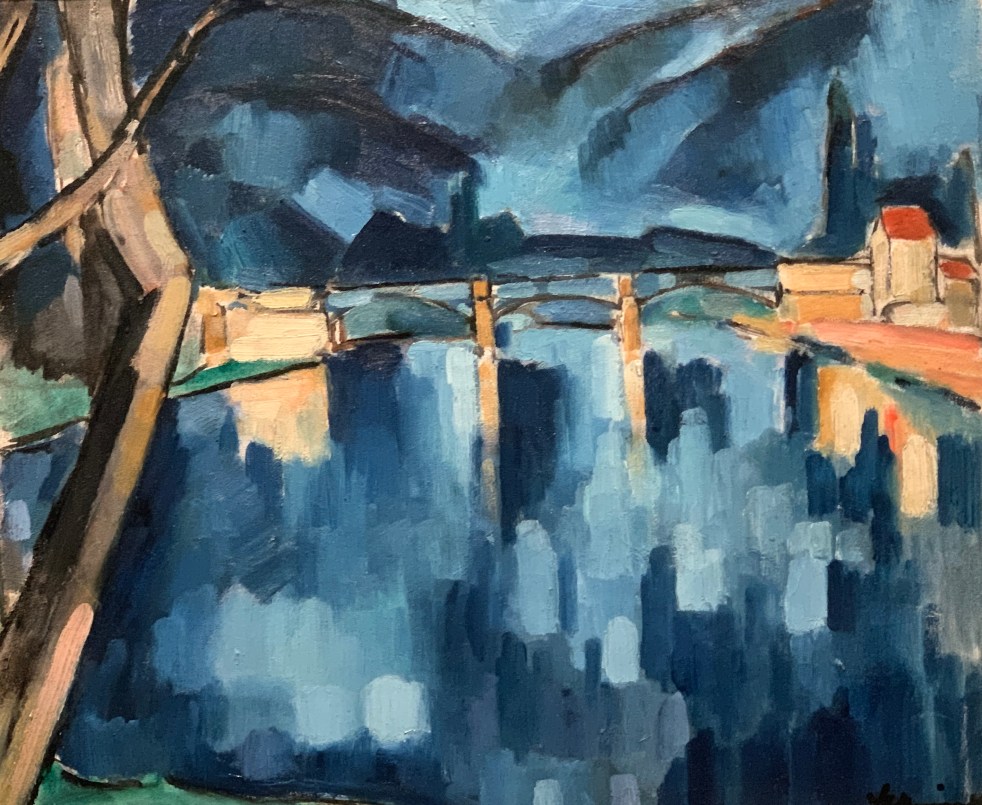
The gallery also has some great examples from two of my favourite French impressionists, Alfred Sisley and Maurice de Vlaminck. Maurice de Vlaminck is such a wonderful artist, I love his work so much! There is also a fabulous Rodin statue and a great Cezanne.
Outskirts of Louvecinnes, Alfred SisleyThe Bridge at Chatou, Maurice de Vlaminck, 1909The Iron Age, Auguste Rodin, 1876Landscape in the west of Aix-en-Provence, Paul Cezanne, 1878
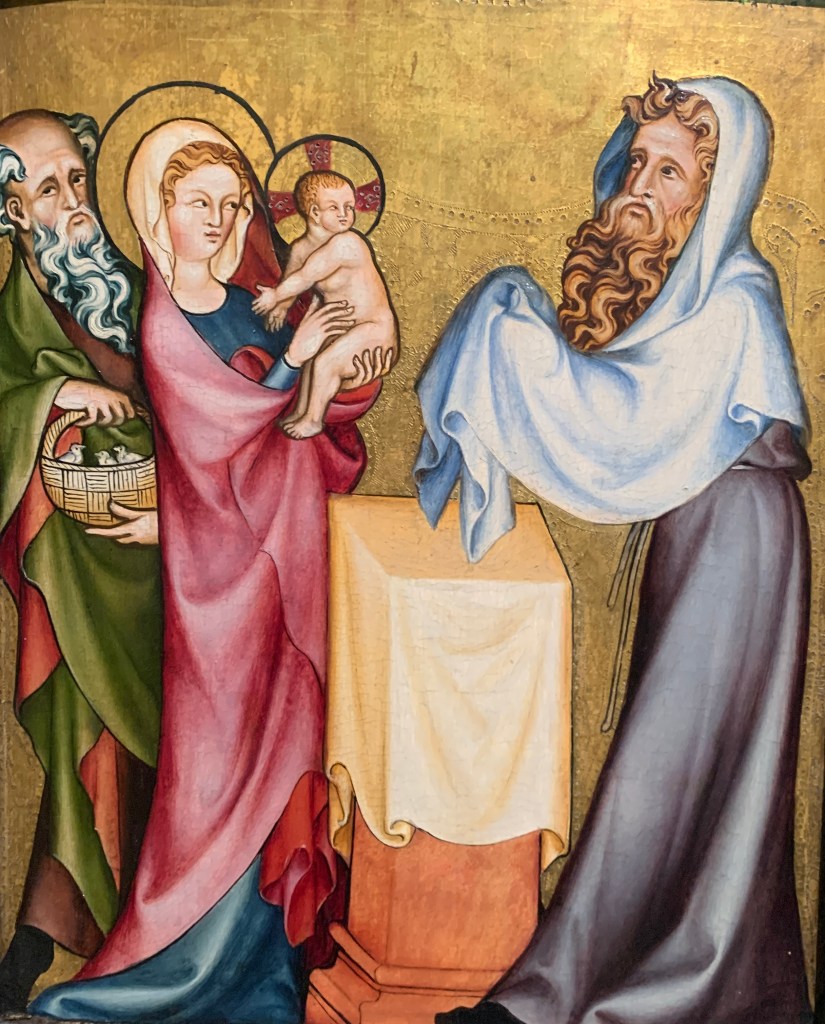
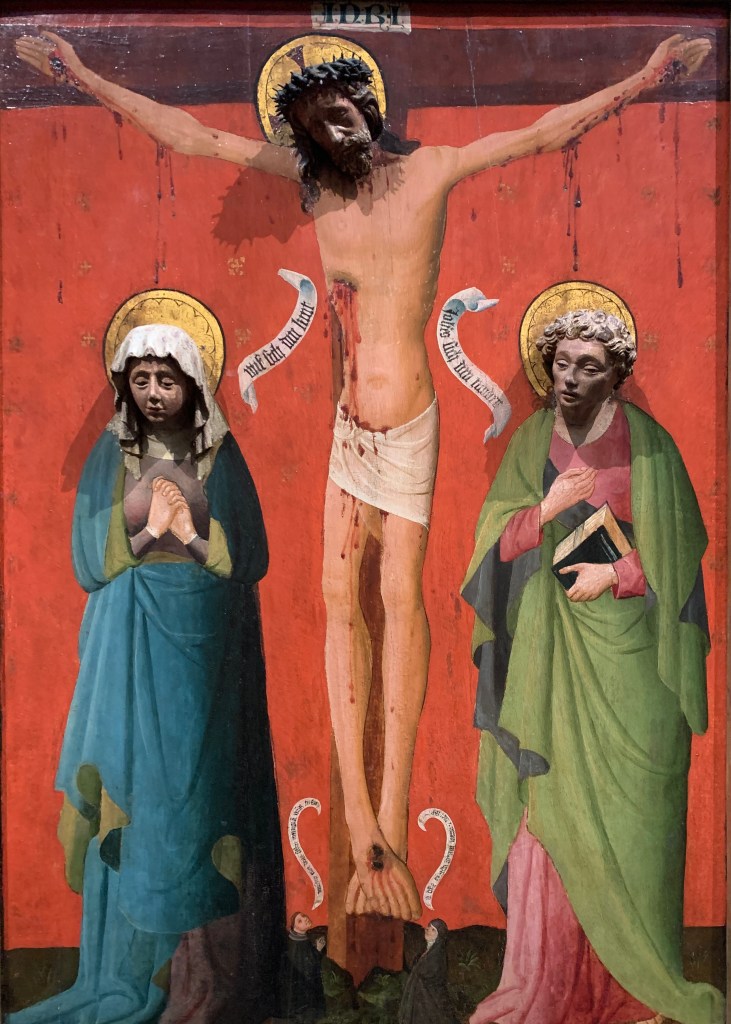
Medieval art
The gallery has an entire floor dedicated to medieval art, most from the 13th to 14th century. It always blows my mind how these artworks have survived, and how the colours are still so vibrant. Here are some of my highlights.
The Schnutgen Museum
The Schnutgen Museum in Cologne houses a fabulous collection of medieval and Christian art. Its main collection is housed in a beautiful old basilica of a church, one of the most unique settings for a museum I have ever seen. The name comes from the man who started the collection, donating it all to the city of Cologne. The entry fee is 7 Euros but for an extra 3, you can also visit the adjoining ethnological museum, the Rautenstrauch Josef Museum. I visited both. It is slightly hidden away, you would not stumble upon it, it was very quiet which I liked, but maybe they need to advertise more. As it was fantastic!!
The Schnutgen Museum
Death
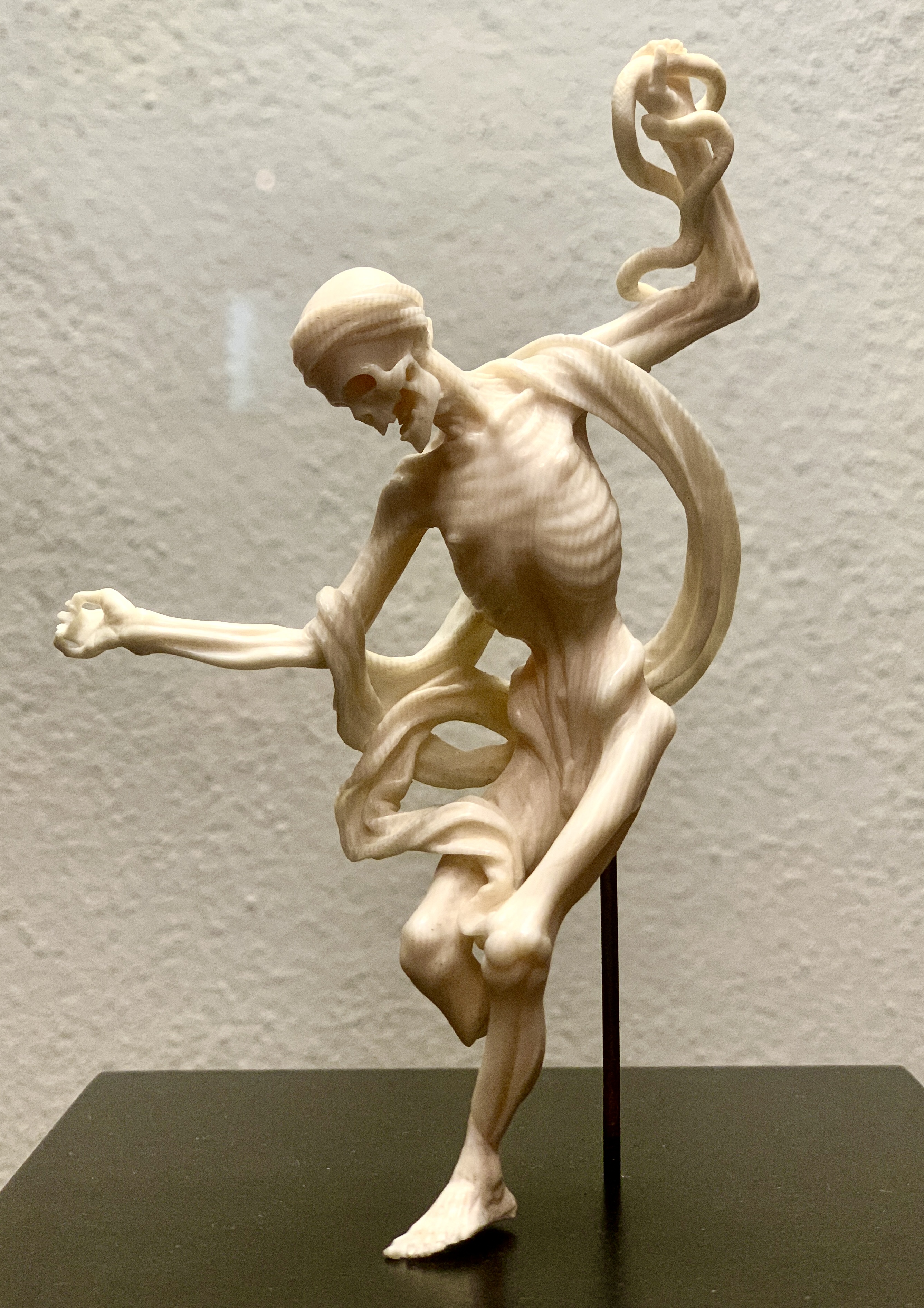
Medieval life had an obsession with death. They feared it, had many theories about what it meant, and represented it often in their art. There are some fascinating pieces in the collection.
Christian statues and carvings
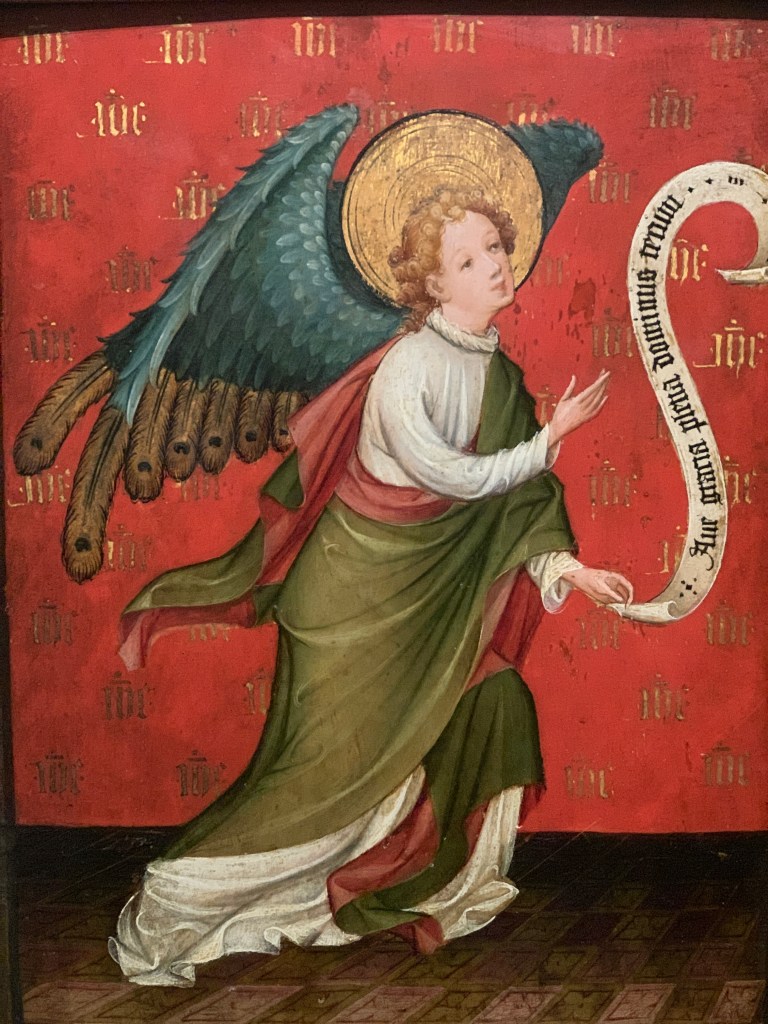
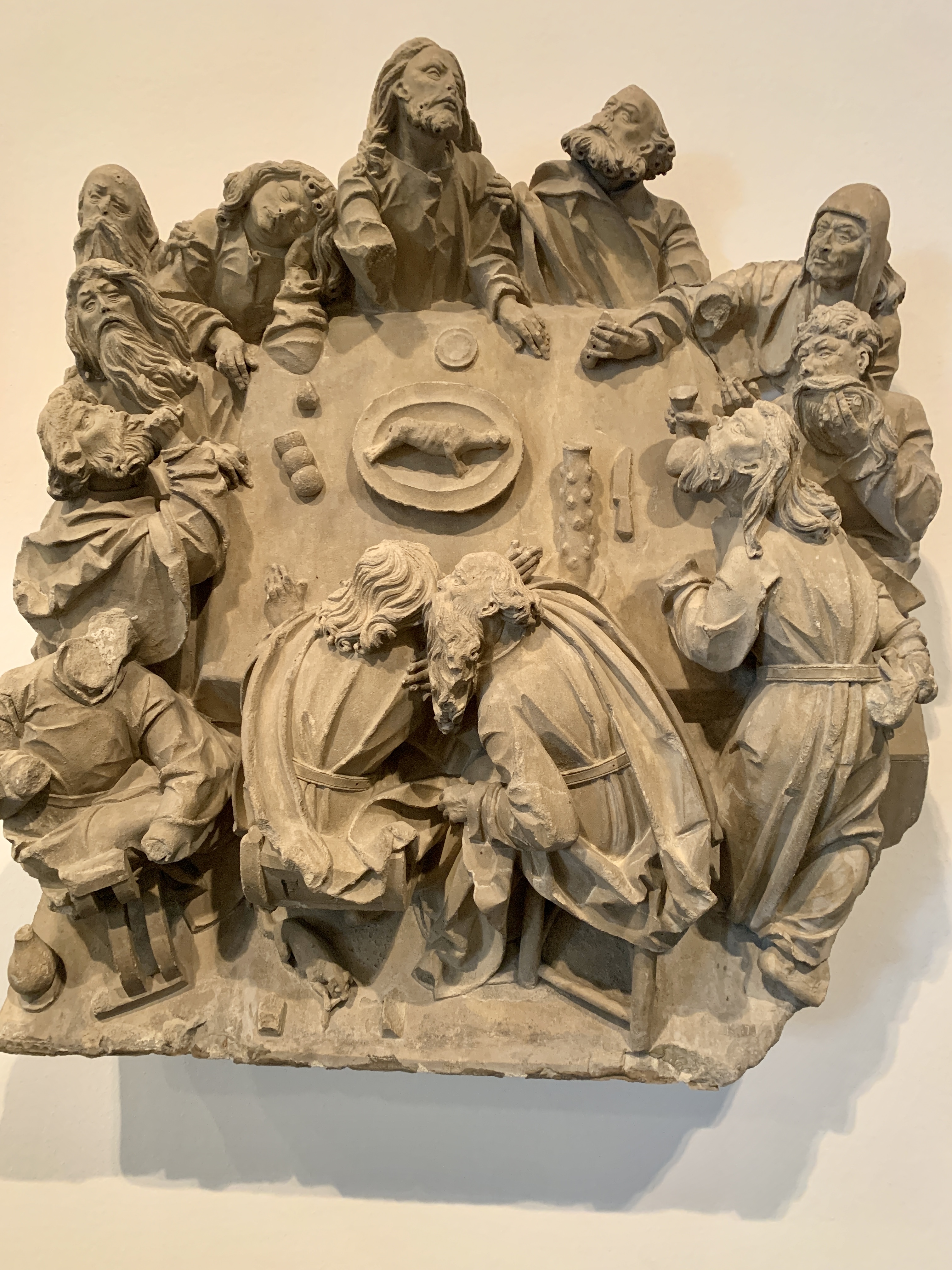
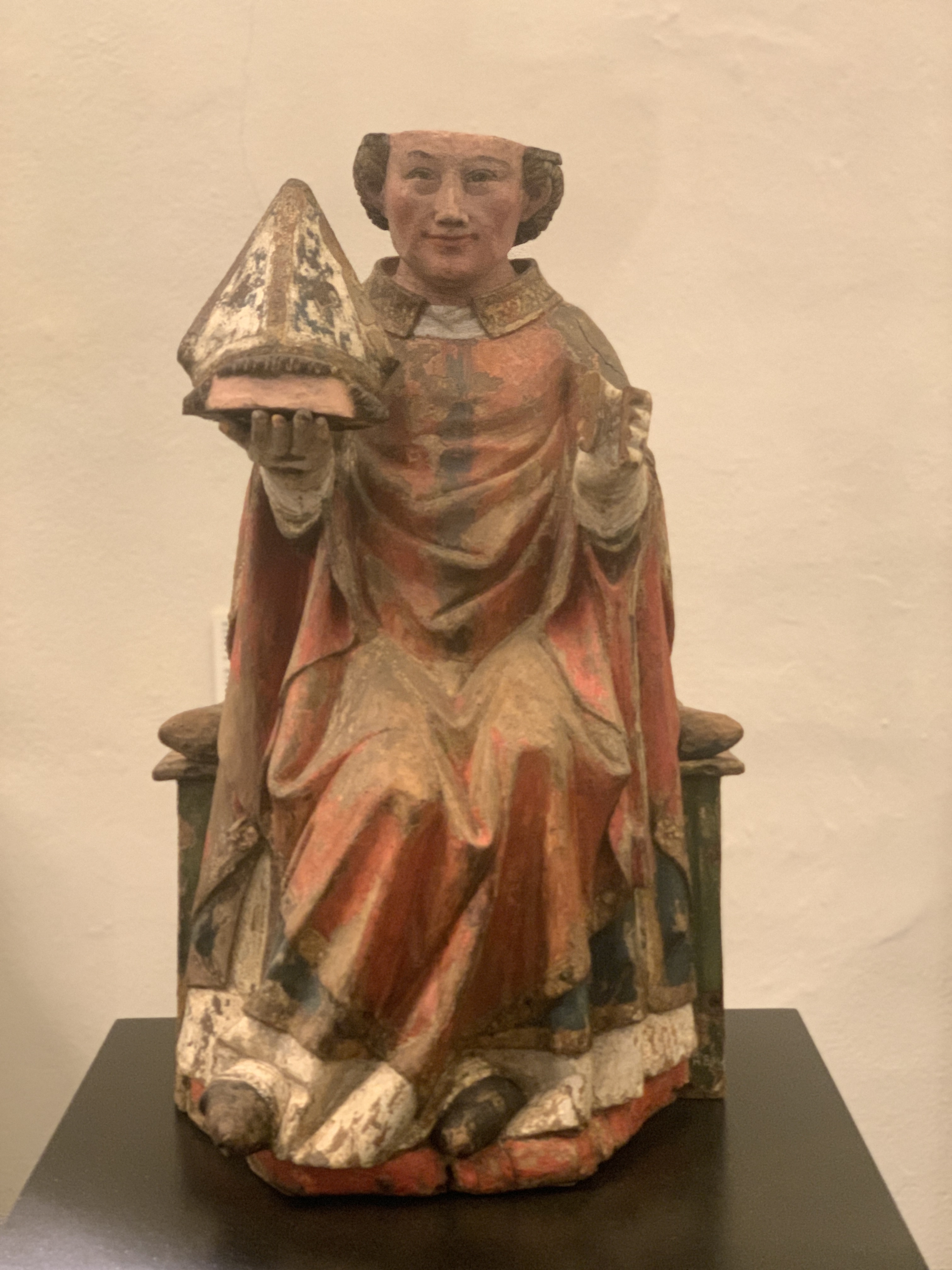
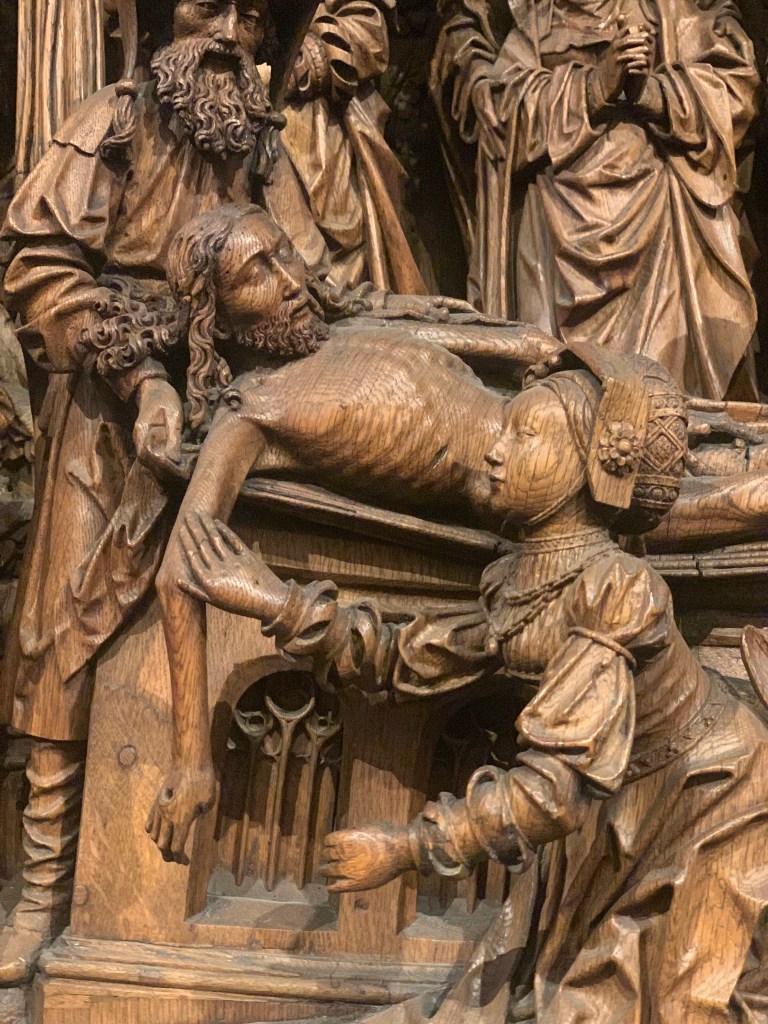
The gallery has a wonderful array of medieval artworks, mostly in the form of carving. Some are quite strange, for example the carving of St Denis holding the top half of his own head! All are exquisitly carved, the detail of the drape of a cloak or the curl of hair is so amazing, considering how old these pieces are.
Detail from a shrine showing teens from the passion of Christ, 1530, made from oakDetail from the adoration of the magi, 1480, made from oakReliquary bust, 1340, CologneAngel, 1530, made from lime
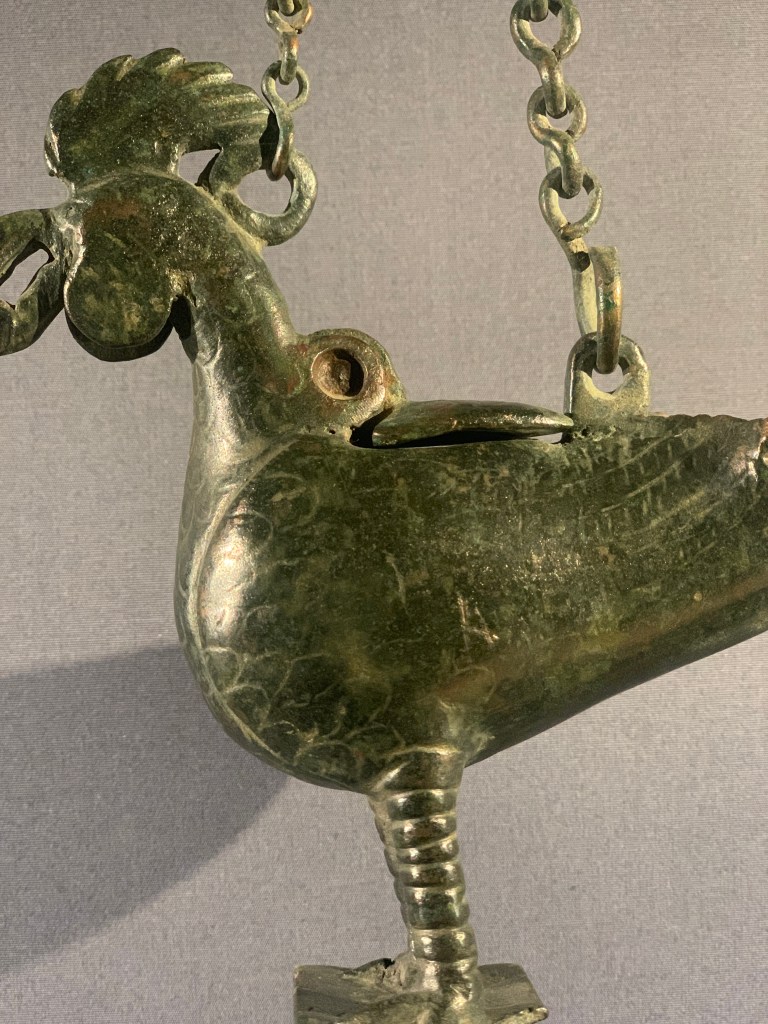
As well as carvings, there are many other paintings and objects. Two of my favourites were a 6th century oil lamp and a 12th century gilded altar panel.
Antependium from St Ursula, 12th century, oak, enamel and giltOil lamp in the shape of a cock, 6th century, cast bronze
The Rautenstrauch Josef Museum
I spent less time here, but as was 10 Euros to see both I thought I would take a look. It’s an incredible modern gallery space and the objects, collected in the 19th century from all over the globe, are presented impeccably. The main objects I was interested in were the buddhist artefacts, as this is something I collect.
Avatamsaka sutra, China, 1736Two standing buddha figuresBuddha, bronze, Thailand, 1500Buddha head, Thailand, 14th century, sandstone Bronze standing bodhisattva, 15th century
The Museum of East Asian Art
I was so excited to visit this gallery! I love Japanese, Indian, Thai, Chinese etc buddhist arts, especially buddha heads and bodhisattvas. It was 10 Euros entry, and is set in a single storey white, minimalist building next to a lake. It should have been everything I like in a gallery. BUT it was not 😦
I was so disappointed. The art in it is all fine, but just almost nothing I like. They had a couple of bodhisattvas, and that was it. I had hoped for more. Very frustrating. As a gallery it is a nice space, just not for me. Here are the three objects I liked. I feel sad just writing that sentence.
Bodhisattva, China, 17th centuryThe favourite disciple of the buddha, China, 1628Japanese mythical figure
There are many art galleries in this western part of Germany. I decided to visit two of them, some are closed for refurbishment so my choice was somewhat limited.
The Folkwang Gallery in Essen
I travelled to Essen from Dusseldorf, which is about 30 minutes on the train, to visit the Folkwang Gallery. I think the name means gallery of the people.
It’s housed in a very modern gallery space, think white walls, high ceilings and bespoke lighting. A sign said it was sometimes seen as the most beautiful gallery in the world. Can’t say I agree but it is a nice space.
It is also free to enter which seems unusual but welcome in this part of Europe.
The collection has recently been rehung by theme. A common trend I see in galleries. I don’t think it always works. Placing a 15th century bodhisattva next to a 1940s abstract painting seems a little odd to me. But I guess they are trying to ask viewers to see art in a different way. I prefer art to be displayed chronically or by artistic movement.
Bodhisattvas
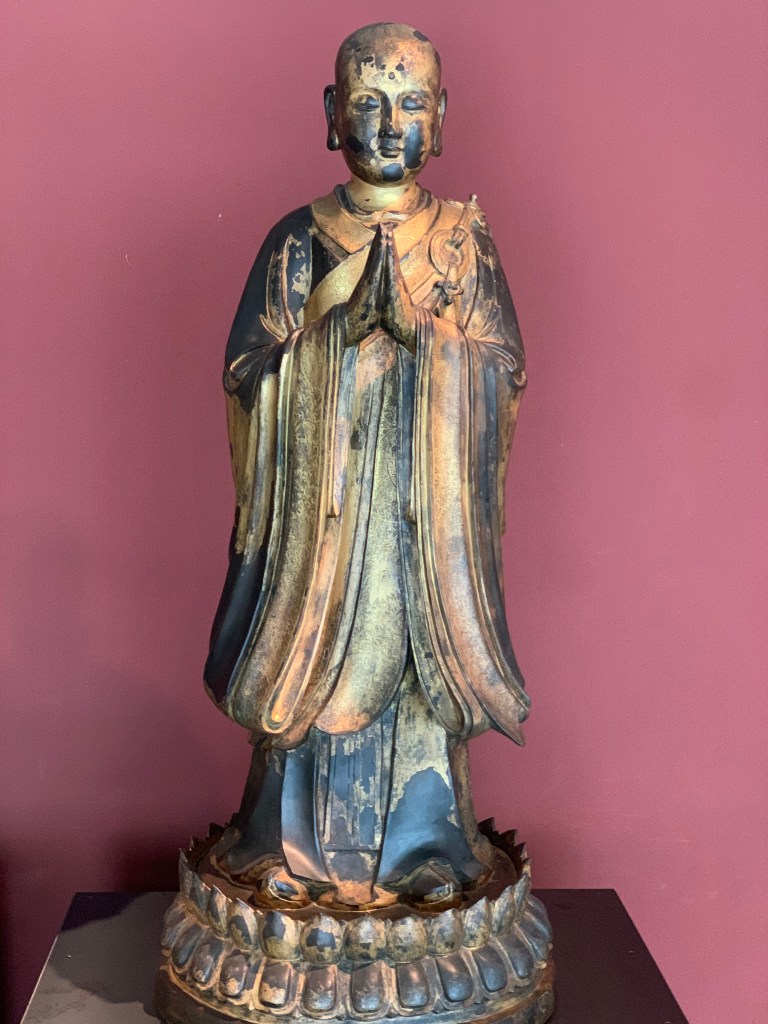
An ancient bodhisattva always sets my soul alight! I collect them myself and I always love to see ancient examples, these are from the 16th and 17th centuries. They are so beautiful and serene close up.
Vincent Van Gogh
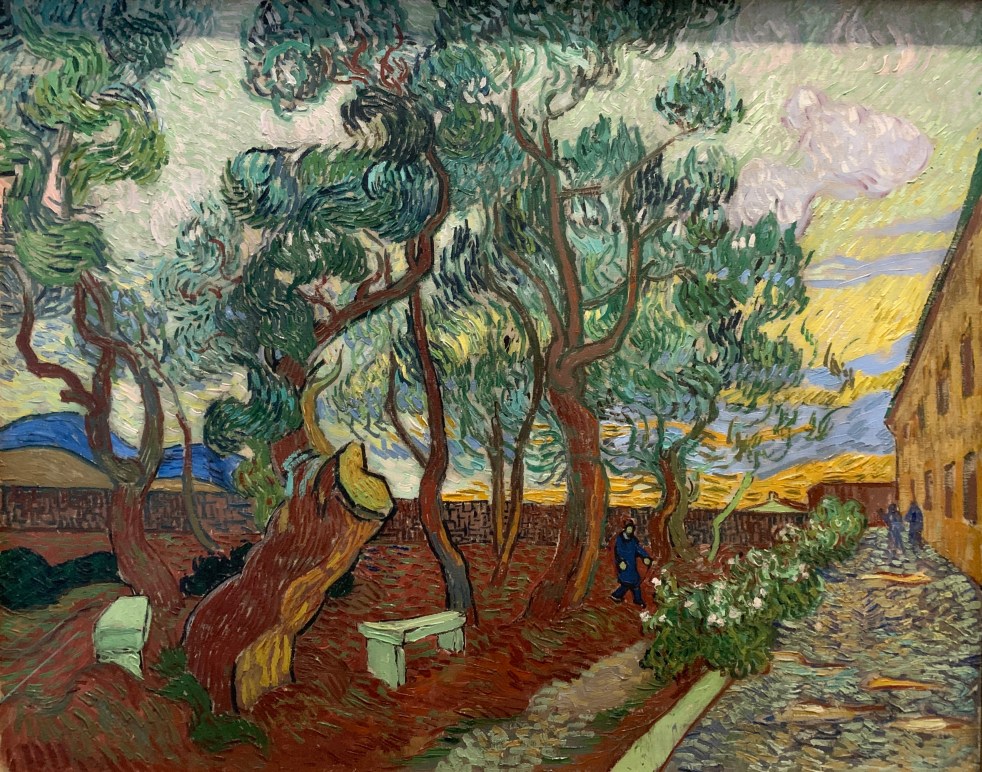
The collection has a few lovely Van Goghs, always a highlight. Also the Van Goghs were lit amazingly well, the lighting made the paintings sparkle, the colours seemed so vibrant, so clever, loved it!
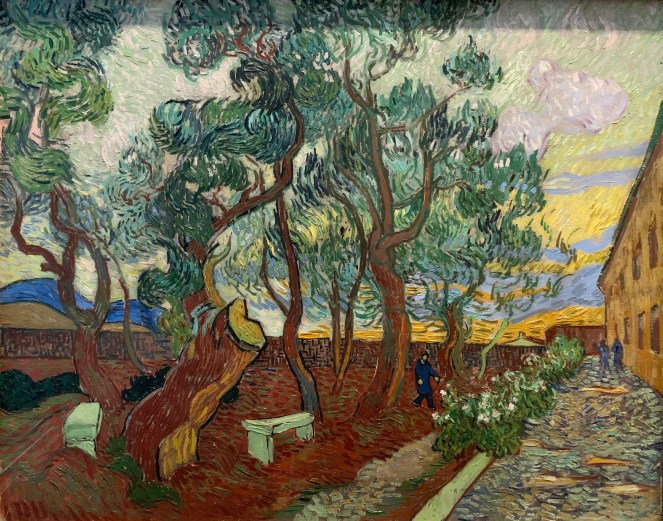
A corner of the Asylum and the garden with a heavy sawed off tree, Van Gogh, 1889 The wheat field behind Saint Paul’s Hospital with a reaper, Van Gogh, 1889
Early 20th century painting
The gallery has many impressive early 20th century paintings in their collection, here are some of my highlights.
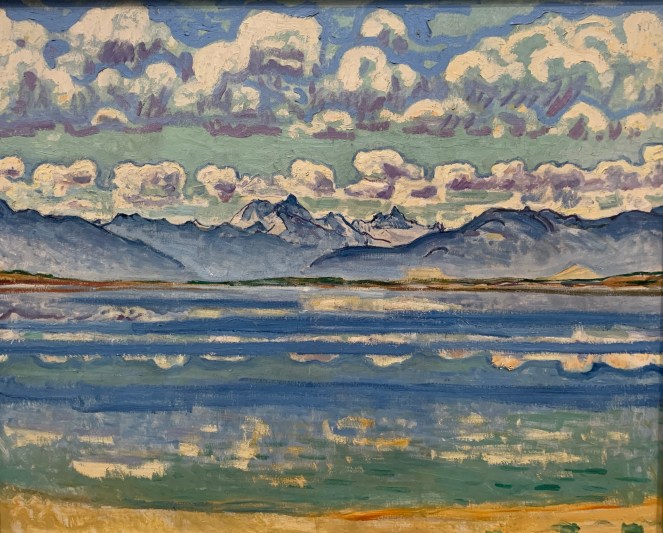
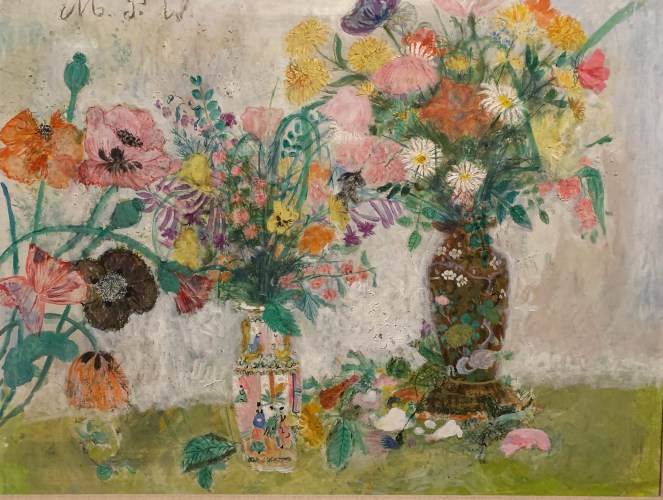
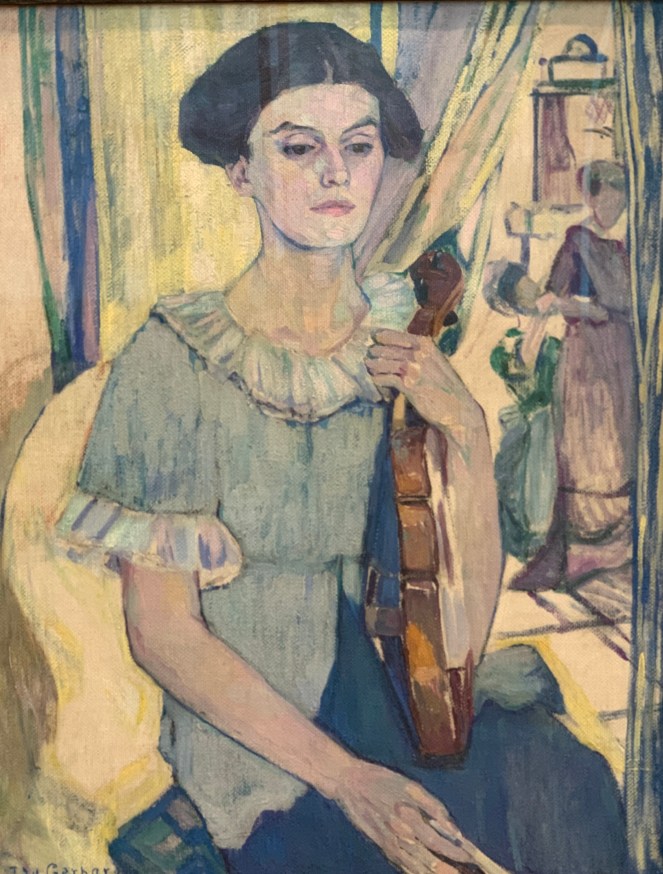
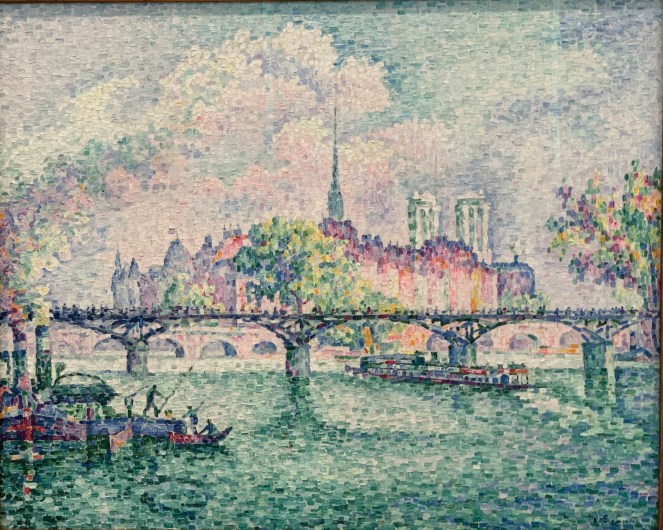
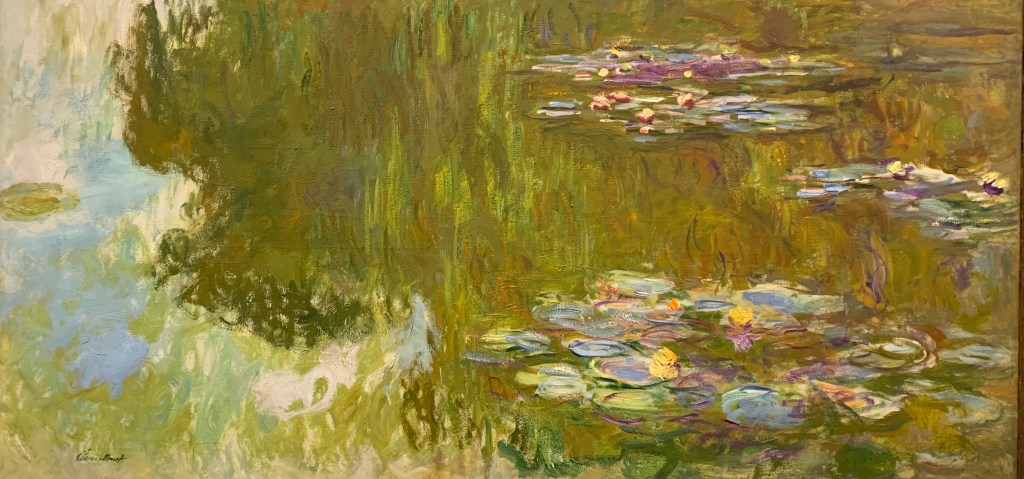
Weisshorn as seen from Montana, Ferdinand Holder, 1915Flowers in Chinese vases, Max Peiffer Watenphul, 1936Still Life, Henri Matisse, 1907Violinist, Ida Gerhardi, 1906The Pont Des Arts, Paul Signac, 1912The Water Lilly Pond, Claude Monet, 1916
The Kunstsamlung Nordrhein Westfalen in Dusseldorf
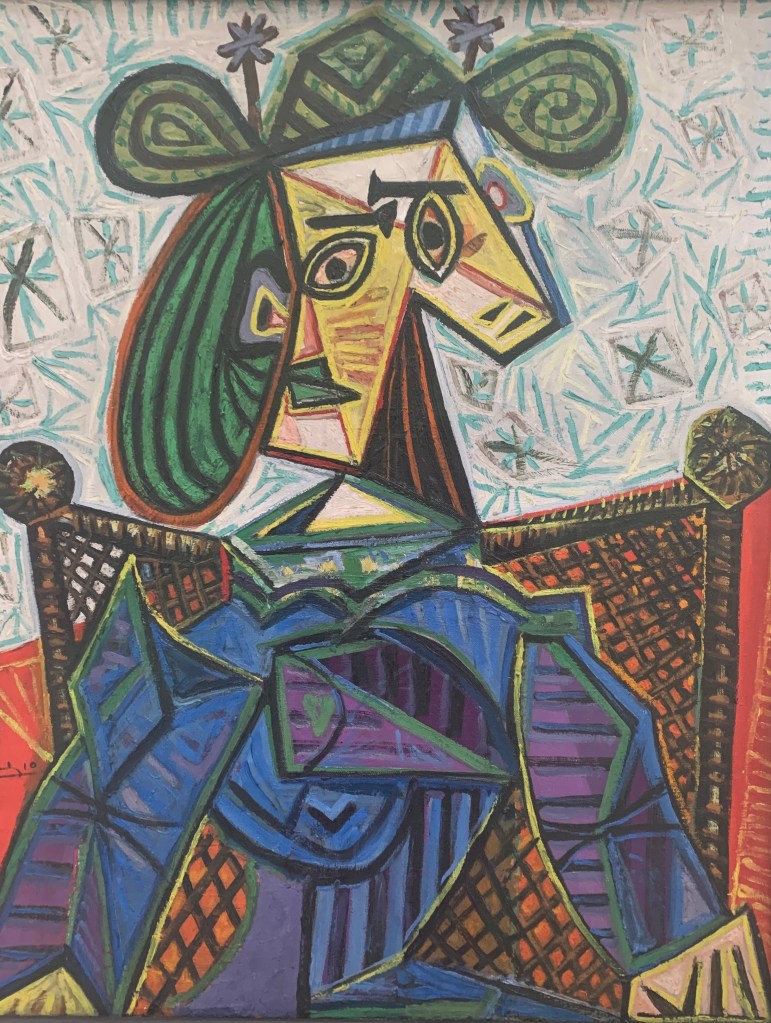
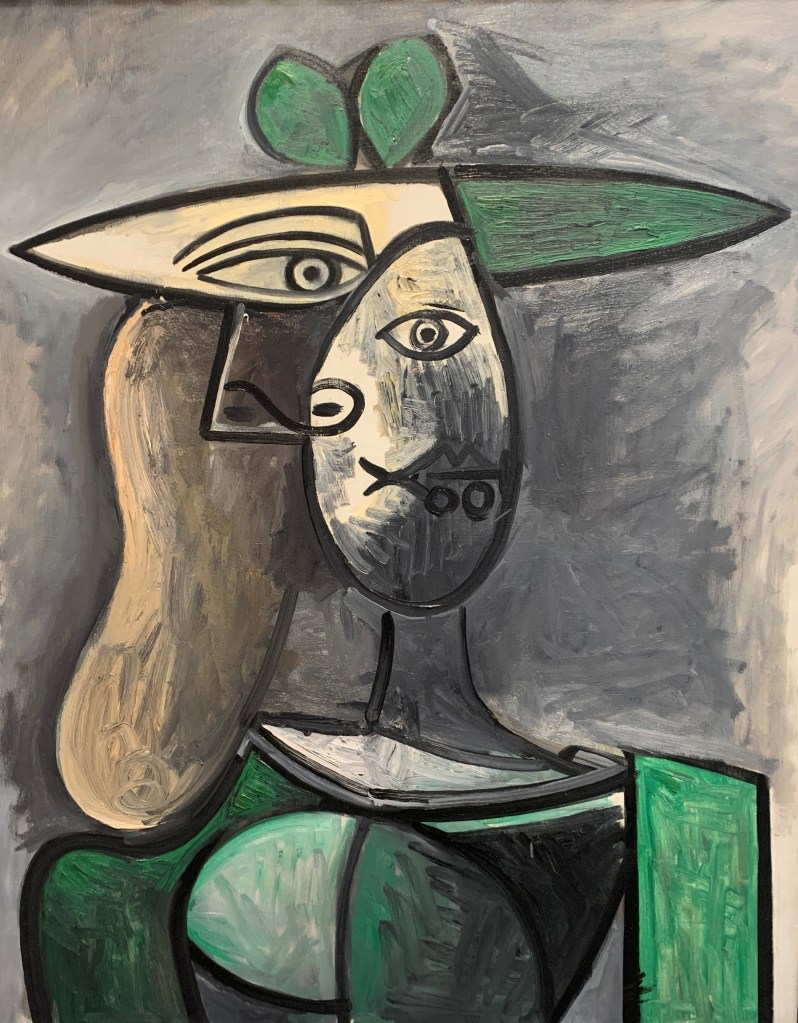
This gallery contains 20th century art, from 1900 onwards, mainly European but has some American artists. There was no exhibition on but the permanent collection was available to see. Entry is €9. The main highlight is the collection of some impressive Picassos.
Picasso
Woman sitting in an armchair, Pablo Picasso, 1941Woman at the mirror, Pablo Picasso, 1966
Portrait of Fernanda, Pablo Picasso, 1909Jacqueline, Pablo Picasso, 1963
Other collection highlights
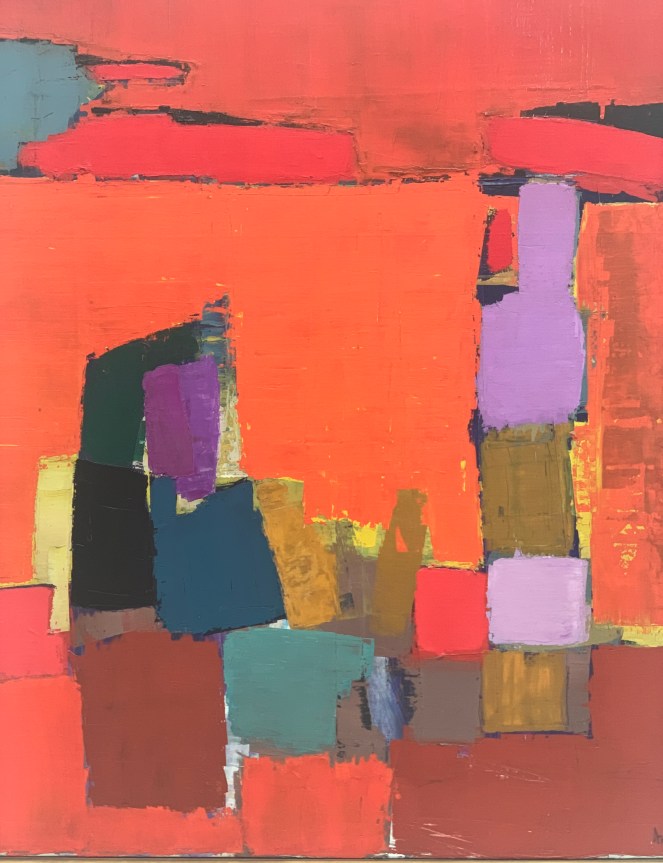
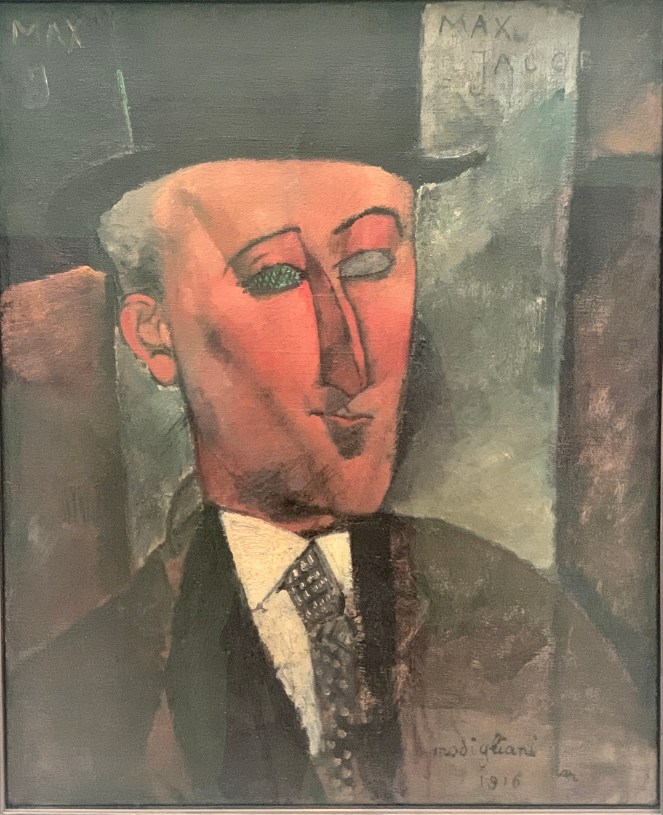
Wasily KandinskyFigure by the sea, Nicholas de Stael, 1952Portrait of Max Jacob, Amedeo Modigliani, 1916
I am here in Vienna for the first time and have four days to explore the galleries of this magnificent city. I have long wanted to visit Vienna, ever since I visited a Gustav Klimt and Egon Schiele exhibition in Japan in 2019. I have five main galleries to see plus whatever else I can fit in:
– The Albertina – The Belvedere – The Leopold – The Secession building – The Kunsthistorisches Museum
1 March 2023, The Albertina
The Albertina is a gallery famous for having some beautiful old masters drawings including works by Rafael, Michaelangelo and Albrecht Durer. My current interest in art started when I read a book called the ‘1,000 paintings to see before you die’ and in that book there were two works by Durer that are in the Albertina. They are ‘Hare’ 1502 and ‘Wing of a Blue Roller’ 1512.
Wing of a Blue Roller, Durer, 1512Hare by Durer, 1502
I do not know a huge amount about Durer but his work does strike me as so different to what other artists of that period were doing. Whilst he did paint portraits, some of his work is studies of birds, trees, plants, animals and the human body. At a time when religious and classical subjects were the flavour of the day, it seems to me that he really was forging his own artistic path.
The other outstanding collection in the Albertina is the Herbert Batliner collection. He was a Lichenstein lawyer who died in 2019. He amassed an amazing collection of artworks, and donated it the Albertina. The focus of his collection is Impressionism, but he also collected many other artists including:
– Alberto Giacommeti – Pablo Picasso – Amedeo Modigiliani – Henry Manguin
The gallery is worth visiting alone just to see his collection. There are some beautiful works by Claude Monet and Paul Signac.
Entry is roughly €19 to get in. It is open late Wednesdays til 9pm, which is when I went and Fridays too I think.
2 March 2023, The Belvedere
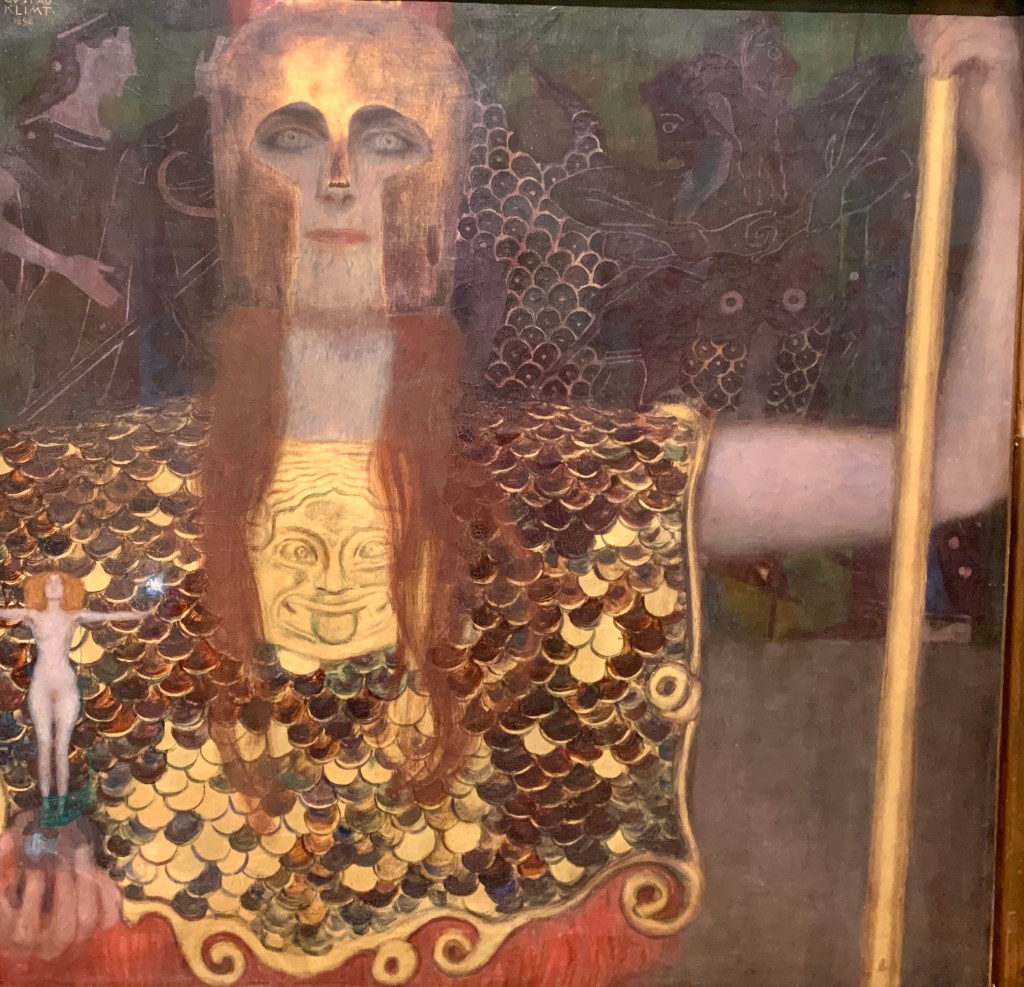
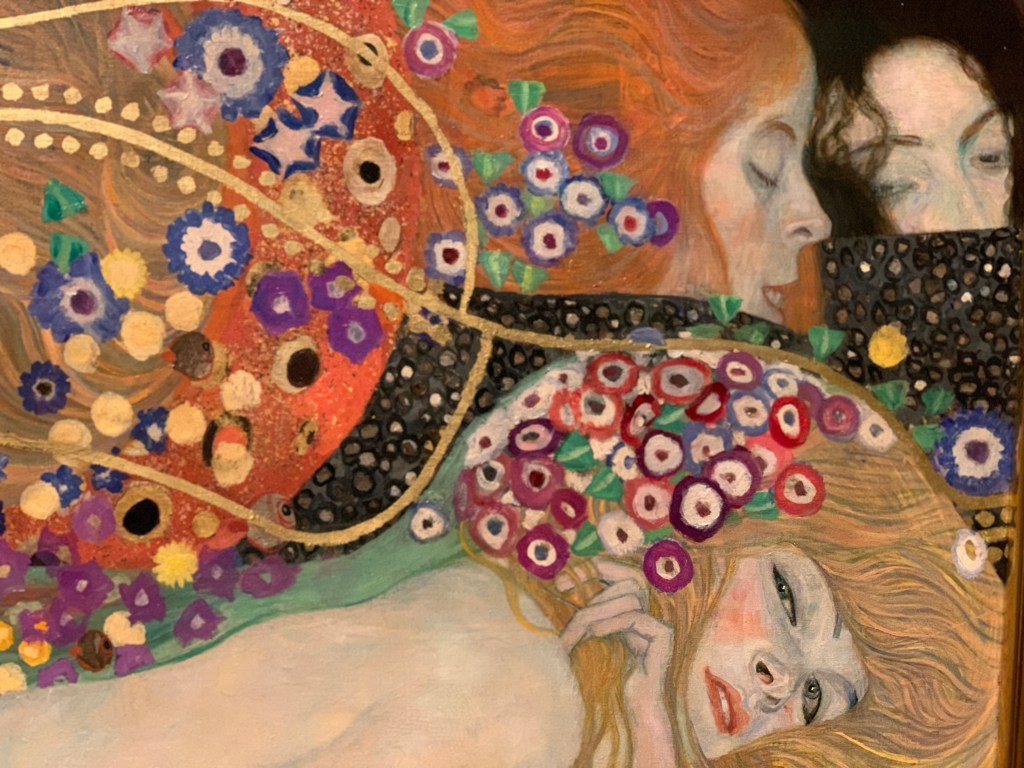
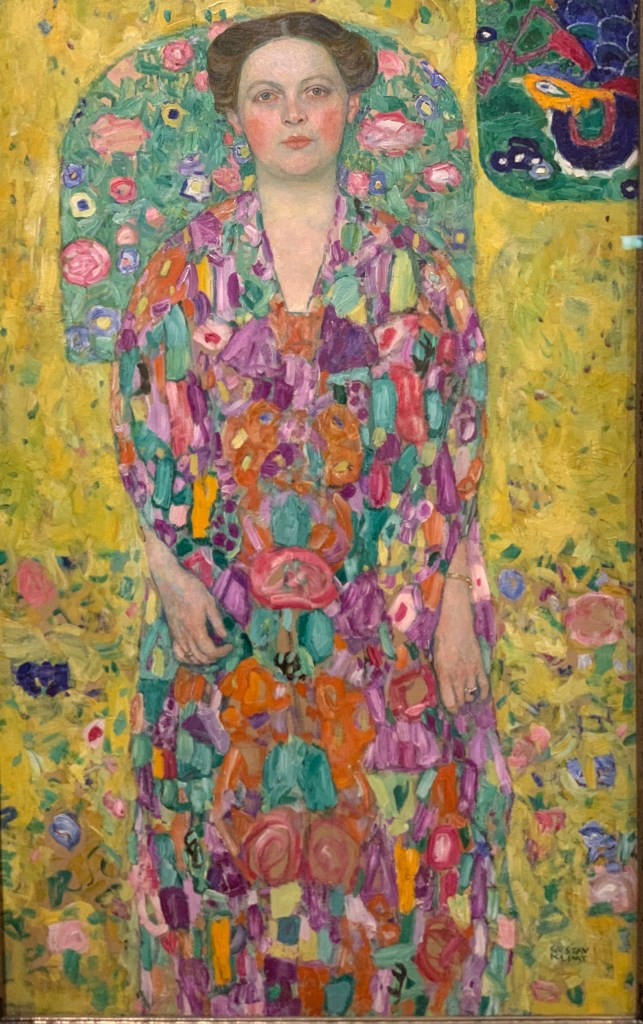
If the Albertina was the starter, the Belvedere was the main course! What a stunning collection of art. Mind. Blown! This is probably a good time to mention the Vienna Secession. It was an Austrian art movement formed in 1897, by the artists Gustav Klimt, Josef Hoffman, Koloman Moser and Otto Wager.
The art of the secession is identifiable as similar to that of the art nouveau movement. In fact the exhibition at the Belvedere demonstrates how Klimt was inspired by other artists of the time. The reason it is called the secession is because the group saw themselves as seceding away from traditional artistic styles of the day. The Belvedere displays many works of the secession along with probably my favourite artist Egon Schiele. There were so many amazing paintings by Schiele and by Klimt in this gallery.
In fact the Belvedere is 3 galleries. The Upper gallery has lots of the Klimt works, and is the largest. The Lower gallery seems to have more exhibitions. In March 2023 when I visited they were showing a selection of paintings from the gallery celebrating 300 years of the gallery. They were also showing an exhibition showing the artists who inspired Klimt, including Lawrence Alma Tadema, Margaret MacDonald MacIntosh and Van Gogh. Both are excellent exhibitions.
The entrance fee of €22.90 gained me entrance to both galleries. I recommend booking online as you have to select a time slot and saves queueing.
Like all the art here, there is a huge depth in the work on display. For maybe the second time ever I actually had to say I had seen enough art! The poster below is from the first Secession exhibition, from 1898.
Poster advertising the first secession exhibition in 1898
There are so many artworks to chose to accompany this post, here are some of my favourites.
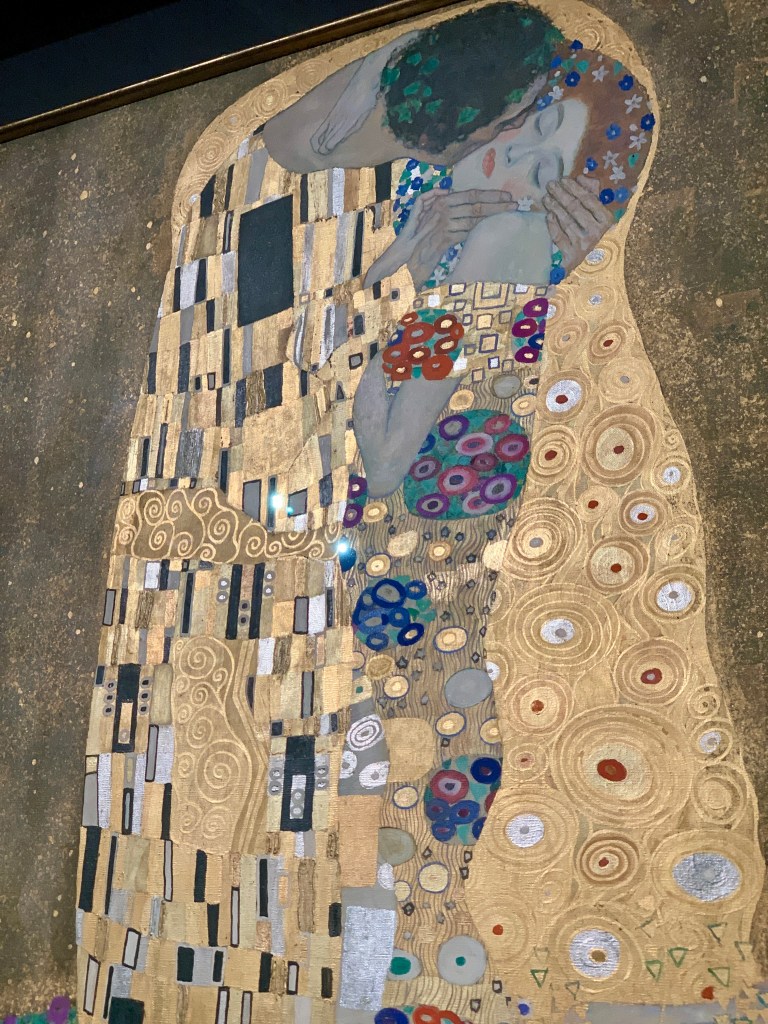
Gustav Klimt at the Belvedere
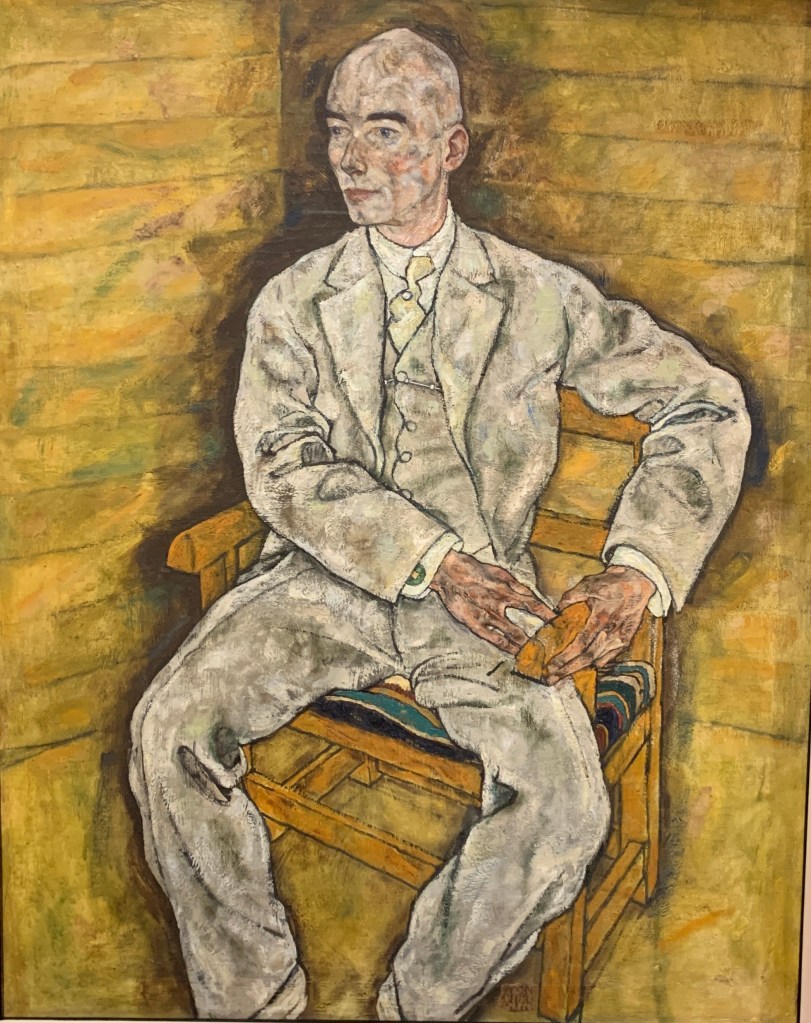
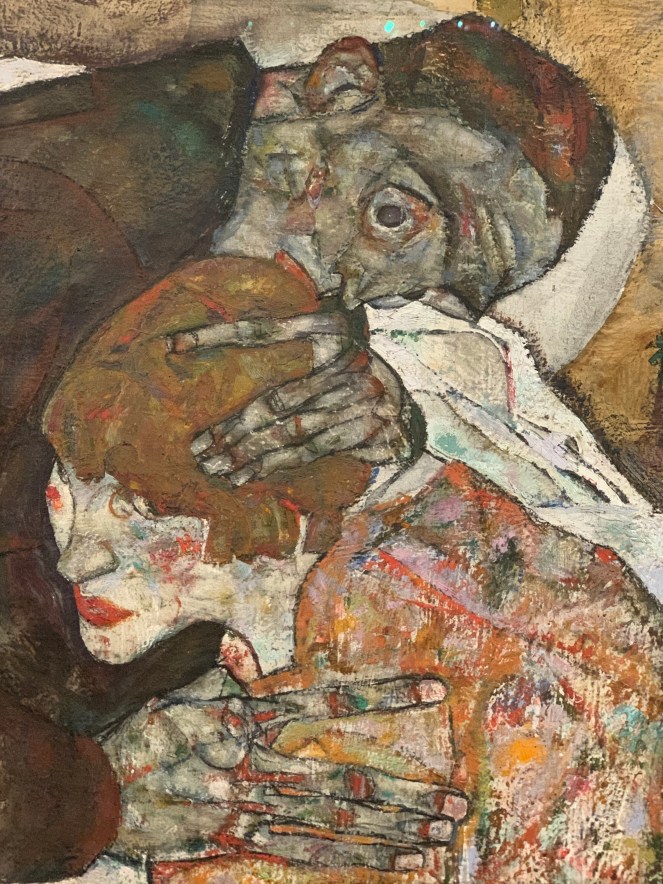
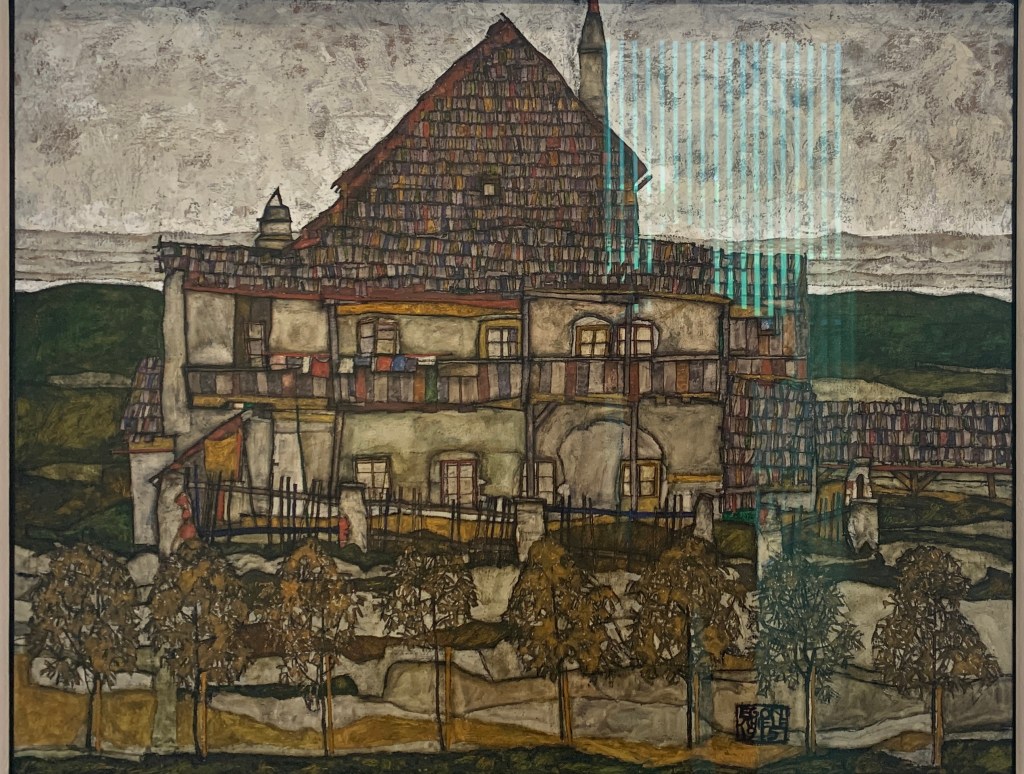
Egon Schiele at the Belvedere
The Belvedere has a great collection of Schiele’s works, some of which are below. However the museum I am going to tomorrow has the largest collection in the world, the Leopold. To say I am excited to go is an understatement!
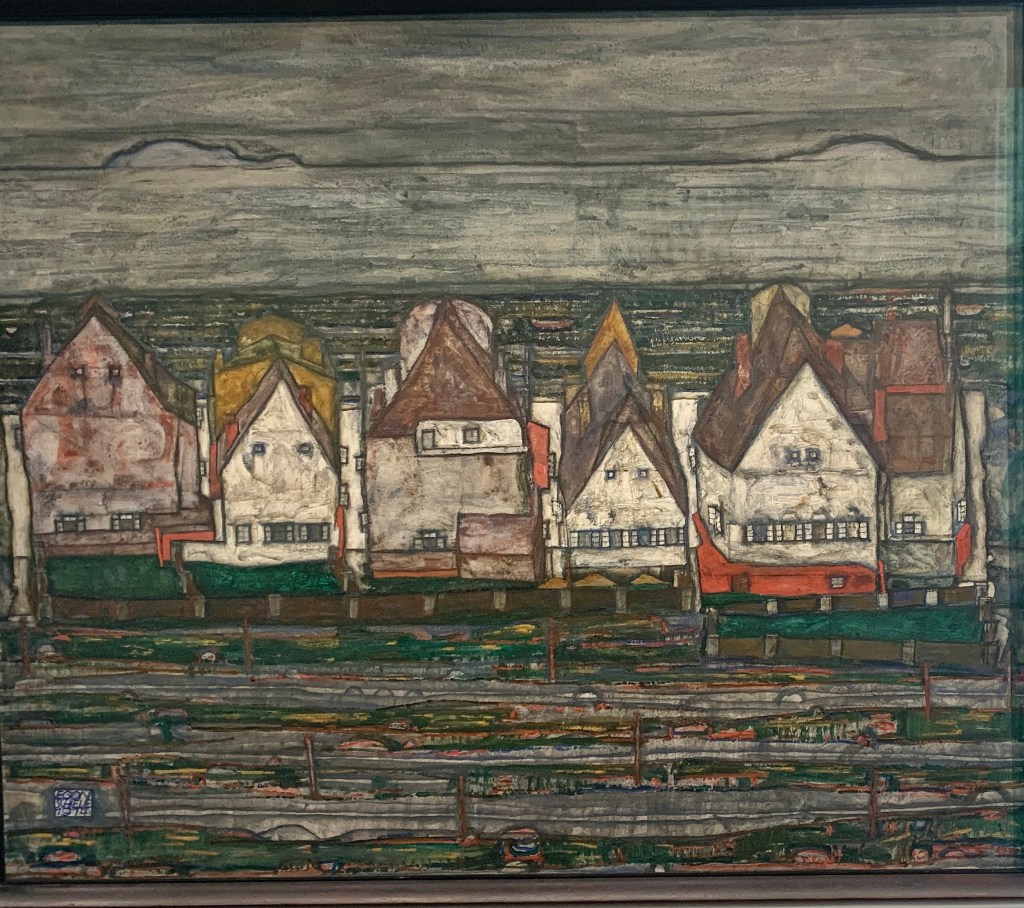
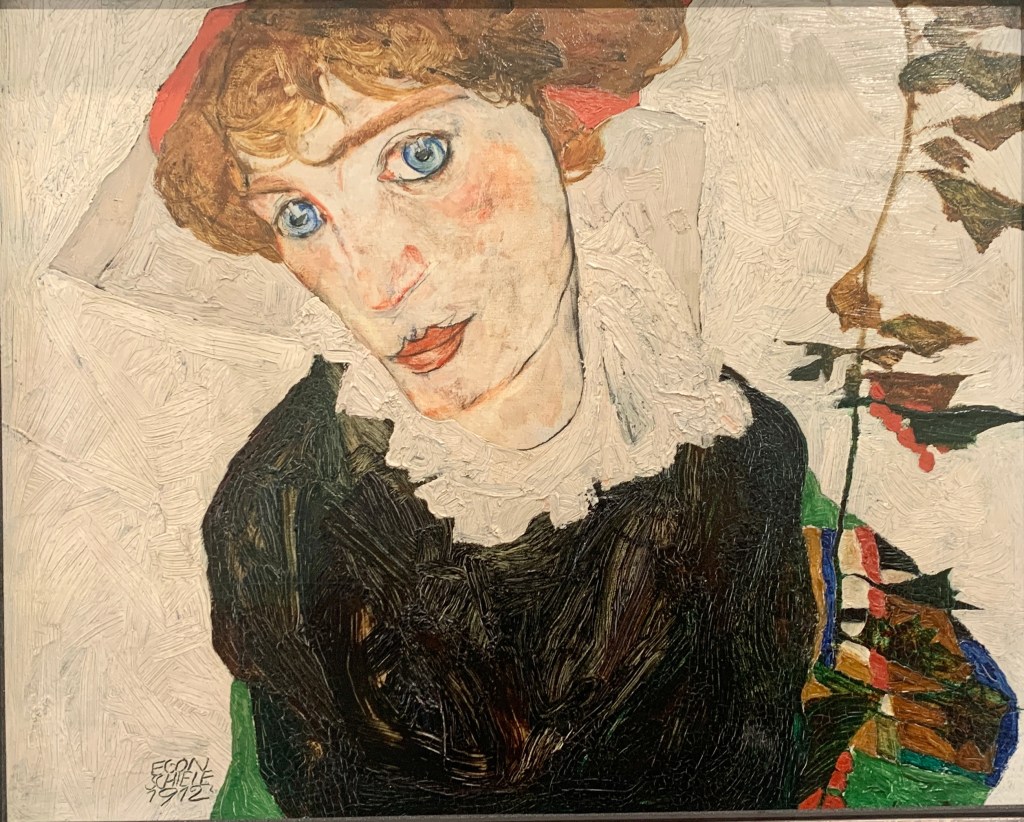
Victor Ritter Von Bauer, Egon Schiele, 1918City on the blue river III, Egon Schiele, 1911 Mother with two children III, Egon Schiele, 1915Portrait of Edith, 1918, SchieleDeath and Maiden, 1915, Egon Schiele
3 March 2023, The Leopold
The Leopold Museum was founded through a donation of a huge and significant private art collection and has become a leading gallery for Austrian art, especially that of Egon Schiele. The couple who collect the original artworks were Elizabeth and Rudolf Leopold. The museum opened in 2001. It is spread over about 4 floors, the permanent collection being on three of the floors. It is mainly late 19th and early 20th century Austrian art.
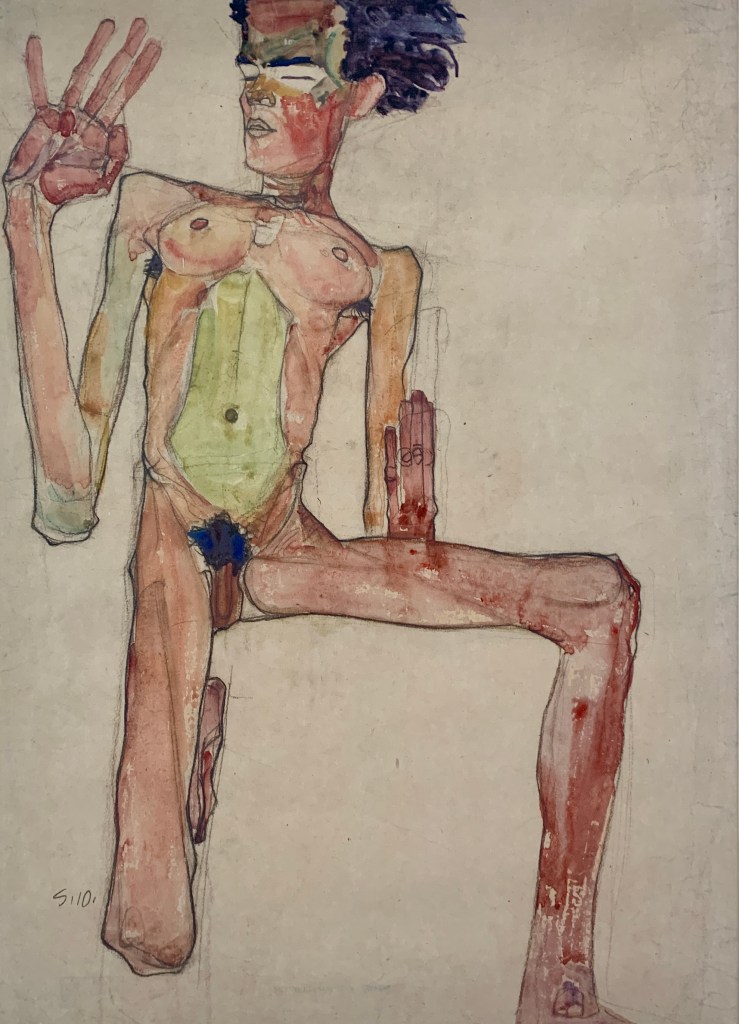
It’s a very modern building, has a nice cafe and a great shop. It costs about €15 to enter. I loved the collection, obviously the Schiele works I loved too! Schiele was a ground breaking artist, painting in a technique unique to him. He does not paint in a realistic manner.
Having read quotes from him, he was interested in painting the soul of the people he saw, the truth he saw of the Austrian landscapes and the objects around him. He was a contemporary of Klimt, though was about twenty years younger.
He met Klimt in 1907, and they both exhibited at the secession building, which I visited today also. Schiele finally made it big in 1918, with a successful show at the building. He finally felt he had risen out from under the shadow of Klimt. Tragedy then struck. His wife Edith, featured in many of his portraits, died of flu in 1918. Schiele also then died of flu just a few weeks later.
What could his career have become if he had survived? He was just 28 years old when he died.
Schiele landscapes
Schiele portraits
Klimt at the Leopold
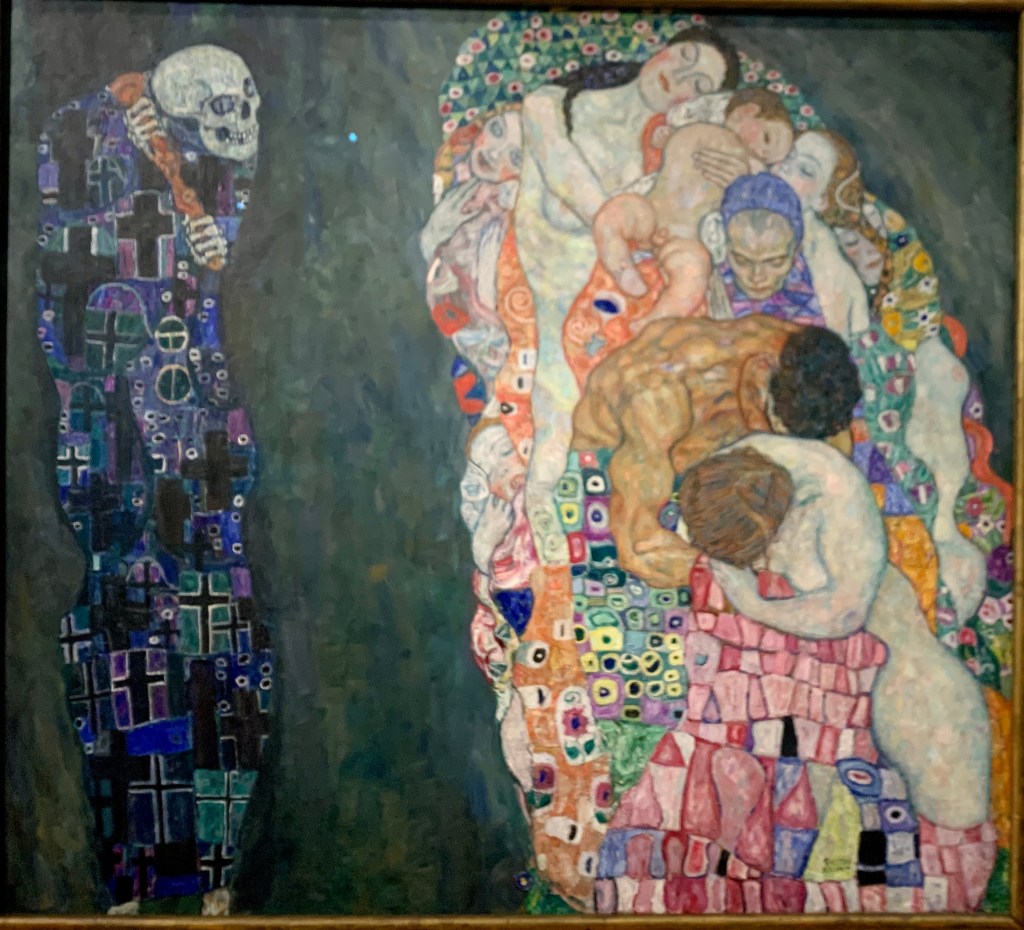
The gallery also has some wonderful Klimt’s, including one of his masterpieces, ‘Death and Life’, 1910.
Death and Life, 1910, Klimt
The Secession Building
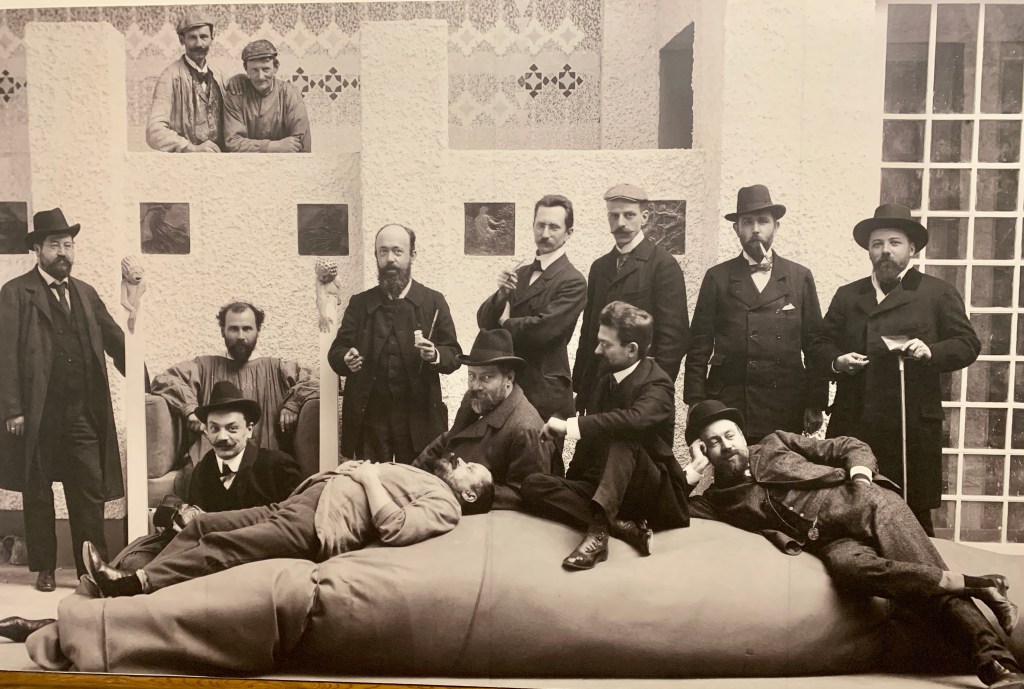
I also visited the spiritual home of the Vienna secession movement. This black and white photo shows the original members, including Klimt, seated on the left.
Artists of the Vienna Secession, including Klimt, seated
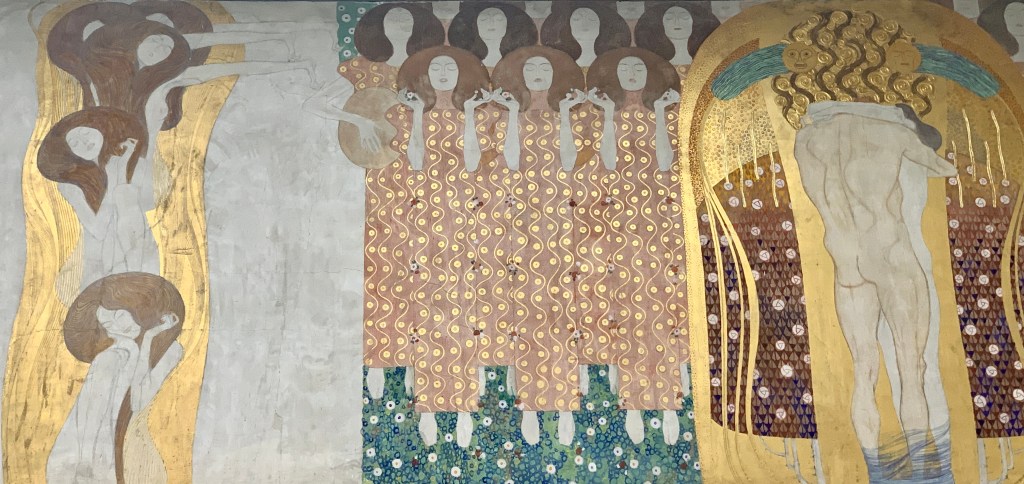
As mentioned, Klimt was a key figure, and he created a wonderful artwork on the walls of the building for the 1898 show that launched his career. The work is called the Beethoven Frieze. The building is a nouveau masterpiece with a wonderful golden crown on top of the building. It costs €12 to enter.
4 March 2023, the Kunsthistorisches Museum
My final day and I headed off to what I think translates in to the ‘art history museum’, You can find it in the ‘MQ’, the Museum Quarter, opposite the Natural History Museum. It is €21 entry.
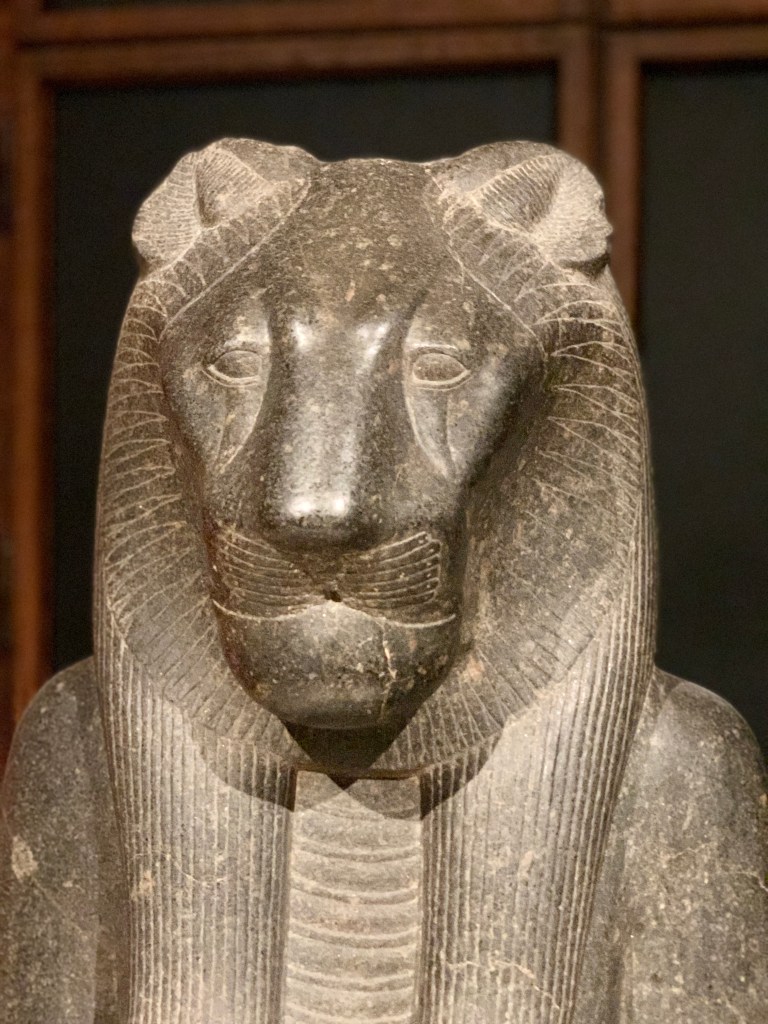
The collection is vast so I did not attempt to see it all. The first floor has all the pictures. The ground floor is Egyptian and Roman artefacts plus lots of items from what I think was the Hapsburg Royal collection.
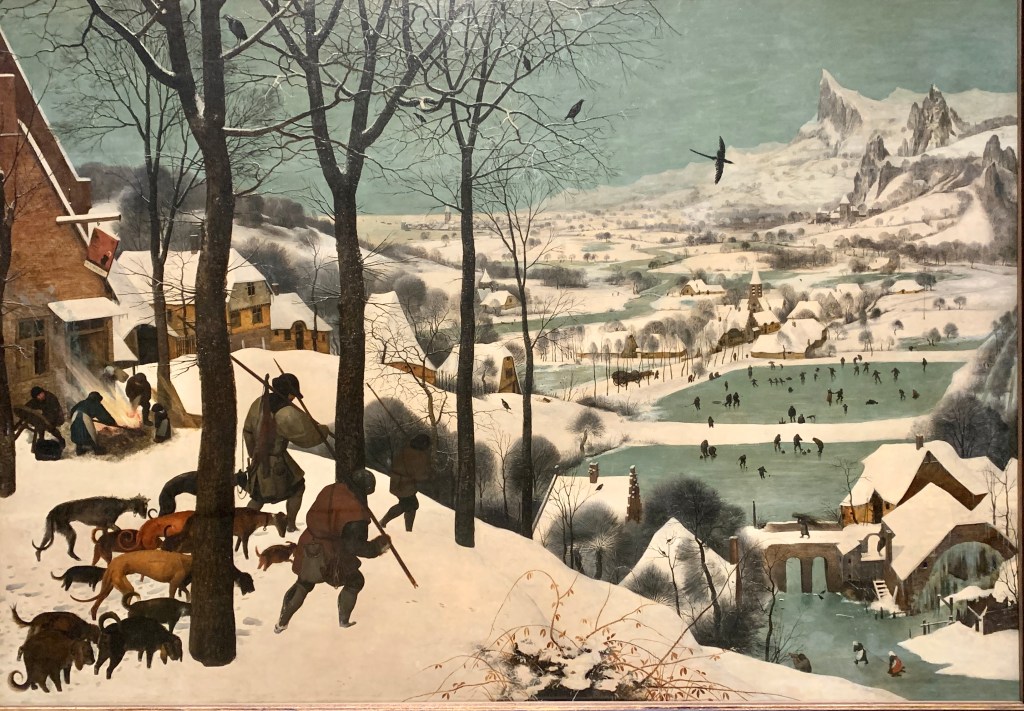
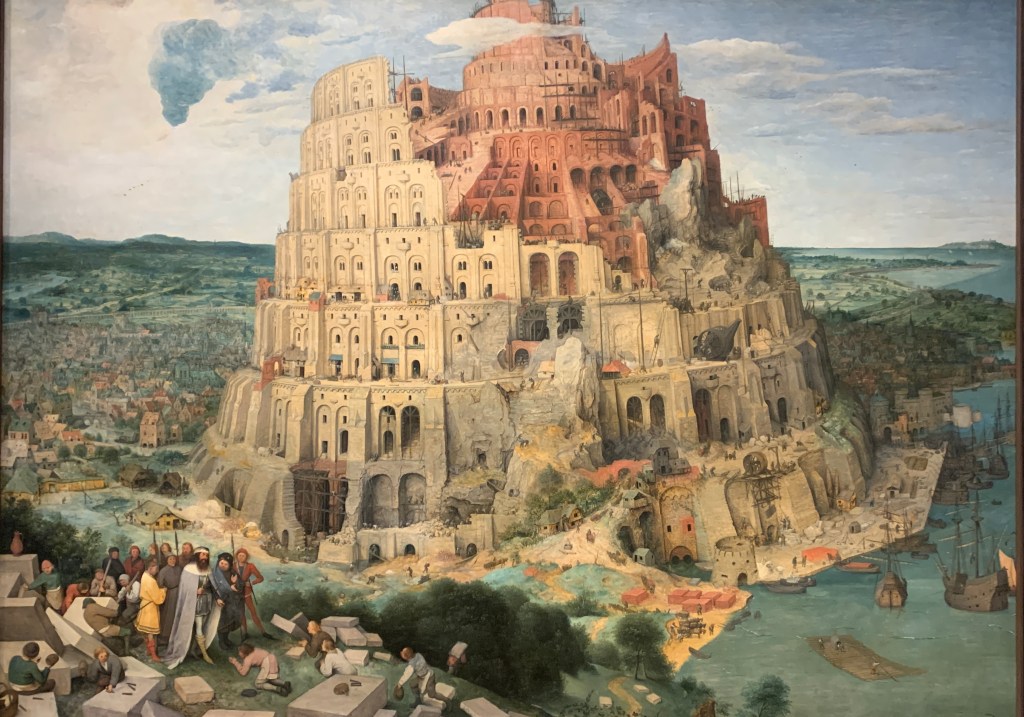
The art here is more ‘traditional’. Think Titian, Velasquez, Rubens. Some of the stars of the show are the paintings by Dutch artist Pieter Bruegel. He is famous for being one of the first artists to depict everyday people and everyday landscapes. One of his most famous works is largely credited as being the first painting to ever show a winter landscape. Some of his other famous works shown in the gallery depict peasants partying and celebrating and going about everyday life.
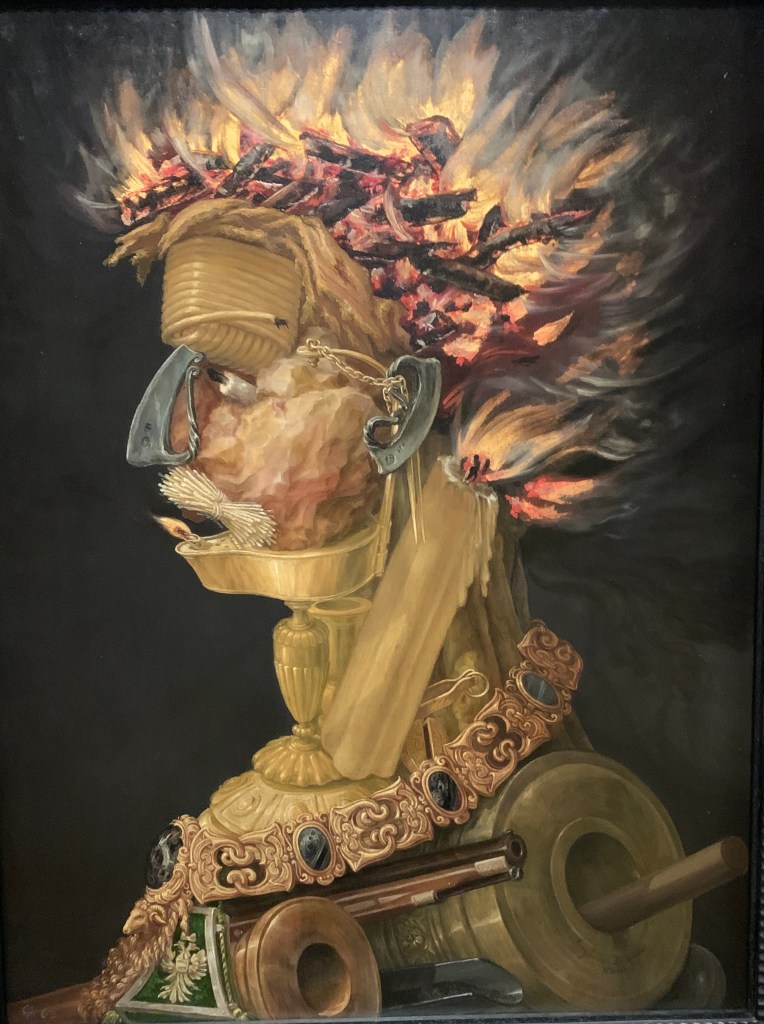
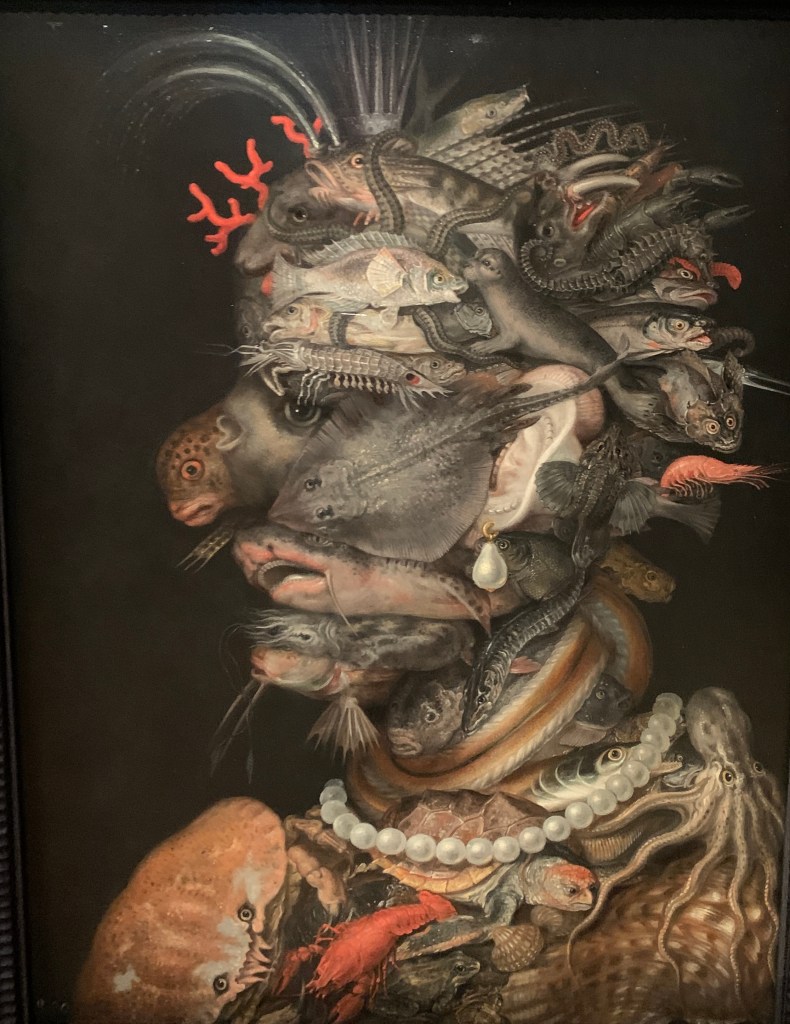
Another artist show here is Giuseppe Arcimboldo. Painting in 1563 he created 4 paintings showing the 4 seasons. However what is unusual is that he created 4 portraits of people showing the seasons using inanimate objects such as fruit, dead fish and guns! They really are fascinating and strange works of art.
The Roman and Egyptian collections are vast, lots of sarcophagi and statues. Whilst I enjoyed the gallery, it is not all to my taste, I prefer straight up painting!
Pieter Brugel
Hunters in the snow, 1565, Pieter BrugelPeasant Dance, 1568, Pieter BrugelThe Tower of Babel, 1563, Pieter Bruegel
I visited the Museum of Eastern Art on a trip to Italy in September 2022. It is truly one of the best Asian art galleries I have ever visited and I would highly recommend going. Laid out over three floors, it covers the art of China, India, Japan, Thailand, Burma, Cambodia, the Himalayas region, including Tibet and also has a section on Islamic art. For more information go to the Museum website.
Here are some of my highlights from the collection, as well as video compilation of my time in Turin and Genoa.
India
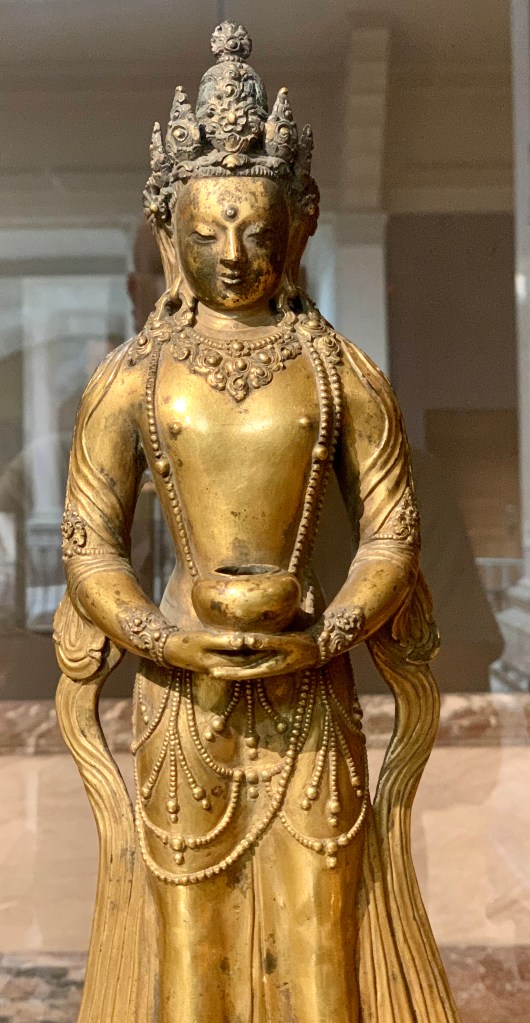
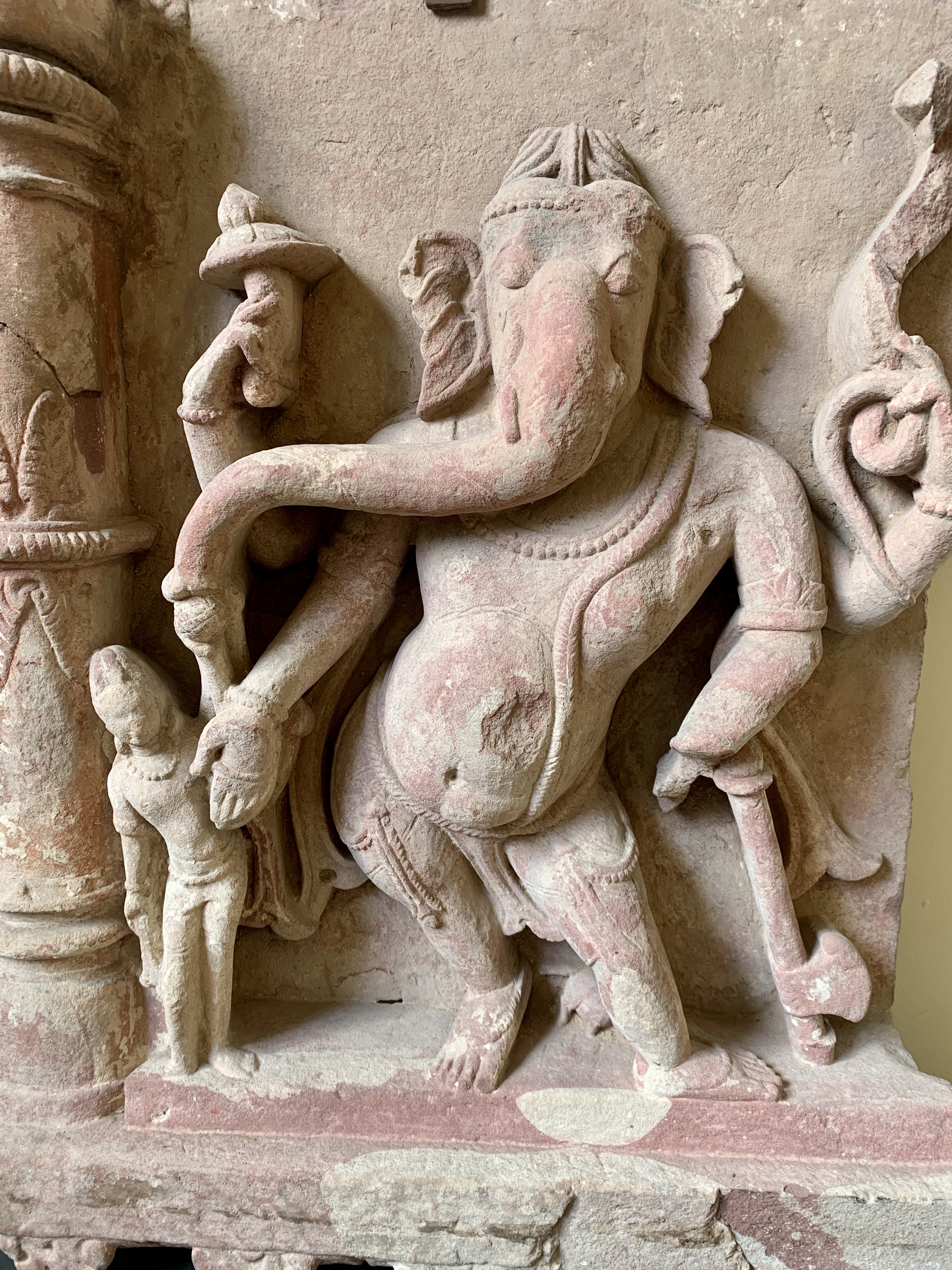
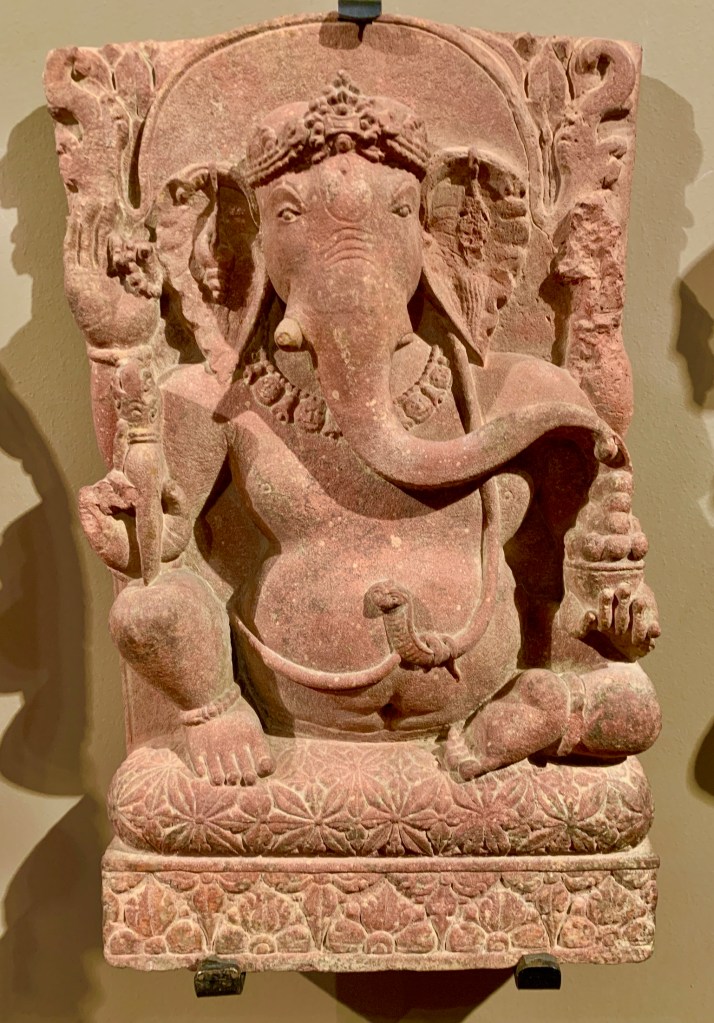
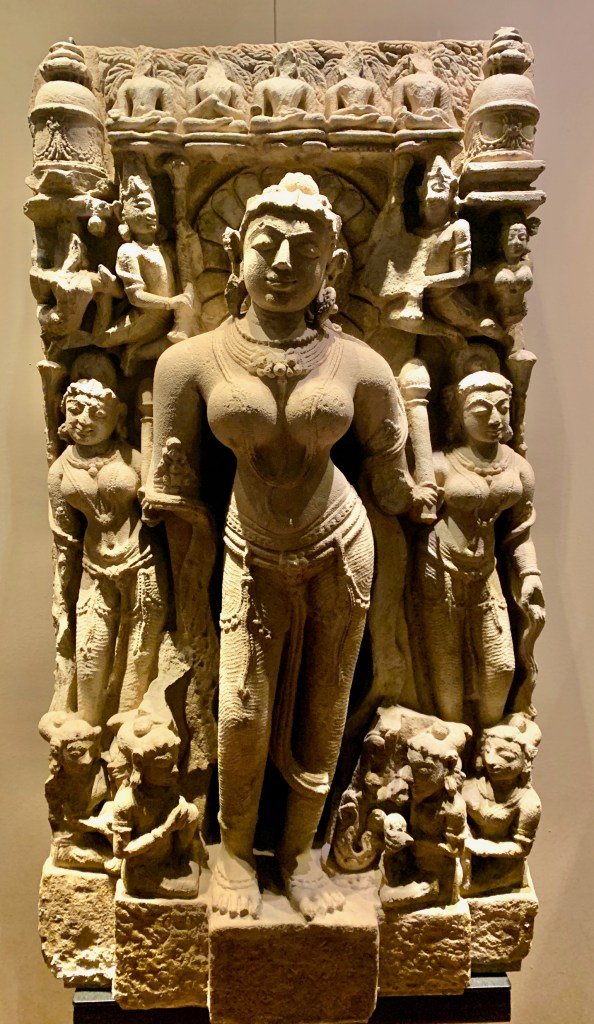
‘Buddha’s parinirvana’, showing the stupa, the symbol of the Buddha’s ultimate extinction, 2nd Century Bharhut area (Madhya Pradesh) India ‘Ganesha’, Hindu god of wisdom, the remover of obstacles 7th century Northern India, made of red sandstone ‘Tara – star’, Buddhist female manifestation of Avalokiteshvara, the Bodhisattva of compassion, 10th century Madhya Pradesh, India‘Saptamatrika’, the Seven Divine Mothers with Vinadhara and Ganesha, 11th century North India, sandstone ‘Vishnu’ – The god Vishnu with Lakshmi, goddess of fortune and riches on his right and Sarasvati, goddess of speech and knowledge on his left 12th century, North-East India, Basalt
Burma
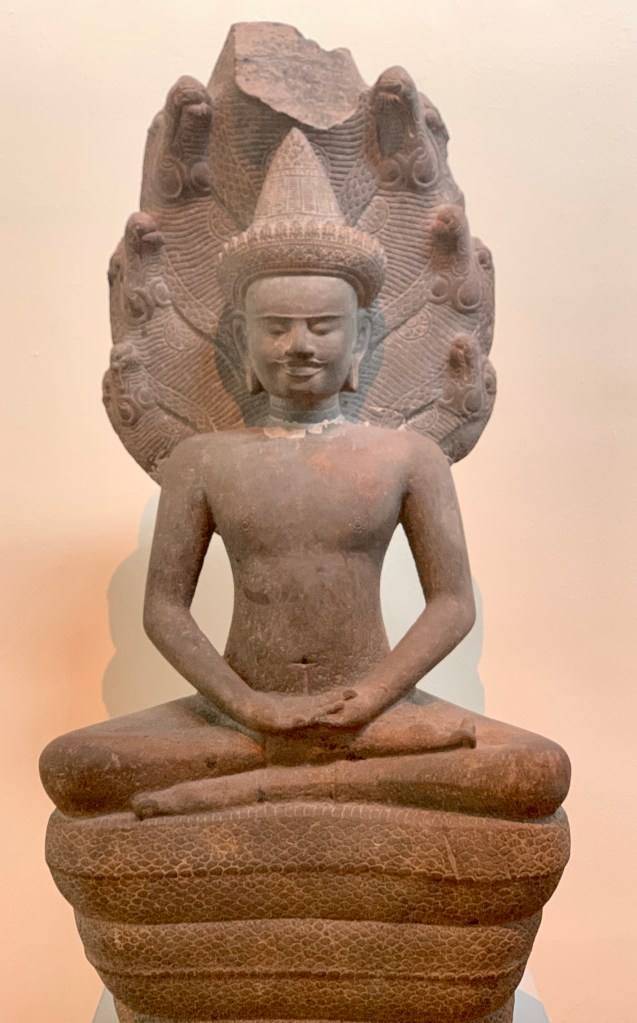
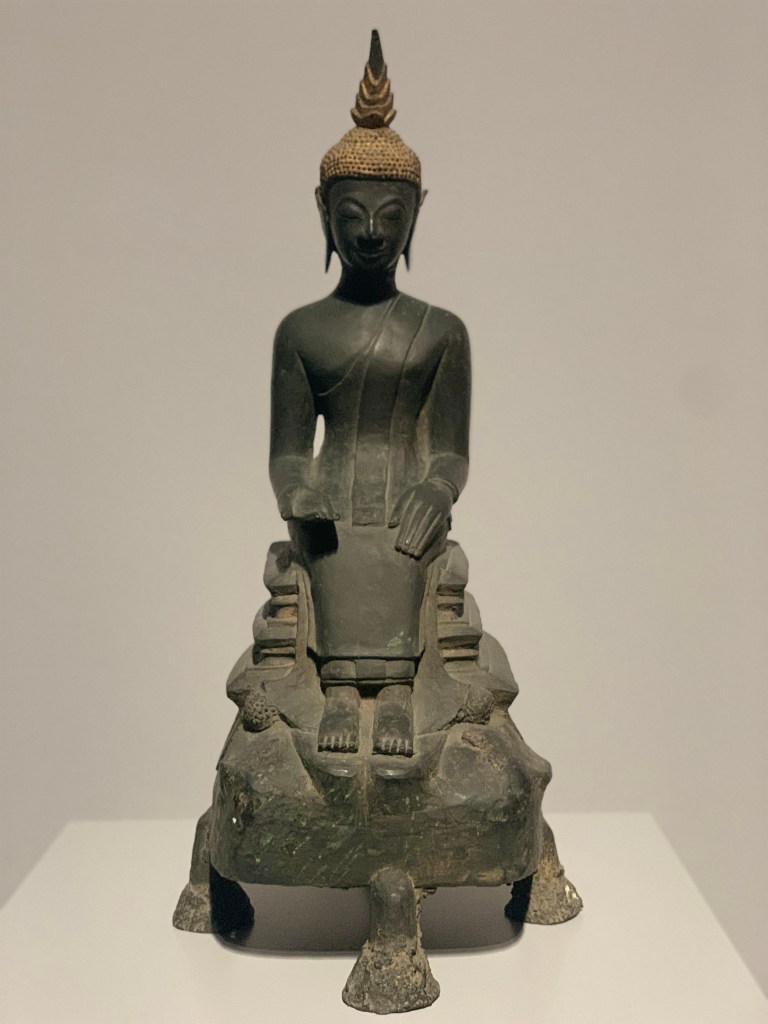
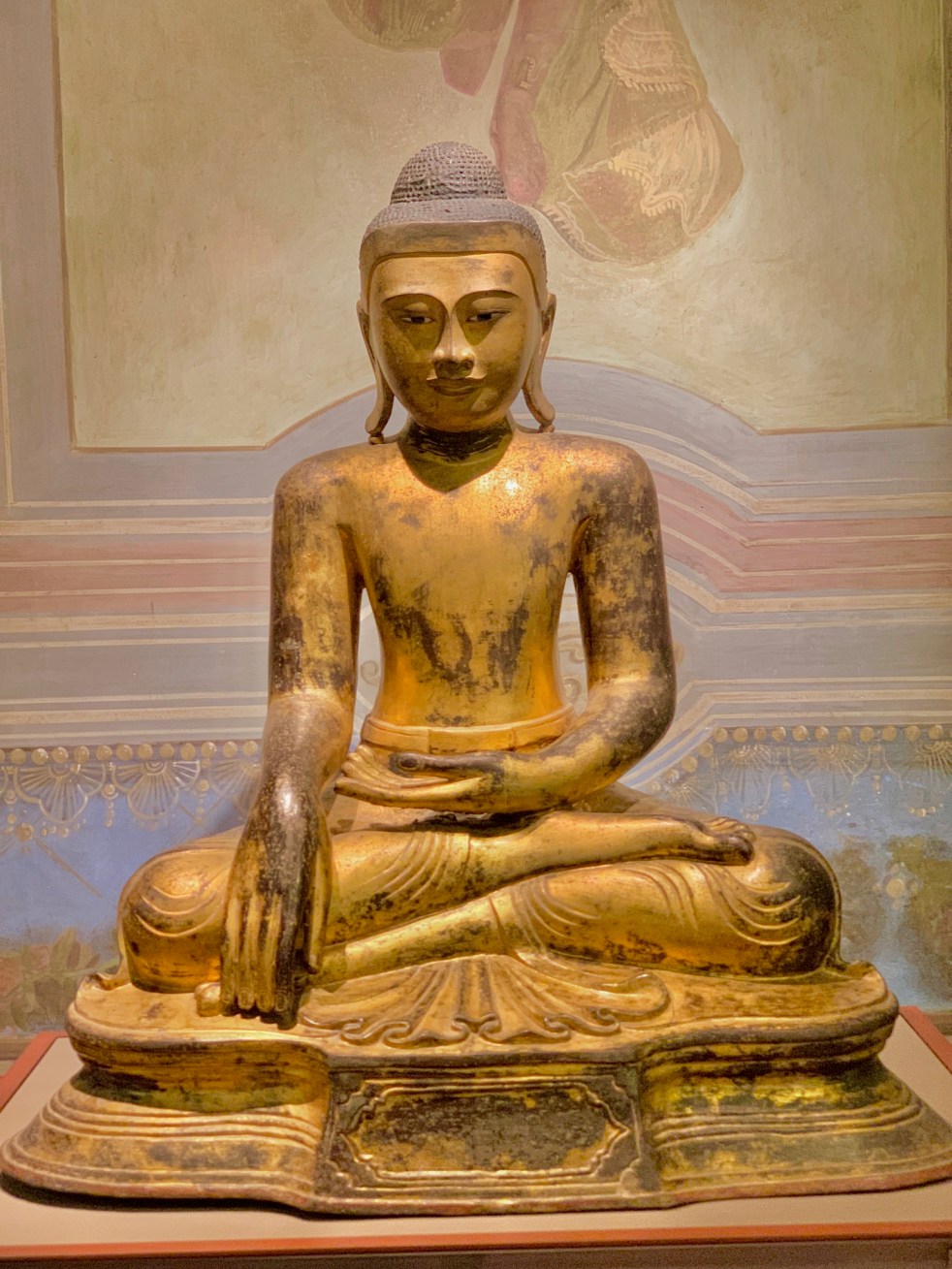
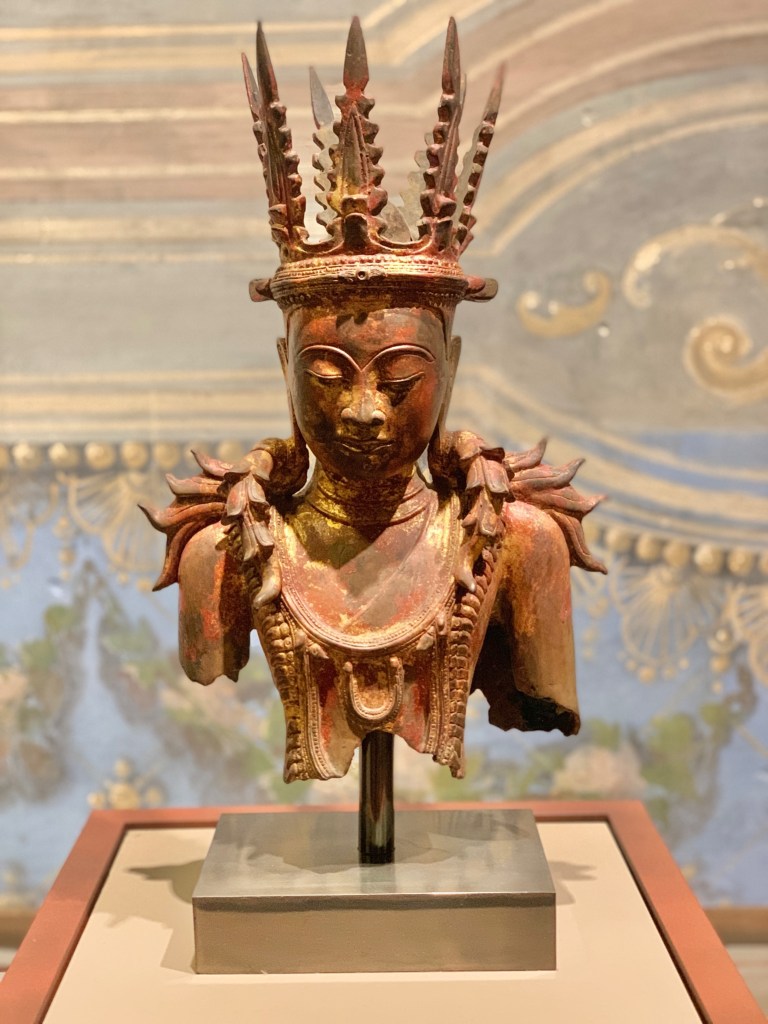
‘Crowned Buddha’, 18th century Arakan, Burma, lacquered and gilded bronze ‘Buddha seated in bhumisparshamudra’, 18th century Burma, lacquered and gilded bronze
Thailand
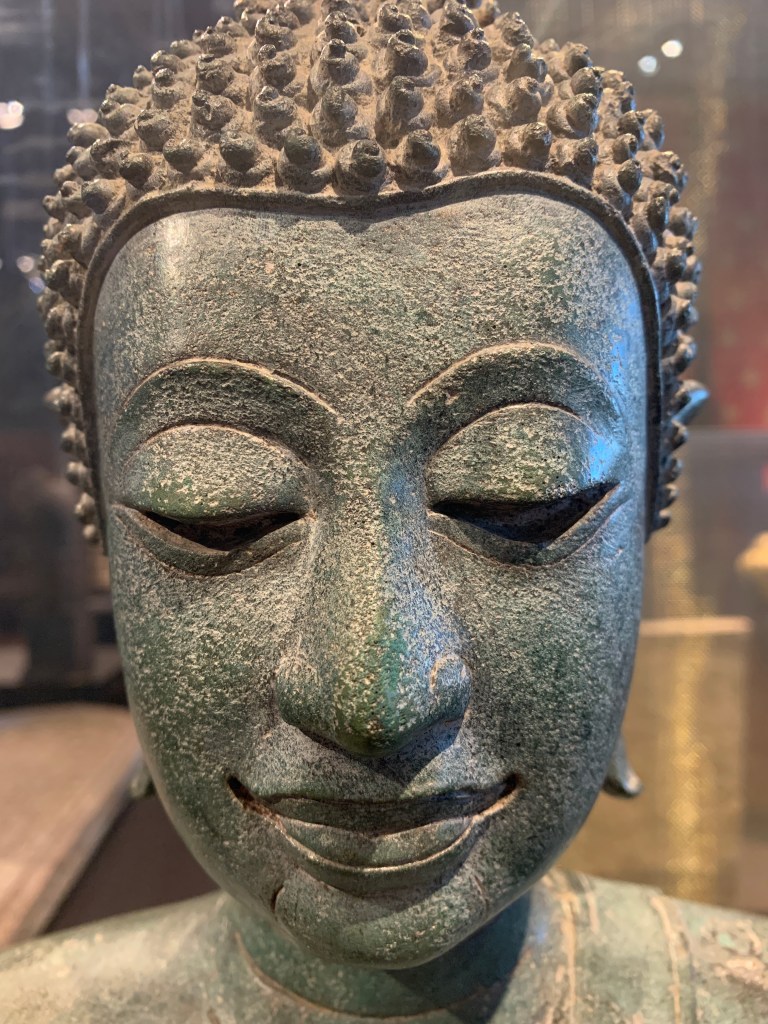
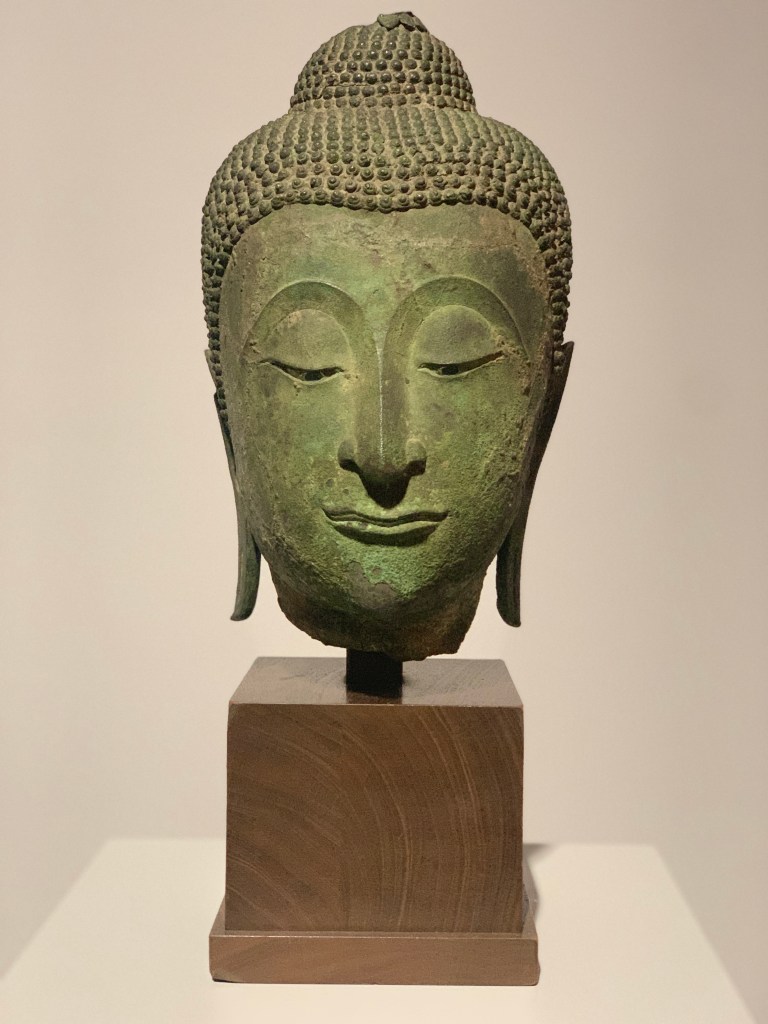
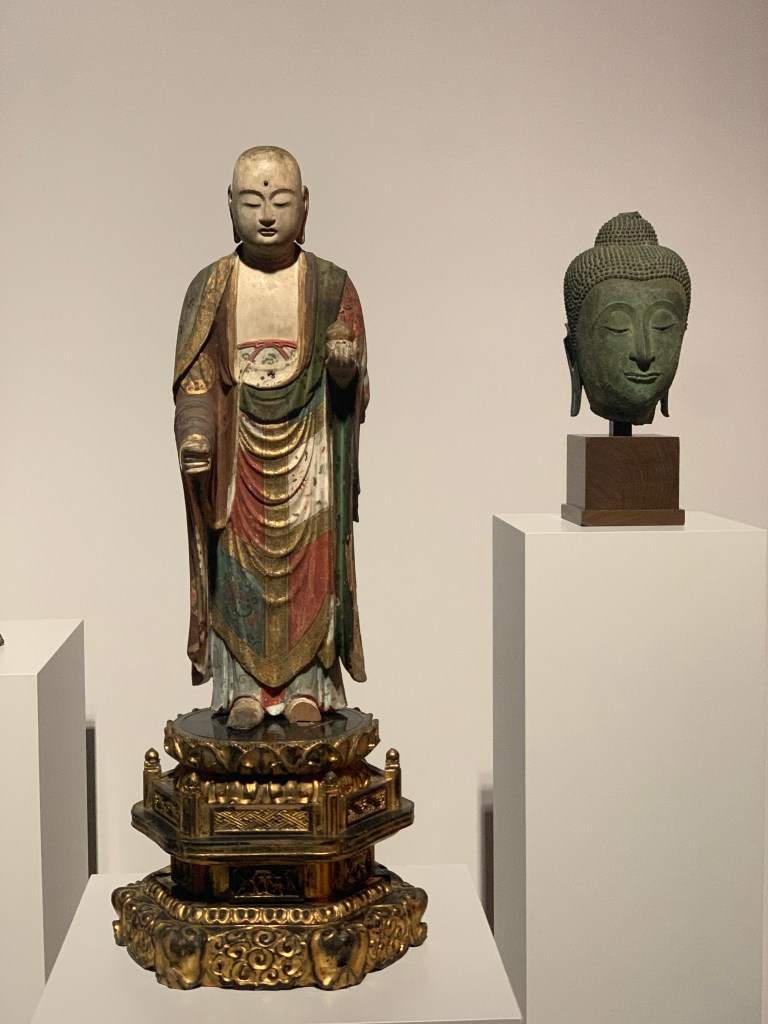
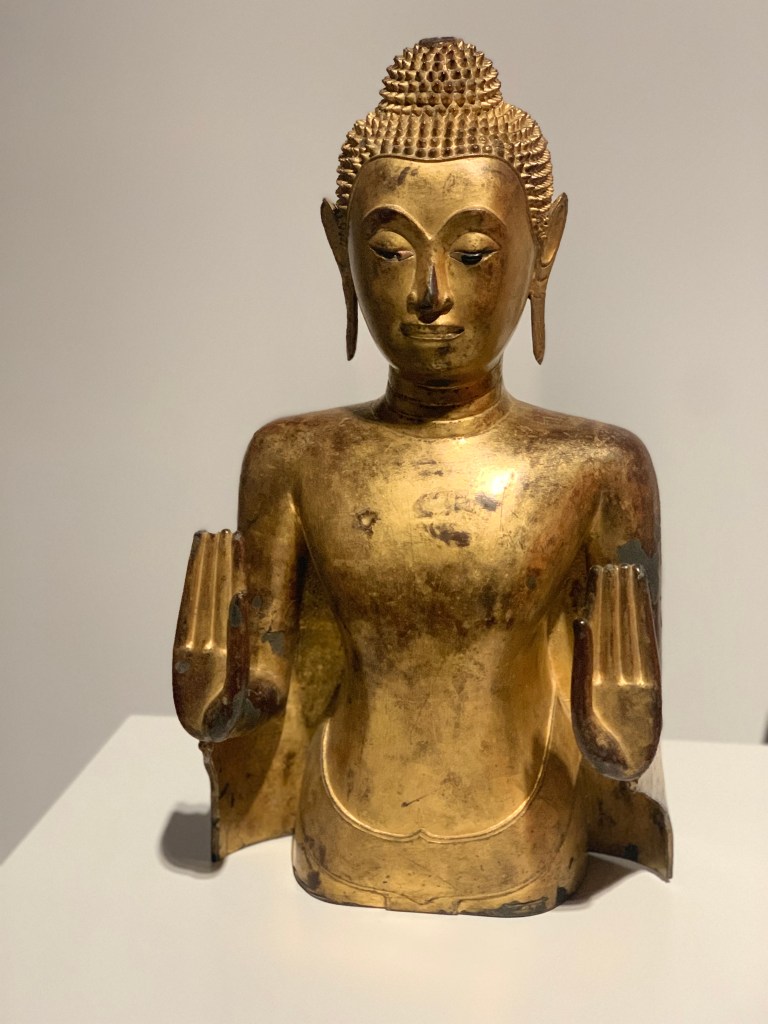
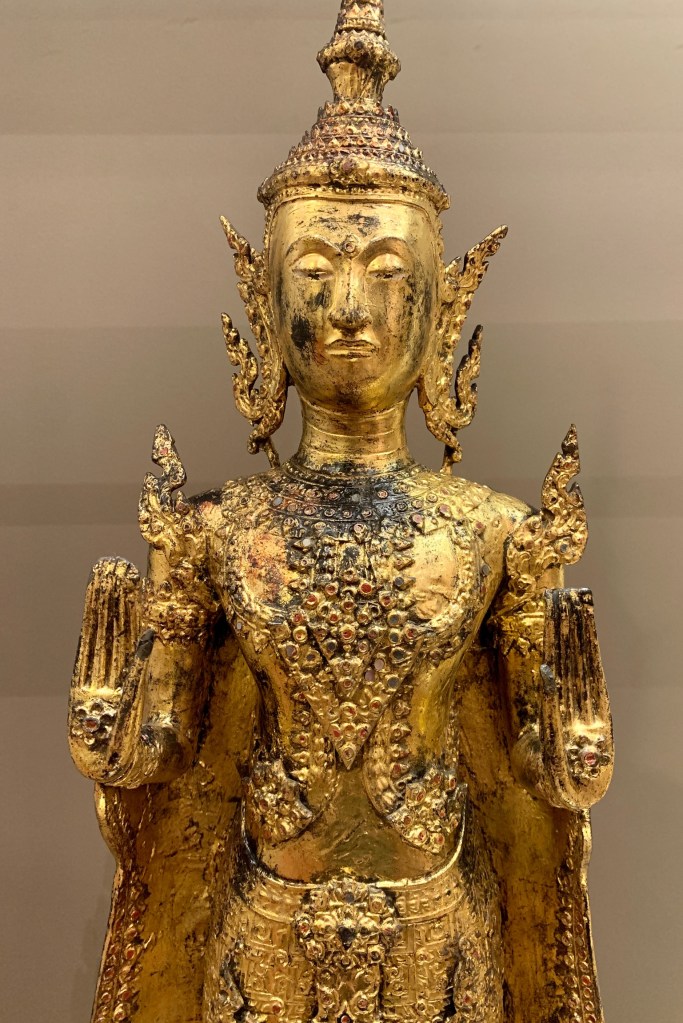
‘Bust of Buddha Shakyamuni’, 15th century BronzeThe Buddha in the gestures of fearlessness and reassurance, 18th century Oxidised and gilded bronze ‘Buddha in bhumisparhamudra’, 17th century Lacquered and gilded bronze
Pakistan & Afghanistan
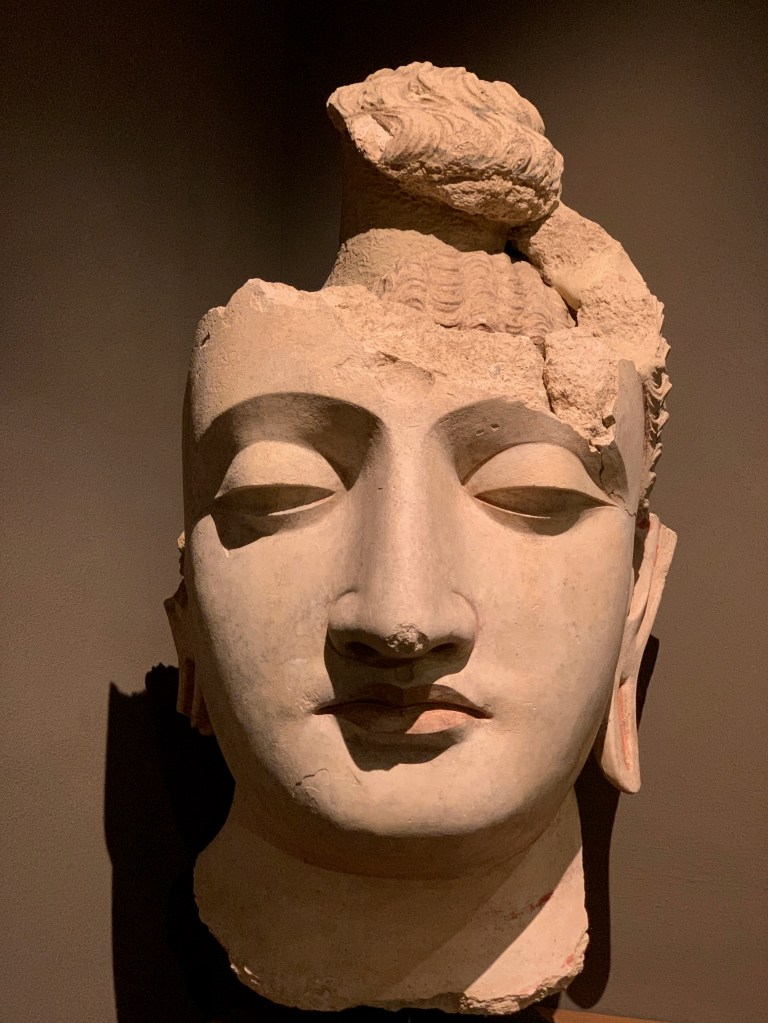
‘Head of Buddha, 4th century North-Western Pakistan or Afghanistan, stucco with traces of pigments
Japan
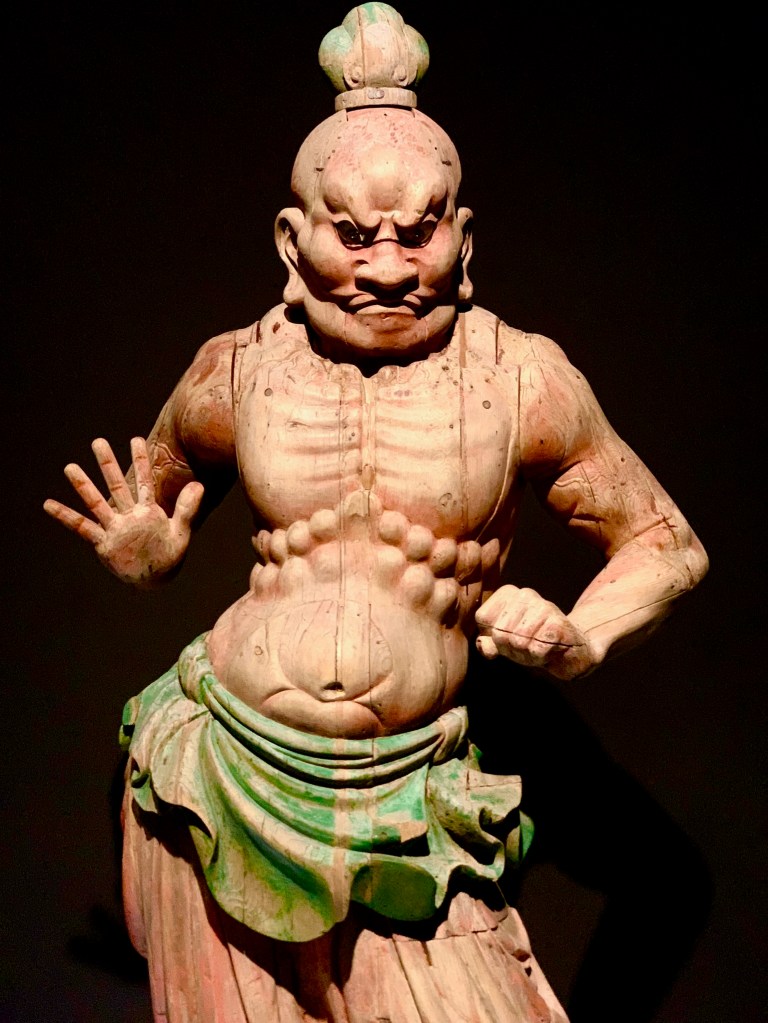
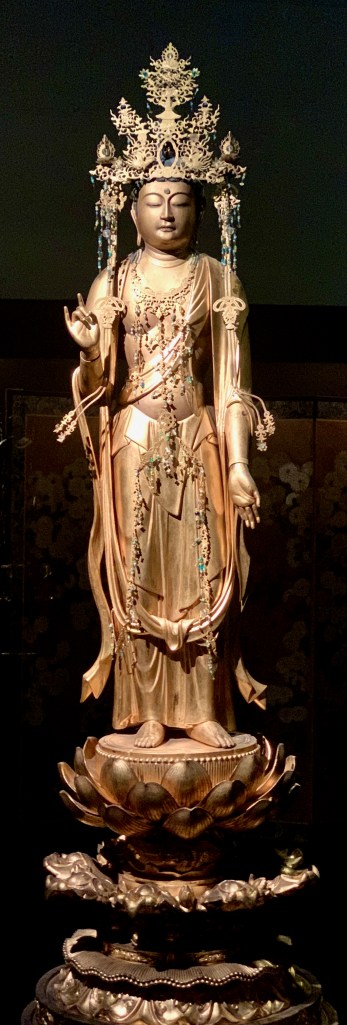
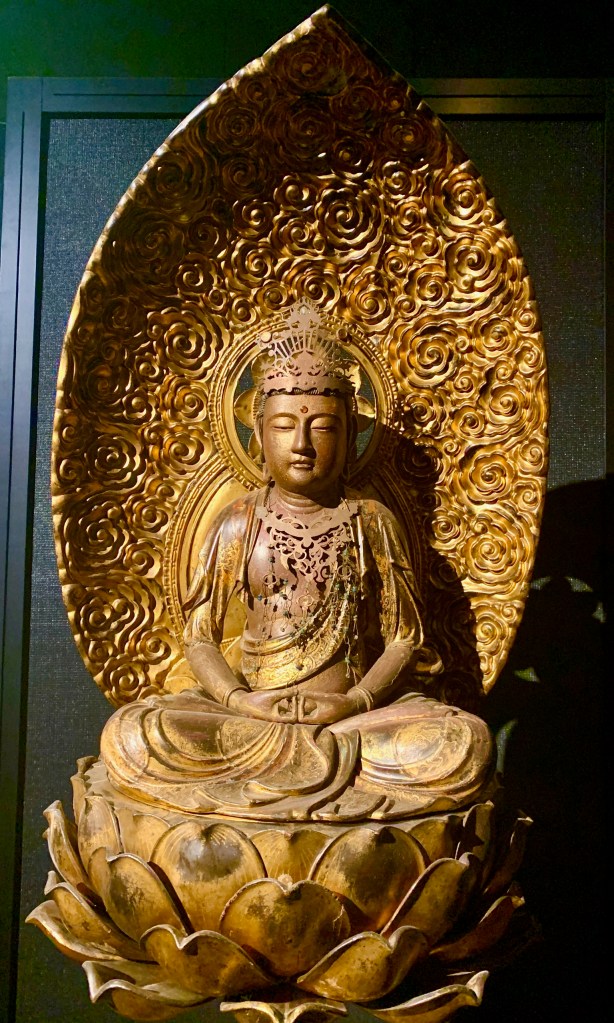
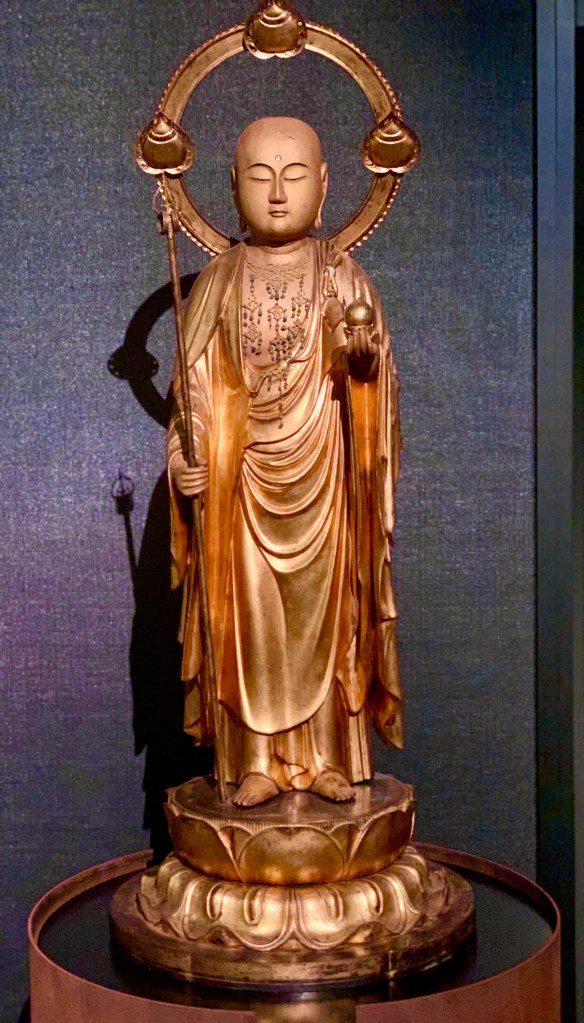
‘Kongo Rikishi standing on a base’, Kamakura period, 13th century Cypress wood ‘Shokannon bodhisattva’, 14th century Japan, cypress wood and gilded lacquer ‘Guhari Amida’, 14th century. Guhari is an esoteric version of Amida Buddha, he wears a tiara and is characterised by the vajra, the symbol of lighting typical of tantric Buddhism Cypress wood and gilded lacquer‘Amida with radiant aureole’, 17th century Edo period Lacquered and gilded wood, subsequently blackened ‘Guhari Amida’, 14th century
Tibet
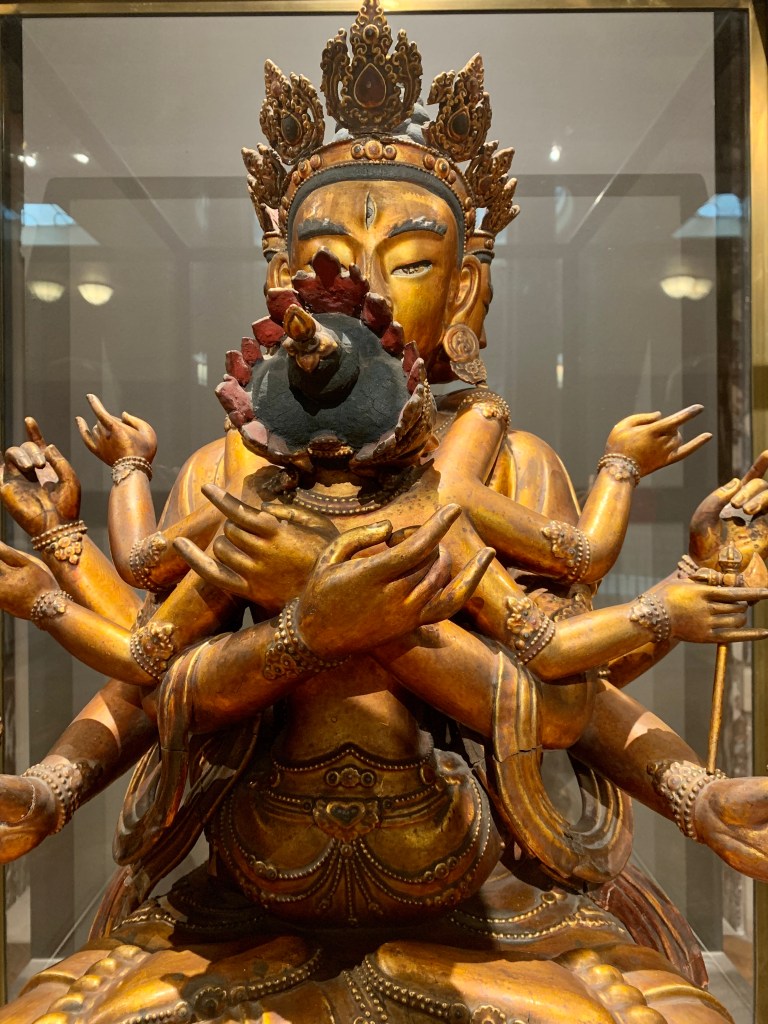
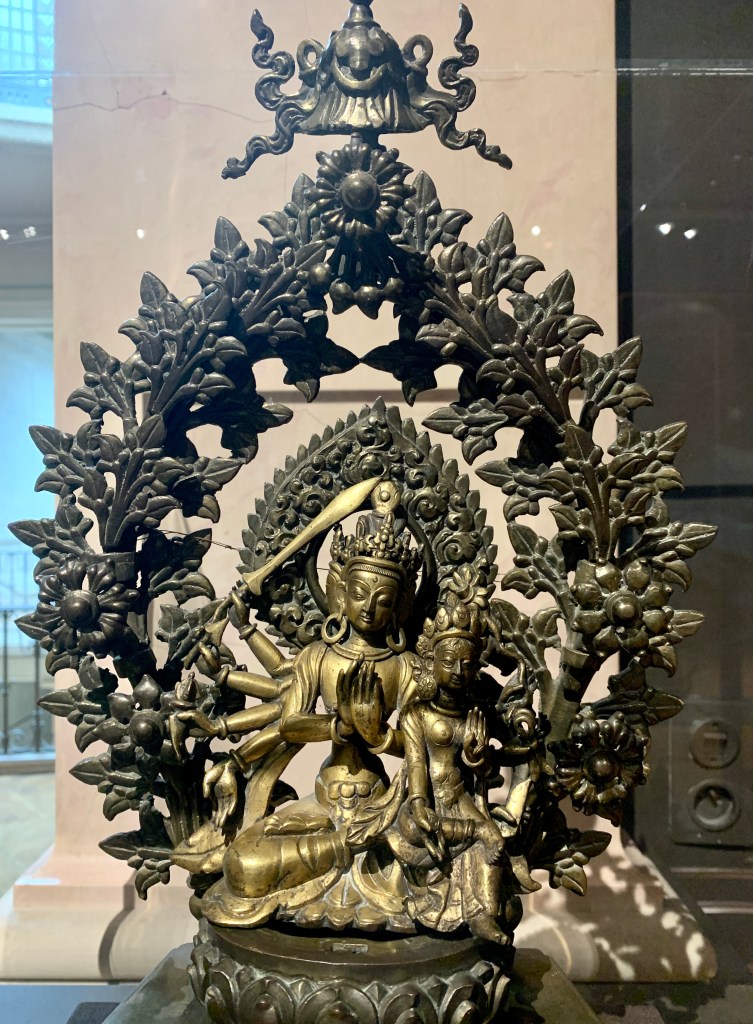
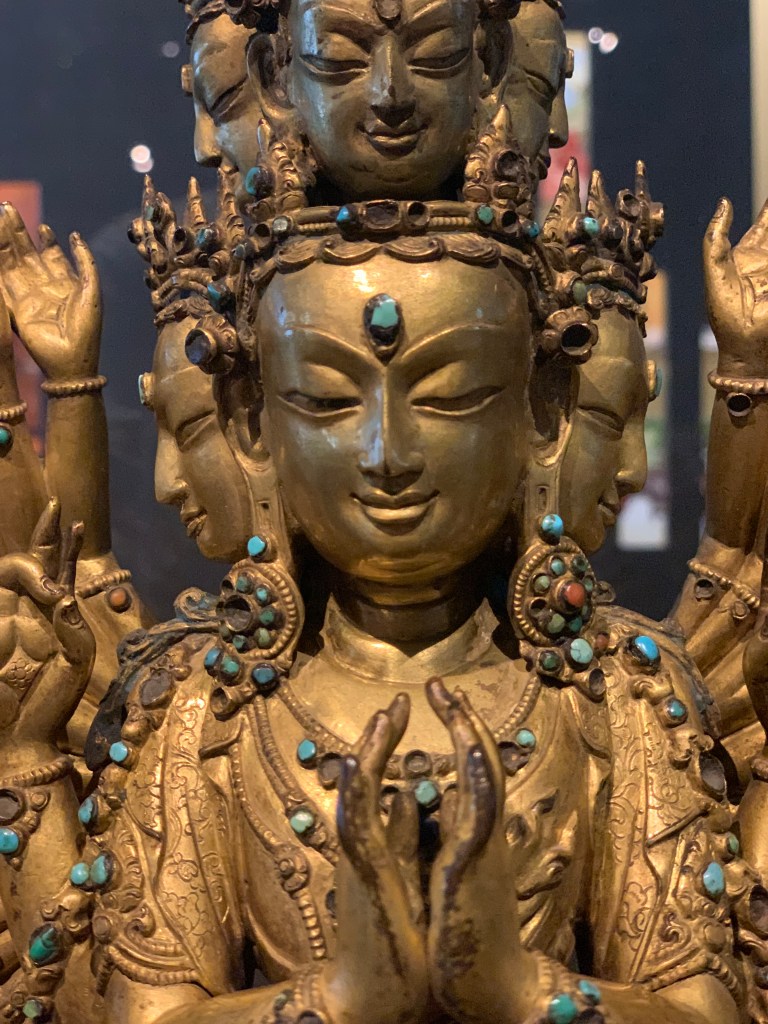
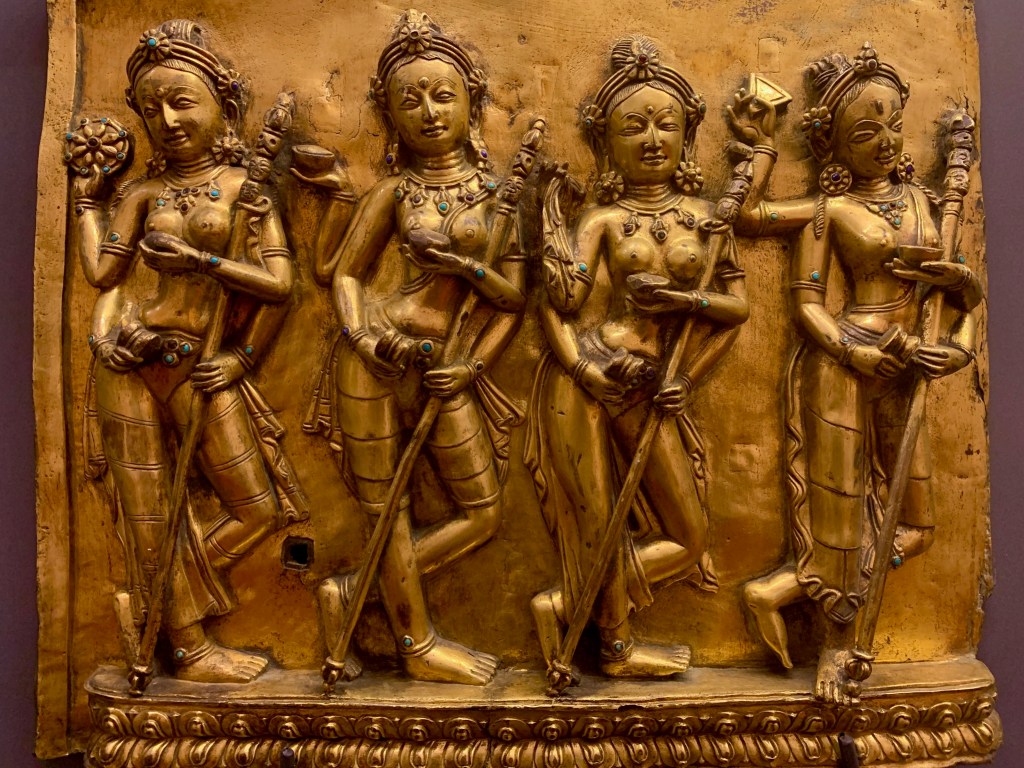
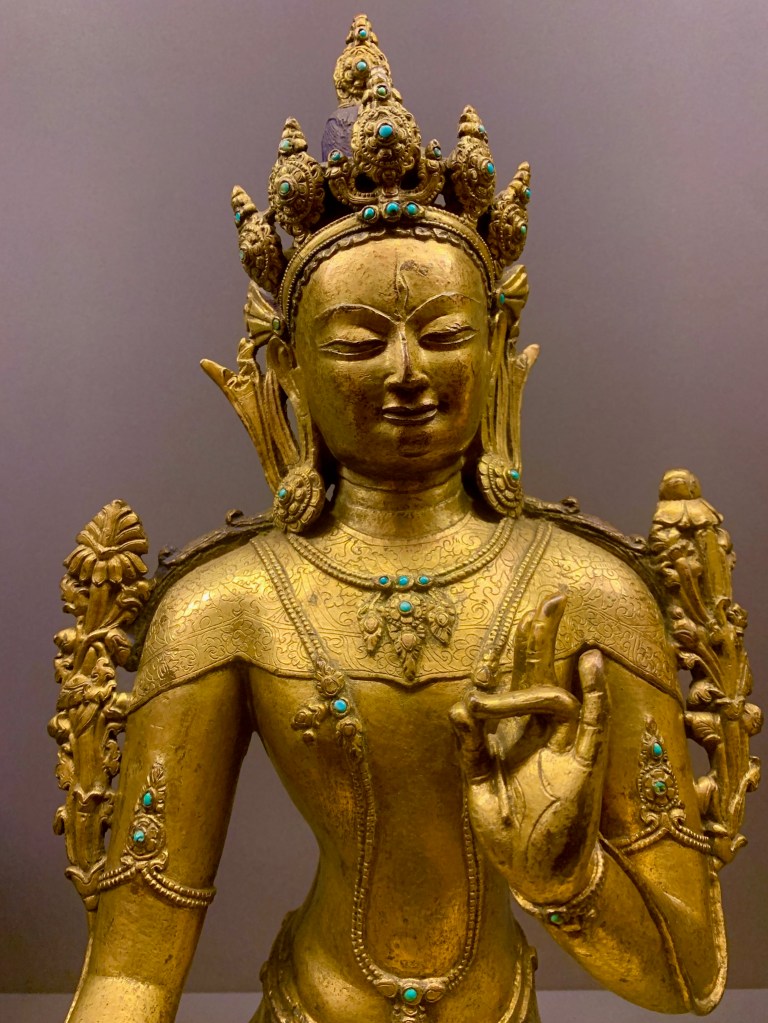
‘Four dancing dakini’, 15th century Gilded bronze‘Sitatara’, 16th century Gilded bronze with pigments and turquoise ‘Vajradhara’, 15th century Gilded bronze










































































 Ben Hills-Jones